
The 7 Elements of Marketing Mix for Newsletter Growth
Master the 7 elements of marketing mix for B2B newsletter growth. Learn to apply product, price, place, and promotion to drive engagement and ROI with Breaker.
Beyond the buzzwords, most B2B teams are dealing with the same problem. The newsletter looks important, everyone agrees it should drive pipeline, and yet the day-to-day operation feels messy. One week the team debates content. The next week they debate list quality, deliverability, signup forms, sponsorships, or whether the channel is producing anything sales can use. The result is a program that stays active without becoming predictable.
That is usually not a channel problem. It is a systems problem.
The classic marketing mix gives you a way to fix that. The framework started with the 4 Ps, Product, Price, Place, and Promotion, introduced by E. Jerome McCarthy in 1960 in Basic Marketing: A Managerial Approach, and later expanded to the 7 Ps with People, Process, and Physical Evidence for service-heavy businesses (Ruler Analytics on the marketing mix). That expansion matters for newsletters because a newsletter is not just content. It is a service, a distribution engine, a data asset, and often a monetization layer.
For B2B growth teams, that makes the elements of marketing mix more useful than most channel-specific playbooks. Instead of asking isolated questions like “How do we get more subscribers?” or “Why are open rates flat?”, you can evaluate the entire machine. Is the offer sharp enough? Is pricing aligned with value? Are you showing up where the right buyers already spend time? Is your promotion tied to outcomes, not vague awareness? Do your team, workflows, and proof points support trust?
That is how newsletter growth becomes less chaotic and more operational.
The seven elements below turn the marketing mix into a practical operating model for B2B newsletter growth, with Breaker as a concrete example of how the parts fit together in one platform.
1. Product

A newsletter is rarely just an email. In B2B, the product is a combination of content, audience fit, sending infrastructure, and growth mechanics.
That matters because many teams still treat the newsletter as a publishing artifact. They obsess over headlines and templates, then bolt on list growth later. That approach usually creates a decent-looking send with weak commercial value. You get activity, not sustained influence.
Build the product around a job
The best B2B newsletters solve a specific job for a specific reader. That could mean helping RevOps leaders understand go-to-market shifts, helping SaaS founders benchmark pricing moves, or helping demand gen teams find better acquisition tactics. If the content tries to serve everyone, it lands with no one.
The second layer is operational. A strong newsletter product also needs a platform that supports the whole lifecycle. Creation, segmentation, acquisition, and analytics have to work together. When those functions live in separate tools, teams spend more time stitching workflows together than improving results.
Breaker is useful to think about here because it frames the newsletter as a growth product, not just a send tool. You design and schedule campaigns, but you also pair that with automatic list expansion for B2B audiences. That changes the product definition. The offering is no longer “we send emails.” It becomes “we help the right subscribers discover, read, and act on our content.”
What works and what does not
A practical product audit usually comes down to three questions:
- Content value: Does each issue help a defined buyer do something better?
- Audience fit: Are subscribers close to your ICP, or just loosely relevant?
- System design: Can the same platform support publishing and growth without manual patchwork?
Teams building from scratch should also study the operational side of launch, not just editorial planning. This guide on how to start a newsletter is useful because the setup choices you make early often shape everything that follows.
A newsletter product can fail without immediate detection. The content can look polished while the audience fit, targeting, and distribution model are already breaking underneath it.
One more trade-off is worth stating clearly. A narrow newsletter often grows more slowly at first, but it tends to create stronger downstream value. A broad newsletter can collect names faster, yet sales teams often struggle to use that audience. For B2B growth, I would choose relevance over scale almost every time.
2. Price
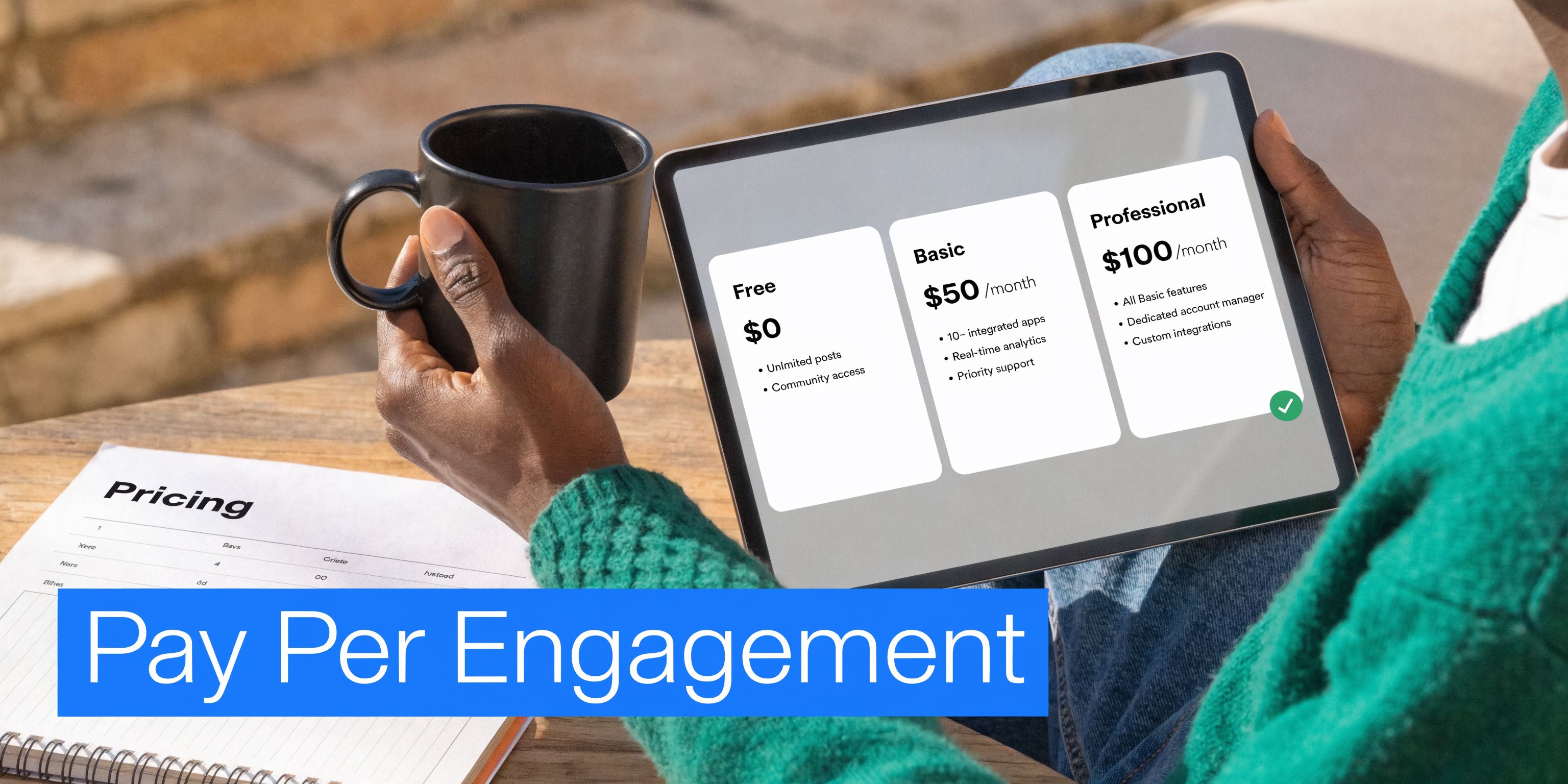
Pricing is where many newsletter strategies become distorted. The channel might look affordable, but the billing model can reward the wrong behavior.
Traditional email platforms often charge by contact volume or send volume. That sounds simple. In practice, it encourages list hoarding. Teams keep old contacts, tolerate low engagement, and pay for names that no longer create value. The software gets paid either way.
Pay for output or pay for useful output
For a growth team, the more useful pricing question is not “What does the platform cost?” It is “What exactly are we buying?”
If you are paying for raw scale, your incentives shift toward accumulation. If you are paying for engaged subscriber growth, your incentives shift toward fit and performance.
That is why performance-aligned pricing is often better for B2B newsletter programs. Breaker’s model is built around paying per new engaged subscriber, which is much closer to how growth teams already think about value. The spend is tied to audience quality, not just database size.
This becomes even more important once monetization enters the picture. If you plan to sell sponsorships, support outbound, or feed lifecycle programs, low-intent subscribers are expensive twice. First in platform cost, then in wasted downstream effort. Teams that want to understand monetization math before they scale should read newsletter ad rates, because pricing the audience externally is much easier when you have already priced it internally the right way.
The trade-offs inside pricing strategy
Pricing is never neutral. It shapes behavior inside the team.
- Per-contact pricing: Easy to forecast, but it often hides quality problems.
- Per-send pricing: Useful for high-frequency programs, but it can punish experimentation.
- Performance-based pricing: Better aligned with outcomes, but it requires confidence in tracking and attribution.
There is also a planning tension. Finance leaders usually prefer stable bills. Growth leaders usually prefer variable spend that scales with results. You need both viewpoints in the room.
The broader marketing lesson is old, but still useful. Promotion often carries a large share of impact inside the marketing mix, with McCarthy-era thinking placing Promotion at roughly 40 to 50 percent of mix impact in consumer goods, a framing discussed in the Wikipedia overview of the marketing mix. For newsletter programs, that does not mean overspending on promotion. It means your pricing model should support the parts of the system that create response, not just database bulk.
What does not work is pretending all subscribers are equal. They are not. A highly engaged, exact-fit reader who forwards issues internally is different from a dormant contact who signed up once and never returned. Good pricing models recognize that difference. Bad ones bury it.
3. Place
A B2B newsletter team launches with a strong value proposition, a clean signup page, and a reliable send schedule. Three months later, list growth looks healthy, but pipeline impact is weak. The issue usually sits in place. The team attracted subscribers from the wrong environments, with the wrong intent, through paths that were never built to carry someone from curiosity to revenue.
Place in a newsletter business is distribution design. It covers where buyers first encounter the newsletter, where they convert, how their data moves into the system, and what happens between signup and the first meaningful action. The inbox matters, but it is only one part of the route.
For newsletter growth, I treat place as an operating decision, not a traffic decision.
Build for the buying environment, not just the signup moment
B2B buyers do not discover newsletters in a single channel. They move across site visits, webinar attendance, social posts, peer recommendations, community mentions, and sales follow-up. Good place strategy accounts for that behavior and shortens the path between attention and subscription.
That usually means a mix of:
- Owned channels: Website forms, blog CTAs, webinar follow-ups, product surfaces
- Paid channels: Sponsored social, newsletter swaps, paid acquisition landing pages
- Connected systems: CRM integrations, audience syncs, attribution tagging
The strategic question is simple. Which of these environments produces subscribers who keep reading, engage with the brand, and create sales opportunities later?
That is where many B2B marketing teams get stuck. They spread forms and CTAs across too many surfaces, then evaluate success by raw subscriber volume. Volume can hide a bad channel mix for months.
Breaker is useful here because it gives the team one place to manage acquisition inputs, subscriber data, and downstream actions. That matters more than it sounds. Once paid, organic, partner, and CRM-driven signup flows run through separate tools, reporting breaks, handoffs slow down, and channel decisions start relying on opinion.
Place fails at the handoff points
The biggest distribution mistakes are operational.
A team drives traffic from digital marketing channels to a generic page with no audience filtering. Or it captures a signup but fails to pass source data into the CRM. Or it adds subscribers smoothly but gives sales no signal about who came from a high-intent webinar versus a low-intent giveaway. Each of those choices weakens list quality and makes later optimization harder.
The practical fix is tighter channel architecture.
- Match channel to intent: High-intent sources deserve focused landing pages and tighter follow-up.
- Preserve source data: Keep UTM, referral, and campaign context attached to the subscriber record.
- Design the next step: A signup should lead to onboarding, segmentation, and a measurable path toward engagement or pipeline.
- Limit channel sprawl: Add channels only when the team can track them and maintain compliance cleanly.
There is a real trade-off here. A narrow distribution setup is easier to manage and usually cleaner from an attribution standpoint. It can also cap growth if your ICP discovers content in more places than your team covers. A broader setup creates more reach, but it also creates more room for broken tracking, weaker consent handling, and disconnected user journeys.
The best place strategy for a B2B newsletter is selective coverage. Show up where your ICP already pays attention. Remove friction between discovery and signup. Then judge each path by downstream quality, not list size alone.
4. Promotion

A B2B newsletter can publish strong content for months and still stall because the promotion is weak. The team buys reach before it sharpens the promise. Or it writes ad copy that sounds polished but never answers the buyer’s real question: why should I subscribe, and what business result will I get?
For newsletter growth, promotion has one job. Turn a clear value proposition into qualified subscriber demand.
That means selling the outcome, not the publishing rhythm. Buyers do not subscribe because an issue arrives every Tuesday. They subscribe because the newsletter helps them find opportunities sooner, avoid bad bets, or stay ahead of a market shift. If the message does not make that payoff obvious, distribution spend gets wasted.
Lead with the result the reader can use
The strongest newsletter promotion reads like a practical business case. It names the audience, the problem, and the payoff in plain terms. That matters across digital marketing channels, from paid social and webinars to sales outreach and product prompts. Channel tactics can change. The core promise should not.
Three patterns usually perform well in B2B newsletter growth:
- Problem-first framing: Call out the bottleneck, risk, or missed opportunity the reader already recognizes.
- Concrete promise: State what the subscriber will learn, track, or do better after joining.
- Easy proof: Show sample issues, testimonials, or a recent edition so prospects can judge quality before they commit.
Breaker is a useful case here because its positioning stays tied to commercial outcomes. It does not stop at "newsletter software." It speaks to subscriber growth, audience quality, and performance visibility. That is the right promotion model for a newsletter business too. Sell the result the team wants from the program, not the tool or format behind it.
Measure promotion like a growth system
Promotion decisions improve when teams review speed, cost, and downstream quality together. A campaign that drives cheap signups can still be a poor channel if those subscribers never open, never click, and never become pipeline. A more expensive source can win if it brings in the right accounts and gives sales a usable signal.
The practical trade-off is simple. Broad promotion creates more top-of-funnel volume. It also raises the risk of weak-fit subscribers, muddier attribution, and lower engagement rates. Narrow promotion usually produces a smaller list, but list quality, conversion rates, and sales confidence tend to improve.
I use a short scorecard here:
- Acquisition efficiency: Cost per subscriber or cost per qualified subscriber
- Engagement quality: Open rate, click rate, and early retention by source
- Commercial value: Demo requests, meetings, influenced pipeline, or sponsor interest tied back to the channel
That scorecard keeps newsletter teams from chasing applause metrics. Growth in subscriber count matters. Growth in qualified attention matters more.
Promotion also has to stay aligned with the rest of the mix. If the ad promises executive-grade insights but the signup flow feels generic, conversion drops. If the newsletter attracts one audience but sales follows up as if it attracted another, trust erodes fast. Strong promotion creates message consistency from first impression through revenue conversation.
For a B2B newsletter, that is the standard. Promotion should bring in the right readers, set the right expectation, and produce results the business can measure.
5. People
Monday morning, the newsletter dashboard looks healthy. Subscriber count is up. By Thursday, sales is asking why none of the new names match target accounts, editorial is defending open rates, and ops cannot explain which segments are slipping. That is usually a People problem, not a tool problem.
In a B2B newsletter, People covers two groups that directly affect revenue. The audience you are trying to attract, and the team responsible for turning attention into pipeline.
Start with the reader, then build the team around that reality
A newsletter grows faster when the team knows exactly who it is for. Which buyer role should care enough to subscribe? What problem should make the issue feel useful the day it lands? What would make that reader share it with a colleague or bring it into a buying discussion?
Those answers shape more than content. They affect segmentation, CTA design, sponsorship fit, handoff to sales, and the standard used to judge list quality. Breaker is a useful case study here because its exact-match targeting pushes teams to define the ICP clearly instead of accepting any subscriber who converts on a generic form.
That trade-off matters. A broad audience gives editorial more room and can inflate growth numbers. A defined audience usually limits reach, but it improves relevance, lead quality, and the odds that newsletter engagement turns into a commercial conversation.
Clear ownership beats shared enthusiasm
Internal structure decides whether that audience strategy survives contact with execution.
I see the same failure pattern often in B2B teams:
- Demand gen owns acquisition volume, but nobody owns fit
- Content owns the issue, but nobody owns conversion intent
- Marketing ops owns tracking, but nobody closes the loop with editorial
- Sales wants better subscribers, but joins the conversation after the list is already built
The result is predictable. Acquisition keeps scaling even when quality drops. Editorial optimizes for clicks that look good in a weekly report but do little for pipeline. Sales stops trusting newsletter leads because the audience definition changed three campaigns ago and nobody documented it.
Strong teams assign decision rights, not just tasks. Someone should own ICP definition. Someone should own acquisition quality by source. Someone should own editorial standards. Someone should own reporting and feedback loops. On a lean team, one person may hold several of these responsibilities. The ownership still needs to be explicit.
A simple test works well. If subscriber quality declines for two weeks, who sees it first, who investigates the cause, and who can change targeting, content, or follow-up within the same cycle? If the answer is vague, the People element is underbuilt.
Automation handles scale. People handle judgment.
Newsletter operators should absolutely use automation for enrichment, routing, segmentation, and recurring workflows. That saves time and reduces avoidable errors.
But judgment stays human. Teams still need people to define the audience, choose the editorial angle, interpret engagement signals, and decide when a subscriber is worth sales follow-up. For a newsletter meant to become a revenue engine, that is the operating model that holds up. Systems create consistency. People make the strategic calls that improve fit, trust, and revenue.
6. Physical Evidence
The newsletter goes out. Leadership asks three simple questions. Did we reach the right accounts, did engagement improve, and did any of it turn into pipeline?
Physical evidence is how you answer without hand-waving.
In the 7 Ps framework, this is the proof layer. For a B2B newsletter, that proof is visible and inspectable. Clean reporting, campaign history, deliverability health, subscriber quality by source, examples of past issues, and CRM records that show what happened after someone subscribed. If you want a newsletter to operate like a revenue engine, the evidence cannot live in six disconnected tools and a slide deck assembled the night before the review.
Breaker makes this concrete. The product is not just the send. The product also includes the reporting environment that helps a team defend budget, diagnose drops, and decide what to change next. When opens fall, the team should be able to see whether the problem came from list quality, send timing, subject line performance, or inbox placement. When subscriber volume rises, the next question should be whether qualified engagement rose with it.
Proof has to support a decision
A lot of teams treat reporting as a recap. In practice, it is part of the offer.
If sales cannot verify that newsletter subscribers match the ICP, trust erodes. If finance cannot see a credible path from newsletter activity to revenue influence, budget gets cut. If marketing cannot trace results back to source, acquisition spend drifts toward cheap names instead of useful ones.
Good physical evidence usually has three traits:
- Decision-ready: the team can tell what changed, where it changed, and what action follows
- Consistent: numbers match across dashboards, exports, and CRM views
- Historical: performance is visible over time, not just send by send
Poor evidence has a different signature. Screenshots instead of shared reporting. Conflicting counts between the ESP and CRM. Channel reports that show volume but not quality. Review meetings turn into metric disputes instead of operating decisions.
I have seen this break newsletter programs that looked healthy on the surface. Subscriber growth was up, click rate was steady, and the team kept promoting wins. Then sales reviewed the records and found weak account fit, missing attribution, and no clean path from subscriber behavior to opportunity creation. The issue was not a lack of activity. The issue was a lack of proof.
That trade-off matters. A smaller B2B team does not need a sprawling analytics setup. It does need a reporting layer that shows source quality, engagement by segment, conversion signals, and revenue influence clearly enough to act on. More charts do not create confidence. Clear evidence does.
Teams that want cleaner reporting usually also need cleaner operations underneath. A documented newsletter workflow for segmentation, routing, and reporting makes the evidence more reliable because the handoffs are defined before the campaign launches. The same principle shows up in adjacent channels too. Marketers evaluating social media automation tools often run into the same problem. Automation creates value only when the output is visible, trustworthy, and easy to review.
Physical evidence earns belief. In a B2B newsletter program, belief is what unlocks more budget, better sales alignment, and room to scale.
7. Process
The fastest way to kill a promising newsletter is to run it on heroic effort.
When process is weak, the team compensates with manual work. Someone cleans lists by hand. Someone checks compliance at the last minute. Someone remembers to sync the CRM after the send. Someone notices a deliverability issue only after results slip. That is not a growth engine. That is a set of chores.
Automate the repeatable work
The Process element of the marketing mix is where efficiency becomes real. It covers the workflows that move a subscriber from acquisition to engagement to revenue contribution.
For newsletters, the highest-value processes usually include:
- List hygiene: Remove or suppress low-quality and risky records before they drag performance down.
- Compliance checks: Keep acquisition and sending practices aligned with privacy and permission standards.
- Data enrichment: Add context that helps segmentation and sales follow-up.
- Performance feedback loops: Push engagement signals into the systems that guide budget and targeting decisions.
Breaker is built around this operational layer. Backend automation handles deliverability, targeting, hygiene, and monitoring so marketers can spend more time on creative and strategy. Teams trying to tighten their campaign orchestration can also study examples of how to create a workflow, because better newsletter performance often starts with cleaner system design.
Process is where scale gets decided
This part gets more important as the program grows. A small newsletter can survive on hustle for a while. A bigger one cannot.
There is also a strong case for mixing newsletter process with adjacent automation systems. The best teams connect subscriber growth and lifecycle signals with broader stacks, including social media automation tools, CRM workflows, sponsorship operations, and sales alerts. The goal is not automation for its own sake. It is removing manual lag between signal and action.
A useful warning from the broader marketing mix world applies here. The data prep phase for serious mix analysis often takes weeks, not hours, because consistency, integration, and validation are hard. That same reality shows up in newsletter ops. Sloppy naming conventions, broken UTM structures, and incomplete CRM syncs create hidden reporting debt that slows every decision later.
What does not work is automating a broken sequence. Bad process at speed is still bad process.
What works is simpler. Standardize the recurring steps. Define ownership. Use tooling to enforce quality. Then review the flow often enough that the system improves without relying on memory.
7-Point Marketing Mix Comparison
Item
Implementation Complexity 🔄
Resource Requirements ⚡
Expected Outcomes 📊
Ideal Use Cases ⭐
Key Advantages 💡
Product: Your Newsletter as a Growth-Focused Offering
Medium: requires platform selection and content ops 🔄
Content team + integrated platform subscription; design & deliverability tools ⚡
Scalable audience growth and consistent engagement 📊
Building B2B thought leadership and lead-gen newsletters ⭐
End-to-end system: content + automated list growth; deliverability controls 💡
Price: Aligning Cost with Growth and Value
Low–Medium: change pricing model and billing flows 🔄
Budget reallocated to pay-per-engaged; analytics to measure ROI ⚡
Cost-efficient acquisition; reduced spend on dormant contacts 📊
Performance-focused programs and limited budgets ⭐
Pay-for-engagement model, trials, and sponsorship monetization 💡
Place: Where Your Audience Finds and Engages with You
Medium: multi-channel integrations and form embeds 🔄
CRM integrations, paid ad budget, embedded signup assets ⚡
Wider discovery, seamless subscriber-to-sales flow 📊
Scaling acquisition across web, ads, and CRM-connected channels ⭐
Centralized distribution hub; inbox-placement and deliverability tools 💡
Promotion: Communicating Your Value and Driving Action
Medium: content production + PLG execution 🔄
Content creators, case studies, trial management, social amplification ⚡
Higher conversions, improved credibility and demo signups 📊
Driving demos, downloads, and high-intent lead generation ⭐
Product-as-promo, clear CTAs, measurable social proof 💡
People: The Team and Audience Behind Your Newsletter
Medium: ICP development and segmentation workflows 🔄
Targeting specialists, support/onboarding, segmentation tools ⚡
More relevant messaging and higher engagement rates 📊
Niche B2B audiences and account-based outreach ⭐
Precise ICP targeting; expert/white-glove support; community building 💡
Physical Evidence: Tangible Proof of Performance and Trust
Low: enable dashboards and reporting access 🔄
Analytics dashboard, deliverability reports, compliance docs ⚡
Increased stakeholder trust and measurable ROI attribution 📊
Proving performance to execs and compliance-sensitive sectors ⭐
Real-time analytics, deliverability proof, exportable reports for sales 💡
Process: The Automated Workflows That Drive Efficiency
Medium–High: design and maintain automation flows 🔄
Automation tooling, templates, recurring review cadence ⚡
Repeatable sends, higher efficiency, consistent list hygiene 📊
Teams scaling cadence and optimizing programmatic acquisition ⭐
Automated subscriber acquisition & hygiene; optimization feedback loop 💡
Your Action Plan
The 7 Ps are still useful because they force a hard question that many newsletter programs avoid. Are you running a channel, or are you building a system?
If you treat the newsletter as a weekly task, you will optimize around output. Better subject lines. Better templates. Better production routines. Those things matter, but they rarely solve the deeper issue. Predictable growth comes from aligning the full set of elements of marketing mix so each one reinforces the others.
Start with Product. Define the newsletter as an offer, not a file you send. That means clear audience value, clear positioning, and a platform setup that supports both publishing and growth. If you have not sized the audience or mapped competitors yet, our market analysis template walks through TAM, SAM, SOM, and competitor mapping before you commit to positioning.
Then look at Price. If your cost model rewards raw list size, expect list bloat and weak engagement. If your cost model rewards engaged subscriber acquisition, your operating decisions improve almost immediately. Teams stop celebrating vanity growth and start paying attention to subscriber quality.
Move to Place. Map every point where a subscriber can discover, join, and engage with the newsletter. Most programs have more friction here than they realize. Broken forms, vague CTAs, disconnected landing pages, and poor source tracking limit performance without immediate notice long before content becomes the problem.
Promotion comes next. Tighten the message until it speaks in outcomes. A strong newsletter promotion strategy should sound like a solution to a business problem, not a reminder that your company publishes content. If the offer is strong, you do not need inflated claims. You need a precise promise and a clean path to subscribe.
People is where many B2B teams either create advantage or lose it. Define who owns audience quality, who owns acquisition, who owns content, and who owns reporting. Also sharpen your understanding of the buyer. The most effective newsletters are built around a clear reader, not a broad market category.
Physical Evidence is your proof layer. If leadership cannot inspect the numbers, trust the reporting, and connect newsletter activity to business movement, the channel will always fight for legitimacy. Make the dashboard, reporting cadence, and visible performance signals part of the strategy, not an afterthought.
Finally, Process. This is what turns good intentions into repeatable execution. Clean workflows, strong hygiene, solid compliance, and fast reporting loops keep the team focused on decisions instead of cleanup work. Good process protects quality as the program scales.
The practical next step is straightforward. Audit your current newsletter against all seven elements. Write down where your system is clear and where it is fragile. Do not start with cosmetic fixes. Start with the point where one weak element is limiting the others.
That is the primary value of the framework. It shows you where newsletter growth is being constrained.
A platform like Breaker is built for that integrated view. Content creation, list expansion, targeting, analytics, deliverability, and workflow support live in one system, which makes it easier to run the newsletter as a growth engine instead of a patchwork of tools.
When the 7 Ps are aligned, a newsletter stops being “something marketing sends.” It becomes a measurable pipeline asset.
Breaker helps B2B teams turn newsletters into a growth system instead of a manual channel. If you want one platform for sending, automatic list expansion, ICP targeting, deliverability management, and real-time analytics, explore Breaker and see how a newsletter can drive engaged subscriber growth with less operational drag.
Keep reading
All articlesHow to Write a Newsletter with AI: Step-by-Step Guide 2026
Learn how to write a newsletter with AI the right way: a 7-step process to train, calibrate, and edit AI drafts that still sound like you.
How to Boost Conversions With Your Email Newsletter
Turn your newsletter into a conversion engine. See 2026 benchmarks, CTR vs CVR explained, and the fixes most email guides skip.
Drip Campaign Template: Ready-to-Use Email Sequences
Get 6 ready-to-paste drip campaign templates with subject lines, body copy, and send timing—plus a step-by-step guide to building your own.