
8 B2B Welcome Mail Sample Blueprints That Drive Engagement in 2026
Discover 8 proven welcome mail sample templates for B2B. Get breakdowns for onboarding, lead magnets, sales, and more to boost engagement and ROI.
Your welcome email isn't just a courtesy; it’s the single most impactful message you'll ever send. With open rates often exceeding 50%, this first touchpoint is your golden opportunity to set expectations, deliver immediate value, and begin converting a new contact into an engaged advocate. Get it wrong, and you risk a quick unsubscribe, damaging your sender reputation and wasting all the effort that went into acquiring that lead in the first place. For the structure behind each sample, start with our guide to the B2B welcome email format.
This article moves beyond generic templates. We will deconstruct eight distinct B2B welcome mail sample blueprints, each built for a specific business goal. You'll find detailed examples for everything from onboarding new trial users and engaging newsletter subscribers to nurturing high-value agency partners. To understand why your first email is so important, consider it one of the most vital among all Customer Engagement Solutions.
For each welcome mail sample, we provide everything you need to take action:
- Proven subject lines and preview text.
- Complete, ready-to-adapt email copy.
- Strategic analysis of why it works.
- Actionable tips you can implement today.
We will also show you how to use a growth-focused platform like Breaker, with its AI enrichment and TruSend deliverability features, to automate and optimize these powerful first impressions. Our goal is to ensure your messages don't just get sent, but get seen, opened, and acted upon. Let’s transform your welcome sequence from a simple handshake into a strategic asset that drives measurable growth for your business.
1. The Value-First Welcome Email
The Value-First Welcome Email immediately delivers high-quality resources to new subscribers, prioritizing their needs over a hard sell. This approach sidesteps promotional content to establish credibility and sets an expectation for valuable, consistent communication. By offering free tools, exclusive guides, or community access from the first interaction, you frame the relationship as a partnership, not just a transaction.
This strategy is about building trust. Instead of asking for a sale, you give something away, demonstrating your expertise and genuine interest in the subscriber’s success. It’s a powerful way to make a strong first impression and reduce early-stage churn.
Analysis of the Value-First Approach
This method flips the traditional sales script. It operates on the principle of reciprocity: provide immense value upfront, and subscribers will be more receptive to future offers. Brands like HubSpot excel at this, greeting new subscribers with links to free marketing plan generators or CRM access. ConvertKit welcomes new creators by highlighting community forums and expert-led workshops, reinforcing that their success is the brand's primary goal.
Key Insight: The initial email is your best opportunity to prove your worth. A subscriber's attention is highest right after they've signed up. Wasting that moment on a generic "thanks for subscribing" message is a missed opportunity.
How to Implement This Strategy
To make this welcome mail sample work for you, focus on delivering tangible benefits that align with your subscriber’s initial intent.
- Segment Your Welcome: Use Breaker's AI enrichment to identify a subscriber's industry, role, or company size. Send a new marketing manager a "90-Day Marketing Plan Template," while a sales director receives a "Sales Forecasting Cheatsheet."
- Match Value to Acquisition Source: If a subscriber signed up from a blog post about SEO, your welcome email should offer an advanced SEO toolkit or an exclusive webinar on the topic. Breaker’s targeting engine can automate this, ensuring content relevance.
- Offer Tangible and Digital Assets: Your value offer can be digital, like a link to a private resource hub, or it could be a physical item. Gifting a relevant item can create a memorable unboxing experience; just be sure to select effective promotional products that reinforce your brand's quality and utility.
- Track Engagement: Monitor which links get the most clicks. This data is invaluable for refining your content strategy and understanding what your audience truly values.
2. The Personalized Multi-Step Onboarding Series
The Personalized Multi-Step Onboarding Series is a sequence of 3-5 emails delivered over 7-14 days. This welcome mail sample progressively introduces new users to brand value, product features, and success stories. Instead of overwhelming them with information in a single email, this strategy builds familiarity by pacing content and using behavioral triggers.
This approach guides users from initial signup to active engagement. It acknowledges that building a relationship takes time and multiple touchpoints, each designed to deliver value and encourage a specific next action. Companies like Slack and Notion use this method to educate users on core functionalities, ensuring they see the product’s value early and often.
Analysis of the Multi-Step Approach
This method treats the welcome experience as a journey, not a single event. It uses a drip campaign to nurture the user, with each email building on the last. For example, Slack's series might first highlight team collaboration, then showcase integrations, and finally introduce premium features. Calendly follows a similar path, first teaching basic scheduling and then demonstrating advanced features that deliver a clear return on investment.
Key Insight: A user’s journey from awareness to activation is rarely linear. A multi-step series adapts to this reality, providing the right information at the right time to build momentum and prevent the user from feeling lost or overwhelmed.
How to Implement This Strategy
To make this welcome mail sample effective, you must map out the user journey and align each email with a key activation milestone.
- Segment by Signup Source: Differentiate the sequence for users from organic search versus a paid ad. Breaker's custom targeting data can identify the acquisition channel and tailor the messaging, tone, and offers accordingly.
- Implement Conditional Logic: Use real-time analytics to create a dynamic path. If a user clicks a link to set up their profile in email #1, you can use conditional logic to skip the generic "complete your profile" reminder in email #2 and send them a more advanced tip instead.
- Optimize Send Times: Schedule each email in the sequence based on the subscriber's local timezone. Sending at 10 AM on a Tuesday in their location, not yours, can significantly boost open rates and engagement.
- Personalize with Rich Data: Go beyond
{{first_name}}. Use Breaker’s proprietary database to include details like their industry or role to make content hyper-relevant. You can learn more by reading this guide to personalization in drip campaigns. - Monitor Deliverability: A multi-step series requires consistent inbox placement. Use a tool like Breaker’s TruSend to monitor deliverability across the entire sequence and ensure your messages aren’t landing in spam.
3. The Creator/Newsletter Brand Welcome
The Creator/Newsletter Brand Welcome focuses on building a direct, personal relationship between the creator and their new subscriber. This approach ditches corporate formality in favor of a genuine, personality-driven tone that sets expectations for exclusive content, community access, and direct engagement. It aims to make the subscriber feel like they’ve joined an inner circle, not just a mailing list.

This strategy is about making the creator the core of the value proposition. Instead of just highlighting the content, it highlights the person behind it. This builds a strong sense of loyalty and transforms subscribers into true fans who are more likely to engage, share, and eventually purchase products or premium subscriptions.
Analysis of the Creator/Newsletter Approach
This method thrives on authenticity and personality. It treats the welcome mail sample not as an automated message but as the first handshake in a new relationship. Newsletters like Morning Brew and The Hustle excel at this, using a casual, witty voice to immediately establish a friendly rapport and clearly state their value proposition in a memorable way. Similarly, Lenny Rachitsky's welcome email feels like a personal note from a trusted mentor, instantly reinforcing his authority and the exclusive value of his insights.
Key Insight: For creator-led brands, the initial email isn’t about the "brand," it's about the person. Subscribers sign up to hear from you. A personal, authentic welcome solidifies that connection and makes them feel seen from the very first interaction.
How to Implement This Strategy
To make this welcome mail sample effective, you must infuse your unique voice and personality into every element of the email.
- Offer Content Preferences: Use Breaker's forms on your signup page to let subscribers choose content tracks. For example, a business newsletter could offer options like 'Growth Strategies' vs. 'Founder Stories,' allowing you to deliver more relevant content from day one.
- Include a Personal Touch: Add a personal photo or a short video message. This dramatically increases the sense of connection and makes your email stand out in a crowded inbox.
- Encourage Direct Replies: Include a clear call-to-action asking subscribers to reply to the email with a question or to introduce themselves. This simple step fosters direct conversation and provides valuable audience feedback.
- Introduce Referral Incentives: Mention your referral program in the welcome email. Offering rewards for sharing the newsletter, as popularized by Morning Brew, can turn new subscribers into your most effective growth channel. For more ideas, you can explore these B2B newsletter examples to see how others integrate growth loops.
- Showcase Social Proof: Mention your community's size or milestones (e.g., "You're now one of 50,000+ members!"). This reinforces the subscriber’s decision and makes them feel part of a growing, valuable community.
4. The Interactive/Preference-Based Welcome
The Interactive/Preference-Based Welcome engages new subscribers immediately by asking them to share their interests. This dynamic approach uses elements like preference centers, content polls, or segmentation questions directly in the first email. Instead of guessing what subscribers want, you empower them to tell you, gathering valuable zero-party data from the very first touchpoint.
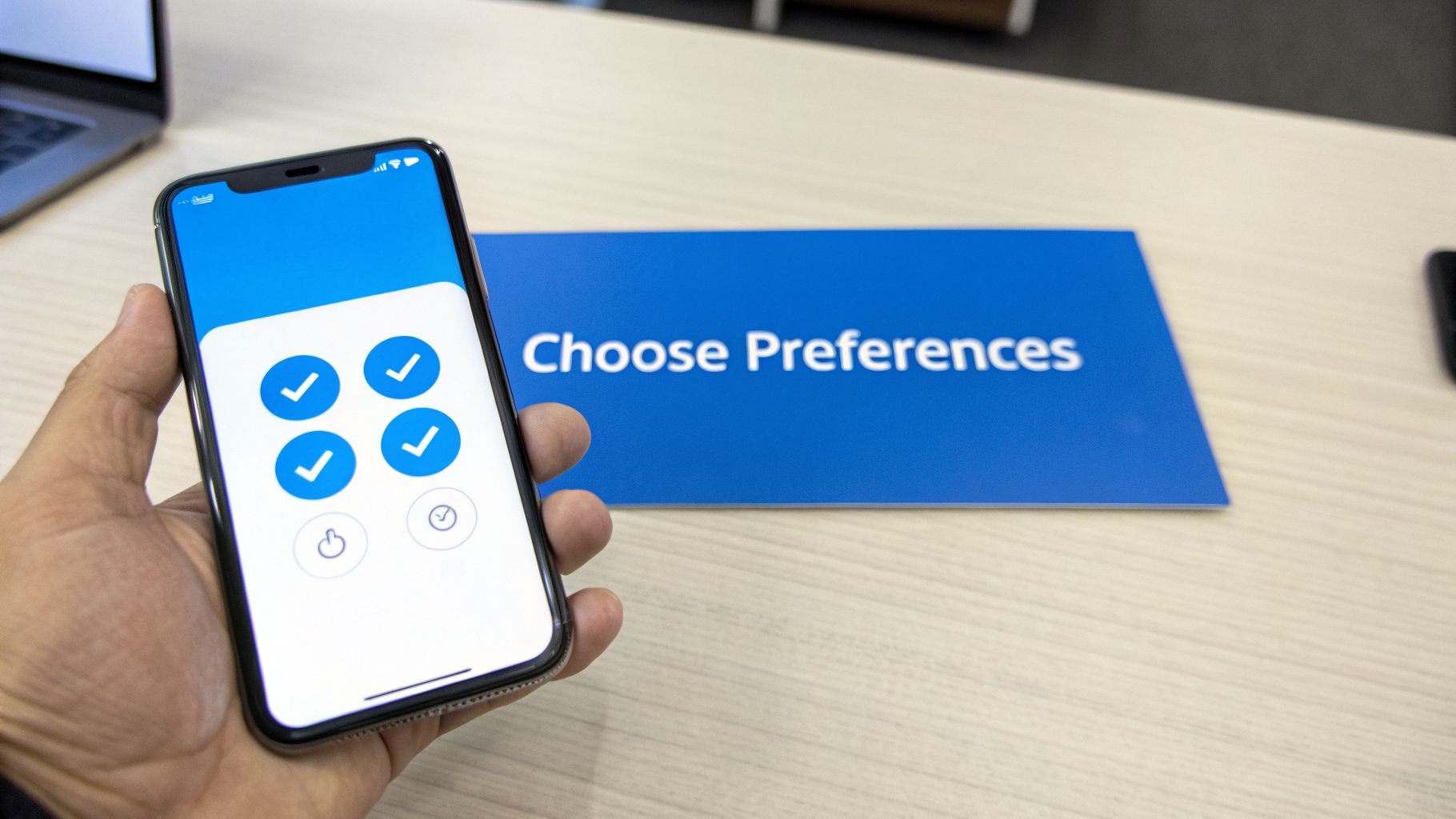
This strategy turns a passive "hello" into an active conversation. It signals to subscribers that their experience will be personalized and relevant, increasing their investment in the relationship. The data collected fuels hyper-targeted future communications, making every subsequent email feel custom-made.
Analysis of the Interactive/Preference-Based Approach
This method is built on the idea that relevance drives engagement. By asking for preferences upfront, you bypass the need for behavioral guesswork and start delivering personalized value immediately. Brands like LinkedIn and Forbes use this effectively in their newsletter sign-ups, allowing readers to choose specific topics or industries they want to follow. This simple action significantly improves open rates and reduces unsubscribe rates because the content is precisely what the user requested.
This welcome mail sample is a powerful tool for building a detailed customer profile from day one. It respects the subscriber’s inbox by ensuring only pertinent information is sent.
Key Insight: The welcome email is a prime moment to gather consent-based data. Subscribers are highly engaged and willing to provide information in exchange for a better, more personalized experience.
How to Implement This Strategy
To create an effective interactive welcome email, focus on making the preference selection process simple, clear, and valuable for the subscriber.
- Limit Choices: Present 3-5 key preference options to avoid overwhelming the user. Focus on the most impactful segments, such as content topics, email frequency, or product interest areas.
- Pre-Populate with Data: Use a tool like Breaker to enrich contact data and pre-select likely preferences based on the subscriber's industry, role, or company. This reduces friction and shows you already understand their context.
- Provide Immediate Payoff: After a subscriber makes a selection, follow up promptly with content that matches their choice. If they select "growth marketing," their next email should feature growth marketing resources, not a generic newsletter.
- Track Preference Performance: Monitor which preferences are selected most often and which ones correlate with the highest long-term engagement and retention. This data helps you refine both your content strategy and your segmentation options.
5. The Social Proof & Case Study Welcome
The Social Proof & Case Study Welcome builds immediate credibility by showcasing customer success stories, testimonials, and quantifiable results. This approach is particularly effective for B2B buyers who need to see proof of ROI before committing their time or resources. By leading with how others have succeeded with your product, you shift the focus from what you say you can do to what you have proven you can do.
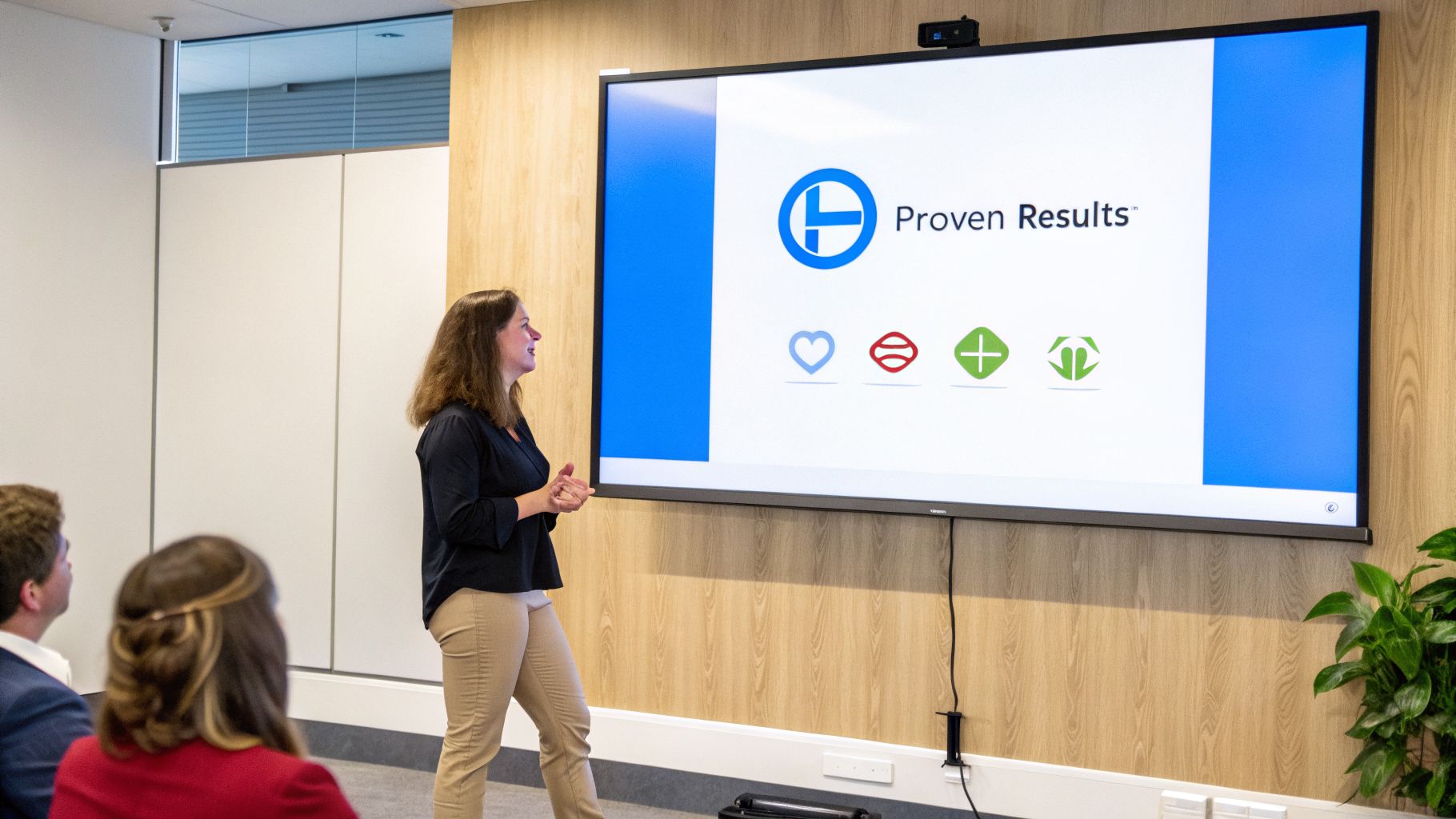
This strategy validates the subscriber's decision to sign up and eases any potential buyer's remorse. Instead of just welcoming them, you're instantly showing them they've joined a community of successful, high-achieving companies. It frames your solution not as a tool, but as a catalyst for tangible business outcomes.
Analysis of the Social Proof Approach
This welcome mail sample works by tapping into the psychological principle of social proof: people are more likely to adopt a behavior if they see others doing it. Enterprise SaaS leaders like Stripe and Salesforce master this by greeting new users with logos of Fortune 500 clients or highlighting unicorn customers. Datadog sends performance-focused welcomes that feature impressive customer success metrics, directly addressing the core concerns of their technical audience.
This method answers the subscriber's unspoken question: "Will this work for me?" By presenting relatable success stories, you build a bridge between their current challenges and their desired results. It's a powerful way to accelerate trust and shorten the sales cycle.
Key Insight: For high-consideration purchases, trust is the most valuable currency. A welcome email that provides immediate, verifiable proof of results is more persuasive than any marketing claim you could make.
How to Implement This Strategy
To make this welcome email effective, you must present relevant proof that resonates with the new subscriber's specific context.
- Segment Case Studies by Industry: Use Breaker’s AI enrichment to identify a subscriber's industry. Send a fintech company a case study from a similar brand, while a healthcare provider receives a success story from their sector.
- Include Quantifiable Results: Vague claims are forgettable. Use specific numbers like, "See how [Customer] achieved a 40% increase in conversion rate." Highlight these metrics visually to make them stand out.
- Showcase Relevant Logos: Displaying logos of well-known companies in the subscriber's peer group adds instant credibility. Breaker can help identify company size to match subscribers with case studies from similar-sized businesses.
- Add "Why They Chose Us" Callouts: Include a short, punchy quote or bullet point explaining the key differentiator that won a customer over. This helps subscribers self-identify with the problem you solve. For a more complete strategy, you can follow a detailed checklist for using social proof in email campaigns.
- Link to Deeper Content: Provide links to full case studies, G2 review pages, or video testimonials for those who want to dig deeper, without overwhelming the email itself.
6. The Agency/Consultant-Focused Welcome
The Agency/Consultant-Focused Welcome is a specialized email designed for service providers, such as agencies and fractional CMOs. It positions your content not just as information, but as a professional tool they can use to deliver better results for their own clients. This approach immediately frames your brand as a partner in their business growth, offering frameworks, templates, and resources they can adapt or use directly.
Instead of a generic greeting, this welcome mail sample provides tangible assets that help the agency or consultant look smarter and work more efficiently. By equipping them with valuable, ready-to-use materials from the first interaction, you build a relationship based on mutual business success and demonstrate your understanding of their specific needs.
Analysis of the Agency-Focused Approach
This strategy is effective because it speaks directly to an agency’s core business model: delivering client value. It acknowledges that consultants and agencies are always looking for an edge, whether through new methodologies or proven templates. Brands like HubSpot and Klaviyo excel at this by onboarding new agency partners with exclusive resources, co-marketing materials, and certification paths that add direct value to their service offerings.
This method treats the subscriber as a channel partner, not just an end-user. The goal is to make your product or content integral to how they operate, creating a deep, lasting business relationship.
Key Insight: Agencies and consultants subscribe to newsletters for professional development and to find resources they can deploy for clients. Your welcome email should immediately prove you are a source of high-quality, actionable tools that can enhance their service delivery and profitability.
How to Implement This Strategy
To make this welcome mail sample work, your focus must be on providing practical, business-oriented value that an agency can immediately recognize.
- Create an Agency Welcome Kit: Bundle together 3-5 of your best templates, client-facing frameworks, or reporting dashboards into a downloadable "Agency Welcome Kit." This provides immediate, tangible value.
- Segment by Agency Type: Use Breaker’s enrichment to identify if a subscriber is from a digital, PR, growth, or creative agency. Tailor the welcome kit to their specialty; for example, send a "Content ROI Calculator" to a content agency.
- Highlight Partnership Opportunities: Mention any white-label, referral, or partnership programs you offer. Breaker’s targeting can identify agency domains and automatically include a specific callout about your partner program in the welcome email.
- Showcase Client ROI: Include a brief case study or link to one that demonstrates how another agency used your tools to achieve significant results for a client. This social proof is incredibly powerful for this audience.
- Offer Exclusive Access: Invite them to an agency-only mastermind group, a private Slack channel, or a webinar dedicated to agency growth strategies. This fosters a sense of community and exclusivity.
7. The Urgent/Limited-Time Welcome Offer
The Urgent/Limited-Time Welcome Offer uses FOMO (Fear of Missing Out) and scarcity to drive immediate action. By presenting a valuable discount or bonus that expires soon after a user signs up, this welcome mail sample encourages quick conversion. This approach shortens the consideration phase and turns a new subscriber into a paying customer right away.
This strategy is effective because it capitalizes on the peak engagement window immediately following a subscription. Brands like Udemy and numerous e-commerce stores use this tactic to offer first-purchase discounts or limited-time course bundles. It frames the initial interaction around a clear, time-sensitive incentive, making the decision to purchase feel both rewarding and necessary.
Analysis of the Urgent/Limited-Time Approach
This method works by creating a sense of psychological pressure. The fear of losing a special deal can be a more powerful motivator than the desire to gain one. SaaS companies often use this to offer a significant discount on an annual plan for the first 24-48 hours, while app companies might unlock premium features for a limited period to showcase their full value and prompt an upgrade.
The key is to make the offer feel exclusive and genuinely valuable. A token 5% discount won't create urgency; a substantial 20% off or access to a normally gated feature will. The offer must be compelling enough to overcome a new subscriber's natural hesitation.
Key Insight: Urgency is a powerful conversion tool, but it must be backed by real value. If the offer feels manipulative or insignificant, it can damage trust from the very first email. The goal is to create an exciting opportunity, not a high-pressure sales tactic.
How to Implement This Strategy
To execute this welcome mail sample effectively, you need to combine a compelling offer with precise timing and clear communication.
- Segment Your Offers: Use Breaker’s segmentation to send your most aggressive offers to colder subscribers who need a stronger push. For warmer leads, you might test a longer timeframe (e.g., 7 days) or a different type of bonus.
- Add a Countdown Timer: Embed a live countdown timer directly into your email. This visual cue dramatically increases the sense of urgency and is supported by most major email clients, providing a constant reminder that time is running out.
- Automate a Reminder: Set up a follow-up email in Breaker to automatically send to subscribers who haven't used the offer within 24 hours. A simple "Your 20% off expires tonight" reminder can capture a significant number of last-minute conversions.
- Test Urgency Language: A/B test different phrasing to see what resonates. Compare the performance of "Offer ends in 24 hours" versus "Your discount expires tonight" or "Available while supplies last." Track conversion rates with Breaker’s analytics to find your winning formula.
8. The Newsletter-as-Product Welcome (Standalone Value)
The Newsletter-as-Product Welcome frames your newsletter as the core offering, not just a marketing channel. This approach immediately asserts its unique value, setting expectations for exclusive insights, expert analysis, or proprietary data that subscribers won't find elsewhere. It’s a strategy for creators and B2B marketers who monetize their audience directly through premium content.
By positioning the newsletter as a standalone product, you treat subscribers like customers from the very first email. This welcome mail sample bypasses generic introductions to clearly articulate the "why" behind your content, emphasizing its quality and exclusivity. It builds a foundation for a direct, trust-based relationship.
Analysis of the Newsletter-as-Product Approach
This method succeeds by treating content as a high-value asset. It communicates that reading your newsletter is an investment of time that will yield a significant return in knowledge or opportunities. Premium newsletters like The Information and Lenny's Newsletter master this by welcoming new subscribers with a clear mission statement, a taste of their best work, and a look behind the curtain.
Similarly, newsletters like Axios and Platformer differentiate themselves by promising concise, original analysis over simple aggregation. Their welcome emails reinforce this promise, establishing a premium brand identity even for their free tiers. This sets the stage for future monetization by pre-qualifying the audience.
Key Insight: When your newsletter is the product, your welcome email is its packaging, product tour, and first user experience all in one. It must immediately convince subscribers they've made a smart choice by highlighting the unique value they now have access to.
How to Implement This Strategy
To make this welcome mail sample effective, you must sell the value of the content itself, not just the act of subscribing.
- Show, Don't Just Tell: Include a direct link to a past issue or a high-value, evergreen article in the welcome email. This gives subscribers an instant taste of the quality they can expect.
- Articulate Your Unique Position: Clearly state what makes your newsletter different. Is it original data, exclusive interviews, expert frameworks, or a specific analytical lens? Be explicit.
- Segment by Subscriber Interest: Use Breaker's AI enrichment to identify a subscriber's industry or role. Customize the welcome email to highlight the content most relevant to them, such as positioning your insights as strategic for a CEO versus tactical for a marketer.
- Build Trust with Transparency: If your newsletter has sponsors, mention it upfront. Frame sponsorships as a way to support independent creation and keep high-quality content accessible. This transparency builds long-term reader trust.
8 Welcome Email Types: Quick Comparison
Template
Implementation complexity 🔄
Resource requirements & setup 💡
Expected outcomes ⭐📊
Ideal use cases 📊
Key advantages ⚡
The Value-First Welcome Email
Low–Moderate 🔄 (single message, personalization)
2–3 hrs; high-quality content + personalization tokens 💡
⭐ Higher opens (≈15–25%); improved list health 📊
B2B decision-makers, quality-focused lists
Builds trust, reduces early unsubscribes ⚡
Personalized Multi-Step Onboarding Series
High 🔄 (automation, conditional logic)
4–6 hrs; 3–5 emails, automation flows, testing 💡
⭐⭐ Conversion lift (≈20–35%); measurable step ROI 📊
PLG SaaS, longer sales cycles, product-led onboarding
Progressive nurturing increases conversions ⚡
Creator / Newsletter Brand Welcome
Low 🔄 (personal tone, simple structure)
1–2 hrs; voice-driven copy, social links, optional segments 💡
⭐ Strong engagement & referrals; higher loyalty 📊
Independent creators, newsletters, community-first brands
Authentic voice drives referrals & retention ⚡
Interactive / Preference-Based Welcome
High 🔄 (AMP/interactive elements + fallbacks)
3–5 hrs; dev for AMP, fallback designs, cross-client testing 💡
⭐ Better targeting via zero-party data; higher engagement 📊
Data-driven publishers, brands seeking personalization
Collects preferences for hyper-relevance ⚡
Social Proof & Case Study Welcome
Moderate 🔄 (asset curation, customization)
2–3 hrs if assets exist; customer permissions & industry variants 💡
⭐ Increases trust with skeptical buyers; supports enterprise deals 📊
Enterprise B2B, procurement teams, high-value prospects
Immediate credibility and risk reduction ⚡
Agency / Consultant-Focused Welcome
Moderate 🔄 (specialized resources & kits)
3–4 hrs + ongoing content; templates, white-label assets 💡
⭐ Boosts agency adoption & CLTV; enables client-ready deliverables 📊
Agencies, fractional CMOs, consultancies
Utility for client work creates stickiness ⚡
Urgent / Limited-Time Welcome Offer
Low 🔄 (single offer, urgency assets)
1–2 hrs; offer setup, countdown, segmentation & terms 💡
⭐ High immediate conversion (≈5–15%); fast revenue attribution 📊
E‑commerce, SaaS promos, time-sensitive acquisition
Drives quick conversions and easy ROI tracking ⚡
Newsletter-as-Product Welcome (Standalone Value)
Moderate 🔄 (positioning + content samples)
2–3 hrs; sample issues, clarity on monetization & USP 💡
⭐ Higher retention of premium subscribers; sponsorship-ready 📊
Paid newsletters, creators monetizing content, B2B insights
Positions newsletter as a premium product for monetization ⚡
Putting Your Welcome Plan into Action
Throughout this article, we’ve dissected eight distinct blueprints for crafting an effective welcome mail sample. From the relationship-building cadence of a Value-First welcome to the immediate activation push of an Urgent Offer, the core lesson is clear: your first email is not a formality. It’s a strategic asset that sets the foundation for the entire customer lifecycle. The most successful welcome emails are not born from a template but are meticulously engineered to align with a specific business goal and the recipient's immediate context.
The examples provided serve as a strategic compass, not a direct map. The true power lies in understanding the why behind each approach. A newsletter creator, for instance, might adopt the "Newsletter-as-Product" model to immediately prove the standalone value of their content. Conversely, a B2B SaaS company will find more success with a "Personalized Multi-Step Onboarding Series" to guide users toward their first "aha!" moment and reduce early-stage churn.
Synthesizing the Core Principles
Your key takeaway should be the importance of intentionality. Every element, from the subject line to the final CTA, must serve a purpose. We saw how personalization goes far beyond just using a first name; it’s about acknowledging the user's entry point, whether they downloaded a lead magnet, started a trial, or subscribed to a newsletter.
Let’s distill the most critical insights:
- Clarity Over Complexity: Your new contact is busy. A single, clear objective for each email in your welcome sequence will always outperform a message that tries to do too much. Are you driving a product login, a preference update, or a reply? Choose one.
- Value Before the Ask: The most compelling welcome emails deliver immediate value. This could be a quick win, an exclusive piece of content, or a critical insight that helps the user solve a problem right away. Earn their attention before you ask for their time or money.
- Context is King: A generic, one-size-fits-all welcome email is a missed opportunity. Segment your welcome flow based on the sign-up source. The conversation you have with a trial user should be fundamentally different from the one you have with a new blog subscriber.
Your Actionable Next Steps
Translating these concepts into a working strategy is the next crucial step. Don’t get stuck in analysis paralysis. Start small, measure, and iterate.
Here is a simple plan to get started:
- Define Your Primary Welcome Goal: What is the single most important action you want a new contact to take within their first seven days? This could be activating a feature, joining a community, or simply reading and enjoying your first newsletter.
- Choose Your Starting Model: Select one welcome mail sample blueprint from this guide that most closely aligns with that primary goal. For most, the "Value-First" or "Creator/Newsletter Brand" welcome is a safe and effective starting point.
- Draft and Personalize Your Copy: Write the email, focusing on your brand voice and injecting personalization tokens that reflect the user's sign-up context. Remember to keep paragraphs short and scannable.
- Implement and Track: Use a platform equipped for automation and analysis to build your sequence. Pay close attention to open rates, click-through rates, and, most importantly, the conversion rate on your primary goal. These metrics will tell you what’s working and what isn’t.
Mastering the welcome email is about more than just making a good first impression. It's about initiating a meaningful dialogue that converts anonymous visitors into engaged users and, eventually, loyal brand advocates. By investing thought and strategy into this first touchpoint, you are building a more resilient, profitable, and growth-oriented business from the ground up.
Ready to turn these strategies into automated, high-performing campaigns? Breaker is the growth marketing platform built to execute the advanced welcome sequences we've discussed. Use our visual workflow builder and deep analytics to create, test, and optimize every welcome mail sample and see exactly what drives results. Start building your perfect welcome sequence with Breaker today.
Keep reading
All articlesNewsletter Agency Services: How Agencies Scale Client Newsletters
Managing multiple client newsletters? Learn what a true newsletter agency platform needs to prevent list mixing, voice drift, and invisible ROI.
Building Owned Audiences: Move Followers to Your Newsletter in 2026
Social platforms can vanish overnight. Learn how to convert Instagram, TikTok, and YouTube followers into a newsletter list you actually own.
Newsletter Analytics: Which Metrics Actually Matter in 2026
Open rate and clicks don't predict buyers. Learn the 7-step method to track click depth, recency, and topic affinity for a revenue-predictive intent score.