
How to Create a Workflow in Breaker for B2B Growth
Learn how to create a workflow in Breaker that turns your newsletter into a lead engine. A practical guide for B2B marketers on automation and growth.
If you want to create a workflow that actually drives growth, you have to move past sending one-off manual emails and embrace automation. A modern B2B newsletter workflow is more than just a series of emails; it’s a living system built to attract, engage, and convert your ideal customers.
Moving Beyond Manual Sends to Automated Growth
Staring at an empty campaign builder in Breaker can be paralyzing. You know your newsletter has the potential to be a growth engine, but turning that idea into a working system is where the real work begins.
The key is to think of your workflow as a strategic blueprint before you lay a single brick. Doing this upfront ensures every step is aligned with a clear goal: generating measurable ROI and building a list of genuinely engaged subscribers, not just racking up vanity numbers.
If you want ready-made sequences to drop into that blueprint, our B2B email drip campaign templates guide includes twelve of them, plus a section on structuring the data behind each workflow.
By using powerful AI workflow automation tools, you can completely shift away from manual sends and start seeing real, automated growth. It all starts with four core pillars.
The Four Pillars of a High-Performing Workflow
To build a workflow that delivers results time and time again, you need to focus on four interconnected parts. Each one builds on the last, creating a tight, effective system for nurturing leads and driving them toward conversion.
- Targeting: It all starts with a crystal-clear picture of your Ideal Customer Profile (ICP). This is about getting laser-focused on who gets your newsletter to ensure every email is as relevant as possible.
- Content: Once you know your audience, you need content that grabs their attention. This pillar is all about structuring emails for impact, placing CTAs that get clicked, and writing messages that truly resonate.
- Automation: This is the engine that powers your entire workflow. Here, you’ll set up triggers and sequences in Breaker to deliver the right content to the right person at exactly the right time—all without you lifting a finger.
- Analytics: Finally, you have to track what’s working and what isn’t. This means focusing on metrics that actually matter, like click-through rates and subscriber growth, so you can continuously optimize for better performance.
This diagram shows how these four pillars create a continuous cycle of growth.
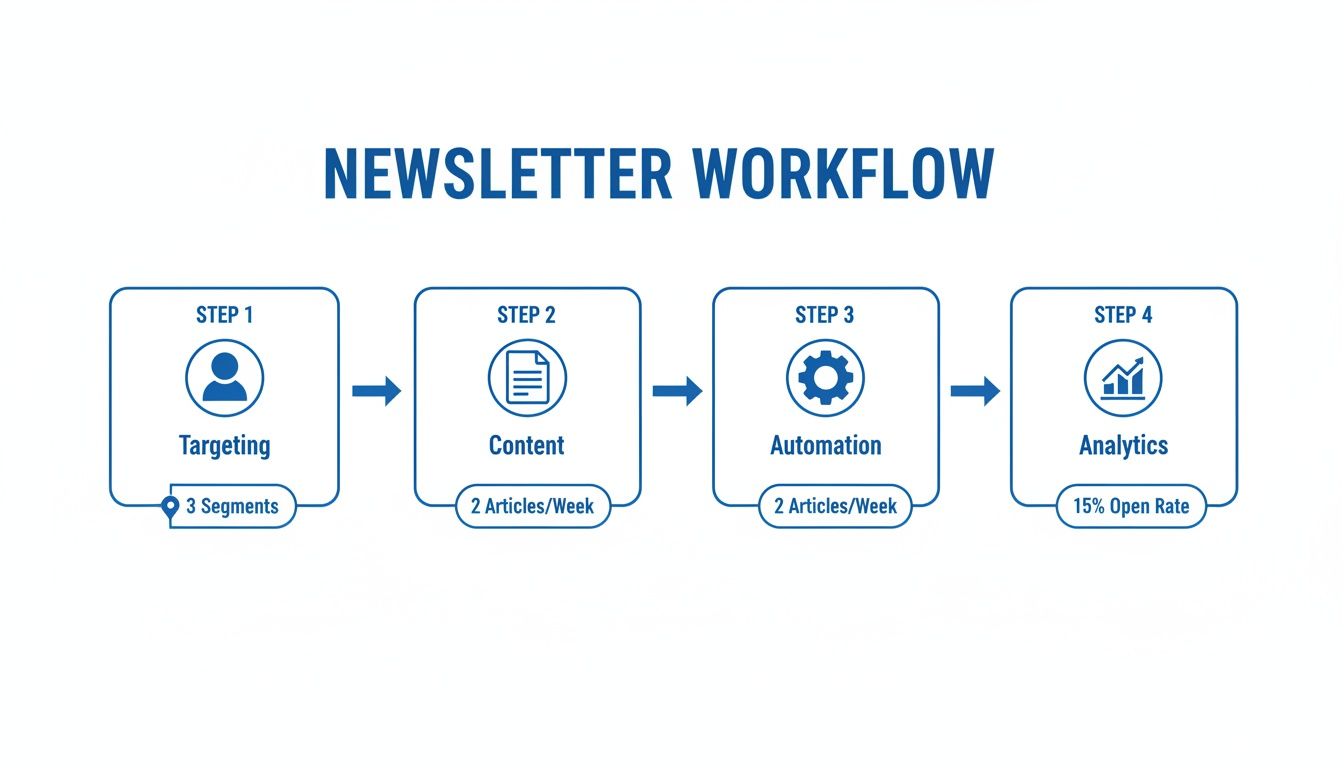
As you can see, precise targeting feeds into your content creation, which is then delivered through automation and sharpened with analytics. Throughout this guide, we’ll dive deep into each of these components, giving you the practical steps to build a workflow in Breaker that truly performs.
If you’re just getting started with this concept, you might want to check out our detailed article on the benefits of marketing automation.
Defining Your Audience and Workflow Entry Points

Let's be blunt: a workflow that tries to speak to everyone ends up resonating with no one. Before you can even think about building an automation that drives real results, you have to know exactly who you're talking to. The entire foundation of a successful workflow rests on a crystal-clear understanding of your Ideal Customer Profile (ICP).
This is about more than just basic demographics. In Breaker, you can get incredibly specific with your targeting using custom parameters and AI enrichment. Think about layering firmographics like company size and industry with technographics, such as the software stacks your prospects are already using. This level of detail ensures your message isn't just sent, but actually received.
If you need a refresher on building this foundational audience, our guide on what an Ideal Customer Profile is is a great place to start.
From Audience to Action with Workflow Triggers
Once your ICP is dialed in, the next step is connecting this audience to an entry point. This is the "trigger" that kicks off their journey—the digital equivalent of a handshake that starts a conversation at the perfect moment.
In Breaker, you can set up a variety of triggers that are especially powerful for B2B. These are the sparks that ignite your automated engine.
- Form Submissions: This is a classic for a reason. A prospect downloads a lead magnet, signs up for your webinar, or requests a demo. This action screams high intent and is the perfect time to launch a nurturing sequence.
- New Subscriber: Whether they signed up on your blog or you imported them from an event, this trigger is your cue to roll out the welcome mat and set the tone for the entire relationship.
- Behavioral Cues: This is where it gets really interesting. A user might visit your pricing page multiple times or spend a while reading a specific feature article. These behaviors can trigger a workflow perfectly tailored to what they're already thinking about.
"A well-timed trigger is the difference between a welcome message and an interruption. Your goal is to start a conversation that feels like a natural next step for the subscriber, not a sudden marketing blast."
For the general anatomy of a workflow, including how conditional splits and actions build on triggers, see our guide to marketing automation workflow design.
Choosing the Right B2B Entry Points
The triggers you choose have a massive impact on the context and content of your workflow. For example, the automation you build for a "Demo Request" is going to look completely different from one for a "Newsletter Signup." One is a sales-focused sequence designed to close a deal, while the other is all about nurturing and education.
Lifecycle email automation, powered by these kinds of triggers, has become the backbone for modern B2B platforms like Breaker. The data doesn't lie: it delivers an ROI of $36-$45 per dollar spent. This is fueled by action-based triggers that can boost CTRs by 13% and revenue by 41% through behavioral personalization. When you combine this with the fact that a good welcome series can see over 83% open rates, it's clear just how vital these entry points are. You can explore more on these trends and tactics over at VerticalResponse.com.
A great exercise is to map out the key conversion points in your customer journey. Then, align a Breaker workflow trigger with each one. This ensures you have a personalized, automated path ready to go for every potential interaction.
Building Your High-Impact Newsletter Content
Once you’ve nailed down your audience and set up your triggers, it’s time to focus on what they’ll actually read—the emails themselves. The right content is what turns a simple workflow into a compelling story that nudges subscribers toward action. Breaker’s builder was designed to make this whole process feel intuitive.
The goal here isn't just to write one-off emails. It's to create a workflow that delivers real value at every single touchpoint. That means structuring emails so they’re easy to scan, placing links where people will actually see them, and writing calls-to-action (CTAs) that are too good to pass up. Every piece, from a punchy headline down to the PS line, has a job to do.
Thankfully, the days of spending weeks on a single campaign are behind us. Back in 2023, a staggering 51% of marketing teams needed two weeks or more just to produce one email. Today? That number has dropped to just 6%. The big driver behind this change is generative AI, which helps with everything from writing copy to designing layouts and personalizing sends. This newfound efficiency has a direct line to ROI, with AI-powered campaigns seeing 13% higher click-through rates and revenue boosts of up to 41%. You can dig into more of these trends over at Litmus.
Structuring Content for Scannability and Action
Let's be honest: your subscribers are busy. They scan; they don't read word-for-word. An effective email structure respects their time and pulls their attention to what truly matters. I like to think of an email like a landing page—it should be clear, concise, and focused on one main goal.
Breaker's drag-and-drop builder is perfect for this, letting you see the structure come to life as you build. You can rearrange content blocks with ease, creating a natural flow that guides the reader’s eye down the page.
Here’s a look at Breaker’s clean interface, which is designed to let you build and manage your campaigns without any friction.
As you can see, you can move quickly from defining an audience to crafting content and tracking analytics, all inside one platform.
A few tips I always follow for structuring content:
- Lead with the Hook: Your most important message or primary CTA should be "above the fold." This is the first thing a subscriber sees without having to scroll. Make it count.
- Use Visual Hierarchy: Break up your text with headings, bold text, and short paragraphs. This makes the email far easier to scan on a phone or desktop.
- One Primary CTA: You can have secondary links, but every email should rally around one main action you want the subscriber to take. Make sure this CTA is a visually distinct button.
Personalizing Content at Scale
Personalization is about so much more than just dropping in a subscriber's first name. True personalization means tailoring the actual content to a subscriber's interests, behavior, or their specific ICP segment. This is where all that audience work you did earlier really pays off.
In a workflow, your content should never be static. Use dynamic content blocks in Breaker to swap out images, offers, or case studies based on a subscriber’s industry, job title, or past engagement. A startup founder doesn’t need to see an enterprise case study, and an enterprise lead doesn't care about a startup offer.
For instance, if you create a workflow that’s triggered by a "Demo Request," the content should get straight to the point. It might feature some social proof, a link to book a meeting, and direct contact info. On the other hand, a workflow for a new blog subscriber should be all about education, serving up your best content to build trust and authority over time. This targeted approach is what makes every message feel relevant and moves the subscriber along their journey with you.
Integrating Your Workflow with Your Tech Stack
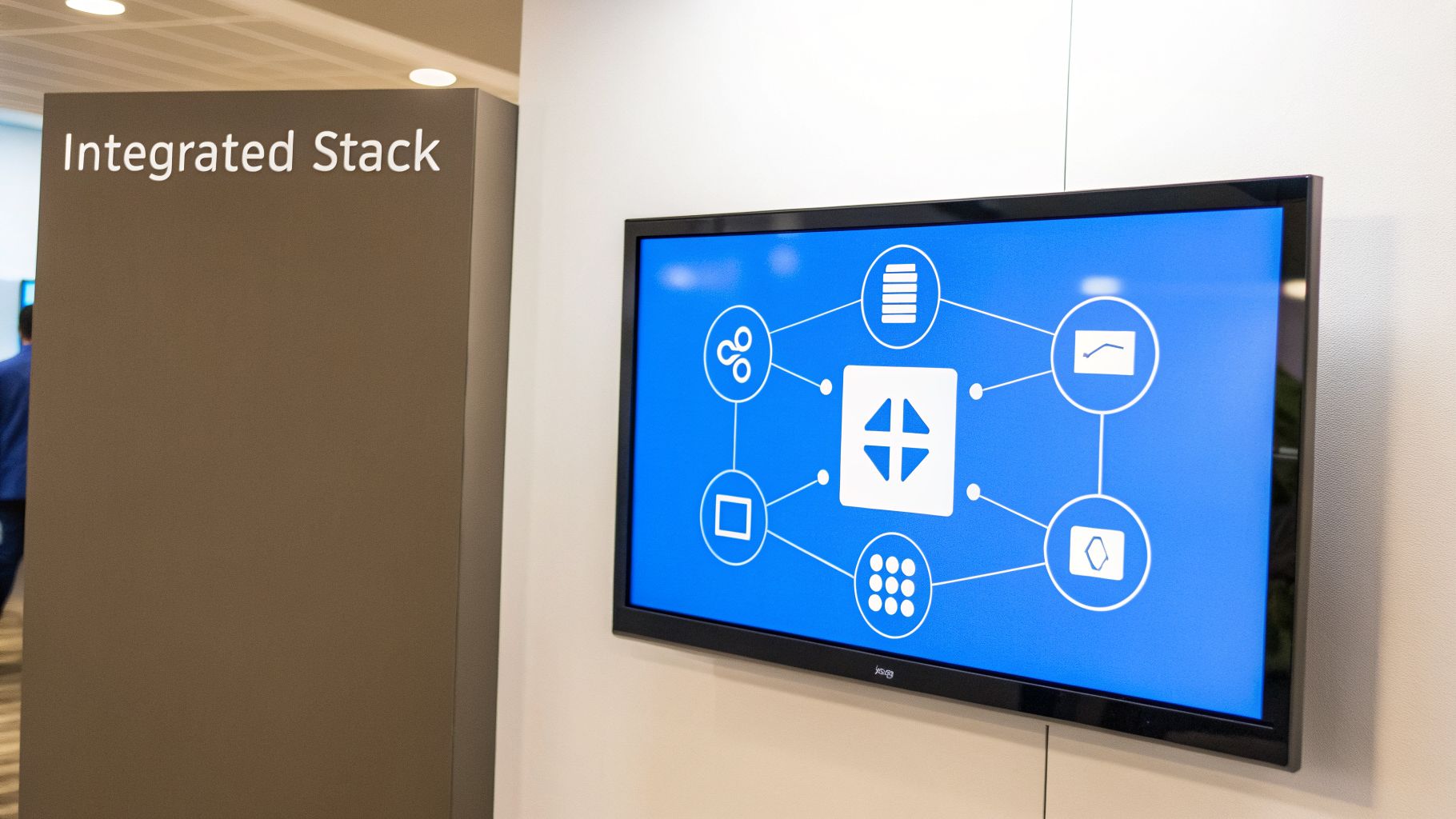
Your newsletter doesn't operate in a vacuum. A truly powerful automation is one that connects seamlessly with the other tools in your marketing and sales ecosystem. When you create a workflow, you should think of it as the central hub in a network, not an isolated island.
This means making sure data can flow freely between Breaker and your other essential platforms. Disconnected tools are a recipe for manual data entry, missed opportunities, and a disjointed customer experience—all the things a good workflow is designed to eliminate. The real goal is to build a unified system where every tool works together.
Connecting Your CRM for a Seamless Handoff
For any B2B workflow, the most critical integration is with your Customer Relationship Management (CRM) platform. Whether you use HubSpot, Salesforce, or another system, this connection is what bridges the gap between marketing engagement and sales action.
When a subscriber in your Breaker workflow shows high buying intent—like clicking a pricing page link or finishing a key educational sequence—you need that information in front of your sales team immediately. A native integration syncs this activity automatically, enriching the lead record in your CRM with valuable context.
This simple connection turns your newsletter from a content channel into a powerful sales enablement tool. A salesperson can see exactly what content a lead has engaged with, allowing them to tailor their outreach and have a much more relevant conversation.
To connect various applications and automate tasks efficiently within your workflow, understanding what is no-code automation can be a huge help. This approach lets you build these bridges without needing a developer. If you want to dive deeper into this specific area, you can also explore our article on how to integrate your CRM with email marketing tools.
Integrating Forms and Sponsorship Tools
Beyond your CRM, two other integration points are essential for scaling and monetizing your newsletter workflow. These connections help you manage both the top and bottom of your funnel with a lot more efficiency.
- Acquisition Forms: Connecting your website forms (like those for lead magnets or webinars) directly to Breaker is non-negotiable. This ensures every new subscriber from your organic and paid campaigns is instantly entered into the correct nurturing sequence, capitalizing on their initial interest.
- Sponsorship Tools: For newsletter creators looking to monetize, integrating with platforms like Paved or LiveIntent is a game-changer. This allows you to programmatically insert sponsored content into your automated workflows, creating a new revenue stream without adding manual work for each send.
By building these bridges, your workflow becomes more than just an email sequence. It becomes the operational core of your growth strategy, automating data flow and unlocking new opportunities across your entire tech stack.
Tracking and Optimizing Your Workflow Performance
Getting your workflow live is a huge step, but let’s be honest—it's just the starting line. The real magic happens when you start digging into the data, figuring out what’s connecting with your audience and what’s falling flat. This is where you turn a good automation into a revenue-generating machine.
When you create a workflow in Breaker, the real-time analytics dashboard becomes your command center. It’s built to push you past vanity metrics and get you focused on the numbers that actually signal true engagement. You need a game plan for measuring success from day one.
Focusing on Metrics That Matter
To get a real feel for performance, you have to look beyond the surface. Sure, open rates give you a quick read on your subject lines, but they don't tell you anything about what happens after the open. That’s where the meaningful insights are hiding.
Here’s what I’m always watching inside Breaker:
- Click-Through Rate (CTR): This is the percentage of total recipients who clicked a link. It’s a gut check on how well your overall message and call-to-action are landing.
- Click-to-Open Rate (CTOR): This metric zeroes in on the people who opened the email and then clicked. It’s the single best way to know if your content and layout are actually driving action.
- Subscriber Growth and Churn: Is your workflow attracting new, engaged subscribers, or are people heading for the door? Healthy growth is a clear sign your content strategy is on the right track.
There's a reason B2B marketers have leaned so heavily into email automation. Personalized workflows deliver results, with targeted emails achieving 20.9% open rates versus just 9.7% for generic blasts. While the average CTR hovers around 2.5%, a strong CTOR can range from 10-25%. These aren't just numbers on a page; they're the benchmarks that show you're turning inboxes into pipeline. You can discover more insights about email's ROI on WSIWorld.com.
To really dial in on what matters for B2B, let's break down the most critical metrics you should be tracking.
Key Newsletter Workflow Metrics to Track
Metric
What It Measures
B2B Industry Benchmark (Content-Focused)
Click-to-Open Rate (CTOR)
The percentage of openers who clicked a link. Measures content and CTA effectiveness.
10% – 25%
Conversion Rate
The percentage of recipients who completed a goal (e.g., demo request, download).
1% – 5%
Subscriber Churn Rate
The rate at which subscribers opt out.
< 0.5% per email
List Growth Rate
The net growth of your subscriber list over time.
5% – 10% monthly (for active campaigns)
Spam Complaint Rate
The percentage of recipients who mark your email as spam.
< 0.08%
Tracking these numbers gives you a far more accurate picture of your workflow's health and its direct contribution to your business goals.
The Crucial Role of Deliverability
All the analysis in the world is useless if your emails are landing in spam. Your deliverability—the ability to consistently hit the inbox—is the absolute foundation of your workflow's success. If it's weak, your entire strategy will crumble.
Breaker has built-in tools like TruSend deliverability management and automated list hygiene that work behind the scenes to protect your sender reputation. It’s a proactive system that monitors your sending health and weeds out unengaged or invalid contacts, giving your messages the best shot at being seen.
A clean list is a high-performing list. Regularly removing inactive subscribers might feel like you're losing audience members, but you're actually improving your engagement rates and signaling to inbox providers like Gmail and Outlook that your content is valuable.
A Framework for A/B Testing
Once you have a solid baseline for your metrics, it's time to start improving them with A/B testing. This is simply creating two versions of an email (Variant A and Variant B) to see which one performs better.
The key is to not test everything at once. Focus on one element at a time to get clean, actionable results.
- Start with Subject Lines: This is the lowest-hanging fruit and often has the biggest impact. A killer subject line can give your open rate a serious boost.
- Move to CTAs: Try testing different button copy, colors, or placement. Does "Get the Guide" outperform "Download Now"? You won't know until you test it.
- Experiment with Content: Play with email length, tone, or image styles. You might discover your audience responds better to short, punchy emails than long, detailed ones.
By consistently tracking the right metrics and using A/B testing to refine your approach, you can transform your workflow from a simple automation into a predictable and scalable engine for growth.
Common Questions About Building Breaker Workflows
Even the best-laid plans hit a few snags. When you start building your first automated sequences in Breaker, questions are bound to pop up. It’s completely normal.
Let’s walk through some of the most common hurdles B2B marketers face and get you unstuck with some quick, practical advice.
A frequent question I hear is whether it's possible to manage leads from multiple sources—say, an ebook download and a webinar registration—without creating dozens of separate workflows. The answer is a resounding yes, and it’s simpler than you think.
You just set up multiple triggers to feed subscribers into a single, unified workflow. From there, you can use Breaker’s conditional splits to guide them down slightly different paths based on where they came from, ensuring the content always feels relevant to their initial touchpoint.
How Many Emails Should Be in a Welcome Series?
One of the first questions people ask is about the perfect length for a B2B welcome series. Is one email enough? Is ten overkill?
For most B2B audiences, a series of 3-5 emails spread over the first one to two weeks is the sweet spot. This cadence gives you just enough touchpoints to build trust and deliver value without flooding a new contact's inbox.
The goal of a welcome series is to deliver on your promise immediately and set clear expectations. Your first email should give them what they signed up for (like that lead magnet), while the next few can introduce your brand's expertise, share some cornerstone content, and frame what they can expect from you moving forward.
This structured approach turns a simple "hello" into a powerful onboarding experience, laying the groundwork for real, long-term engagement.
What’s the Best Way to Re-Engage Inactive Subscribers?
So, what do you do about the subscribers who go silent? Dealing with inactive contacts is critical for keeping your deliverability high and your list healthy. The best approach is to automate the cleanup process.
First, create a dynamic segment in Breaker that automatically groups anyone who hasn't opened or clicked an email in the last 90 days. You’ll use this segment as the trigger for a dedicated re-engagement workflow.
Here’s a simple, effective sequence that gets results:
- The Pattern-Interrupt: Send an email with an unconventional subject line that stands out, like "Is this goodbye?" or "A final question for you."
- The Value Offer: In the email body, don’t just beg them to stay. Offer a high-value piece of content or simply ask for feedback on why they’ve tuned out.
- The Final Send: If they still don’t engage after a couple of tries, send one last email letting them know you're removing them from your list to respect their inbox.
Sure, this proactive cleanup might shrink your list size a bit, but it pays off by drastically improving your engagement metrics and sender reputation. Quality over quantity, always.
Ready to put these ideas into practice? Breaker gives you all the tools you need to design, build, and optimize B2B newsletter workflows that actually drive growth. Start your free 7-day trial and build your first automated sequence today at https://joinbreaker.ai.
Keep reading
All articlesHow to Grow Newsletter Subscribers with Qualified Leads in 2026
Discover 8 channels to grow engaged newsletter subscribers in 2026, with real cost-per-engaged-subscriber data to focus your list-building strategy.
B2B Lead Generation via Newsletter: What Actually Works
Cold outbound is losing steam. See 7 proven newsletter tactics for B2B lead generation, from gated content to sponsorship swaps, that beat cold outreach.
How to Write a Newsletter with AI: Step-by-Step Guide 2026
Learn how to write a newsletter with AI the right way: a 7-step process to train, calibrate, and edit AI drafts that still sound like you.