
How to Map Email Touchpoints in B2B Funnels
Learn how to effectively map email touchpoints in B2B sales funnels to enhance engagement and boost conversions throughout the buyer's journey.
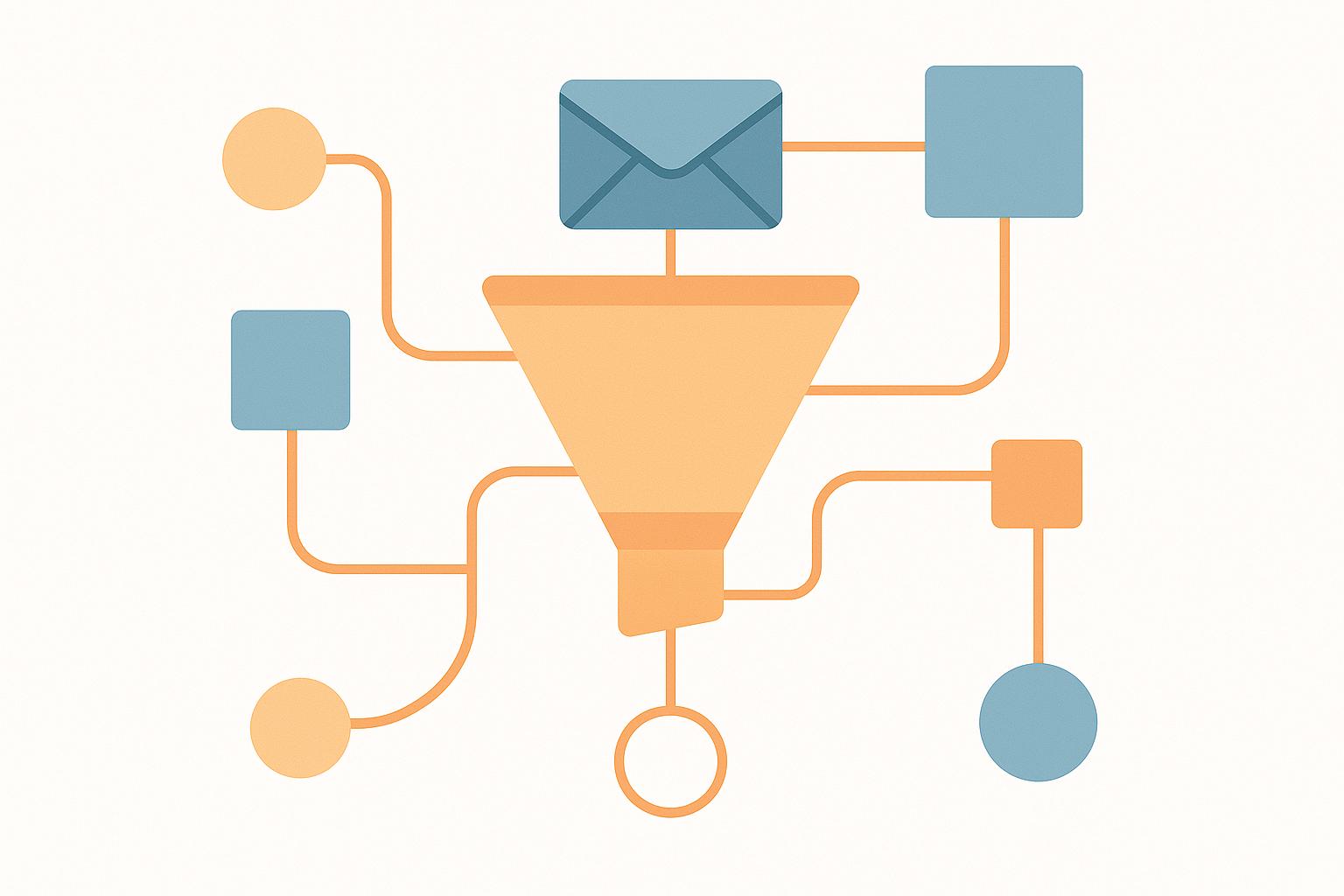
Mapping email touchpoints in B2B funnels ensures your communication aligns with the buyer's journey, improving engagement and conversion rates. Here's the process in a nutshell:
- Understand Funnel Stages: Buyers move through awareness, consideration, decision, and retention stages, each requiring tailored email strategies.
- Identify All Emails: List every email sent (marketing, sales, support) and note its purpose, audience, and trigger.
- Assign Emails to Stages: Match emails to the relevant funnel stage, focusing on their role in guiding the buyer forward.
- Create a Visual Map: Use a flowchart or spreadsheet to organize emails by stage, timing, and goals.
- Leverage Automation: Automate workflows to send timely, personalized emails based on buyer behavior.
- Analyze Performance: Track metrics like open rates, click-through rates, and conversions to refine your strategy.
How to Build an Email Funnel That SELLS (Even If You’re Just Starting Out)
B2B Sales Funnel Stages Explained
Navigating the B2B sales funnel means understanding that prospects move through distinct stages, each with its own set of needs. Unlike a straight path, the journey is rarely linear - prospects can jump between stages or revisit earlier ones, especially when new stakeholders get involved in the decision-making process. This makes it crucial to grasp the characteristics of each stage and tailor email communication to match.
Awareness Stage
In the awareness stage, prospects are just beginning to realize they have a problem or need. At this point, they’re not ready to buy - their focus is on learning and understanding their challenges. Your goal here isn’t to sell but to educate.
Welcome emails and educational newsletters are ideal tools for this stage. These emails introduce your company in a low-pressure way, offering value through industry insights, how-to guides, or thought leadership content. For instance, a cybersecurity company might send out weekly newsletters covering emerging threats and simple protection strategies. By doing this, they position themselves as experts while prospects are still exploring their vulnerabilities.
The key here is building trust and staying relevant. Prospects are forming opinions about which companies are knowledgeable and helpful, laying the groundwork for future engagement.
Consideration and Decision Stages
As prospects move into the consideration and decision stages, their focus shifts from understanding their problem to evaluating solutions. This is where buyer intent ramps up, and they actively compare vendors, request demos, and look for proof that your solution works.
Email strategies at this stage need to address specific concerns and provide compelling reasons to choose your product or service. Content like case studies, product demos, comparison guides, and tailored proposals works best. These emails should highlight measurable results and tackle common objections.
Take, for example, a B2B SaaS company that, in March 2023, refined its email approach for these stages. By sending personalized follow-ups at critical decision points - featuring case studies and demo invites - they saw a 30% boost in demo bookings and a 20% jump in conversion rates within just 60 days.
In these stages, you’re often dealing with multiple stakeholders. Technical decision-makers might need detailed specs, while executives are more interested in ROI and strategic benefits. Emails should address these varied perspectives and make the next steps crystal clear, removing any barriers to purchase.
Retention and Post-Sale Stage
The retention stage is all about nurturing relationships with existing customers to drive renewals, repeat business, and referrals. At this point, the focus shifts to helping customers maximize the value of their purchase and ensuring they achieve long-term success with your solution.
Retention emails should revolve around support, education, and relationship building. Examples include onboarding sequences, renewal reminders, and satisfaction surveys. Regular check-ins can also uncover upsell opportunities or address potential concerns before they escalate.
For instance, in January 2024, a tech company offering enterprise software implemented a structured retention email strategy. They combined a thorough onboarding sequence with quarterly check-ins and renewal campaigns. The result? A 25% increase in demo bookings for additional features within three months.
To keep customers engaged, share success stories, training resources, and updates on new features. When customers consistently see value from your solution, they’re more likely to renew contracts and recommend your company to others.
How to Map Email Touchpoints: Step-by-Step Process
Organizing your email interactions is essential for crafting a strategy that aligns with your business goals. Here's a clear, step-by-step approach to mapping email touchpoints effectively.
Find All Email Interactions
Start by creating a complete list of every email your organization sends. This includes not only marketing emails but also communications from sales, customer success, and support teams. Every email, no matter how small, can influence the customer journey.
Document basic details for each email, such as its name, what triggers it, the target audience, how frequently it’s sent, and its purpose. Don’t overlook less obvious emails like abandoned engagement emails designed to re-engage inactive prospects, discovery call invitations that encourage sales conversations, or trigger-based emails that respond to specific actions like content downloads or website visits.
Include key touchpoints like onboarding emails, newsletters, follow-ups, and automated messages. Even a simple "thanks for downloading" email or a quarterly check-in from customer success can play a crucial role in shaping how prospects and customers view your company.
Once your list is complete, assign each email to the appropriate funnel stage to better structure your strategy.
Assign Emails to Funnel Stages
To make your emails more effective, match each one to the correct funnel stage and clarify its intended purpose. Consider what action you want recipients to take next.
- Awareness-stage emails introduce your brand without overwhelming potential customers. Examples include welcome emails, educational newsletters, and industry insights that build trust and establish credibility.
- Consideration-stage emails position your offerings as potential solutions to their challenges. These might include product comparisons, case studies, or educational content that addresses specific pain points. Avoid pressuring prospects with premature sales pitches.
- Decision-stage emails focus on closing the deal. They provide targeted information like pricing details, video testimonials, or product reviews to address objections and guide prospects toward a purchase.
- Retention emails keep the relationship strong after the sale. Examples include onboarding sequences, feature updates, renewal reminders, and satisfaction surveys. These emails help maintain engagement and open opportunities for upselling or renewals.
Create a Visual Map
A visual representation of your email touchpoints not only organizes your strategy but also makes it easier for your team to identify gaps or redundancies. You can use a spreadsheet for detailed tracking or a flowchart for a more intuitive overview.
Your map should include key details like:
- Funnel stage (awareness, consideration, decision, retention)
- Email name/type
- Primary goal
- Target audience
- Trigger or timing for sending
- Responsible team member
- Key performance metrics
Additional details, like email templates, content focus, and calls to action, can also enhance the map. Use color-coding to visually distinguish between funnel stages - for instance, blue for awareness, green for consideration, orange for decision, and purple for retention emails.
Make sure the map is accessible to both marketing and sales teams. When everyone understands how emails fit into the larger customer journey, it’s easier to coordinate efforts and avoid mixed messages.
Update Your Map Regularly
Your email touchpoint map isn’t a static document. It should evolve with changing buyer behavior and business goals. Review and update it quarterly or whenever there are major shifts in performance metrics, product offerings, or customer needs.
During each review, analyze metrics like open rates, click-through rates, and conversions to assess whether each email is meeting its goals. Remove or update underperforming emails, and add new ones where gaps exist. Keep a record of all changes, including dates and reasons, to provide an audit trail for your team.
Using Automation and Analytics for Better Results
Once your email touchpoints are mapped, the next step is to bring automation and analytics into the mix. These tools streamline execution and make your campaigns more effective. In today’s fast-paced B2B sales environment - where closing a deal often requires at least five touchpoints, yet 44% of salespeople stop after just one follow-up email - manual email management simply can’t keep up.
Automation platforms ensure messages are sent at the right time and to the right audience. Instead of relying on manual processes, which can lead to missed opportunities, automated systems provide consistent follow-ups and personalized communication at every stage of your sales funnel. This efficiency sets the stage for more targeted automation strategies, which we’ll dive into next.
Automated Lead Targeting
The key to successful email automation lies in precise audience targeting. Breaker’s automated lead generation system uses a powerful matching algorithm that combines custom targeting, AI-enriched data, and proprietary sources to identify the best recipients for your emails. This ensures each email reaches the right person at the most opportune moment.
Behavioral triggers play a big role in making automation smarter. For example, after someone downloads a resource, you can initiate a tailored educational email sequence. Similarly, if a prospect visits your pricing page or attends a webinar, they can receive follow-up content tailored to their specific interests. This level of precision ensures every touchpoint feels relevant and timely.
Lead scoring integration takes this a step further. By scoring prospects based on their engagement, you can determine who’s ready to move forward in the funnel. High-scoring leads might skip some awareness emails and receive more detailed, consideration-stage content, while lower-scoring leads get additional nurturing. Automation also optimizes delivery times, sending emails when recipients are most likely to engage, which improves open and click-through rates.
Real-Time Performance Tracking
Automation doesn’t stop at targeting - it also benefits from real-time tracking. Breaker’s analytics dashboard provides instant insights into how each email touchpoint is performing. You can monitor metrics like open rates, click-through rates, and subscriber growth in real time, allowing you to address issues or seize opportunities as they arise.
For instance, if an awareness-stage email has low open rates, you can quickly test new subject lines or adjust the send time. Real-time data also helps pinpoint where prospects drop off in your email sequences. If you notice a pattern of unsubscribes after a specific email, it’s a clear signal to make adjustments.
Funnel-specific metrics are invaluable for identifying what’s working. For example, you might discover that leads who attend webinars are 30% more likely to convert. Insights like these allow you to double down on strategies that drive results while refining approaches that fall short.
Improving Touchpoints with Data
Data is the backbone of continuous improvement. With 70% of marketers stating their funnel emails aren’t delivering the conversions they need, optimizing based on performance data becomes essential. By analyzing which messages and timings resonate best at each stage, you can systematically refine your email strategy.
A/B testing is a powerful tool here. Experimenting with subject lines, call-to-action buttons, or sending times can reveal what grabs your audience’s attention. Segmentation insights are equally important for delivering personalized messages at scale. By creating segments based on user behavior or industry, you can send content that directly addresses the needs of specific groups.
Additionally, tracking engagement patterns helps identify the best times and formats for your emails. Regularly reviewing performance data and running A/B tests ensures your touchpoints stay aligned with shifting buyer behaviors, keeping your campaigns effective and relevant.
Key Metrics for Email Touchpoint Success
To ensure your email campaigns hit the mark, it’s crucial to track metrics that align with the specific goals of each funnel stage. Early-stage emails should grab attention, while later-stage emails need to inspire action. Without this alignment, you might celebrate high open rates while overlooking conversion issues, or worry about low engagement when retention-focused emails are doing their job. By focusing on these metrics, you can fine-tune your workflows and refine your touchpoint strategies.
Awareness and Consideration Stage Metrics
At the top of the funnel, the focus is on sparking interest and engaging your audience. Here are the key metrics to monitor:
- Open rates: These serve as the first indicator of success. For B2B campaigns, aim for open rates between 15–25%, though results can vary depending on your industry and audience quality. Strong subject lines and a solid sender reputation play a huge role in achieving better open rates.
- Click-through rates (CTR): CTR measures how well your content encourages action. B2B campaigns typically see CTRs of 2–5%, but the best-performing campaigns often exceed these benchmarks. For example, Breaker reports an average CTR of 4% across active campaigns, showing how targeted content can boost engagement.
- Email sharing rates: When recipients forward or share your email, it’s a sign of valuable content. This metric highlights how well your message resonates and extends your reach beyond your current audience.
These metrics paint a clear picture of early-stage performance. For instance, if you notice high open rates but low CTR, your subject lines might be doing their job, but your content may need a refresh. On the flip side, low open rates paired with high CTR among engaged readers could point to issues with deliverability or audience targeting.
Decision and Retention Stage Metrics
As your audience moves deeper into the funnel, the focus shifts to driving conversions and maintaining loyalty. Here’s what to watch:
- Conversion rates: This metric tracks actions like demo requests, downloads, or purchases. Top-performing B2B campaigns often achieve conversion rates of 5–10% or more, though results vary based on industry and offer type.
"Breaker is our #1 source of booked calls."
– Brennan Haelig, CEO, Jumpstart ROI
- Response rates: Direct replies to emails signal strong engagement and buying intent. A response rate of 5% for personalized follow-ups is considered excellent, as it shows your messaging resonates with decision-makers and helps shorten sales cycles.
- Customer satisfaction scores: Retention-focused metrics like Net Promoter Score (NPS) and Customer Satisfaction (CSAT) reveal how well you’re meeting customer needs. Surveys sent via email can gauge loyalty and service quality. For B2B businesses, NPS scores above 50 and CSAT scores over 80% are strong indicators of healthy customer relationships.
Real-world examples underscore the power of these metrics. RL Property Management, led by CEO Peter Lohmann, used Breaker to triple sponsor revenue and double community memberships, achieving more than a 10X ROI.
Regular Performance Reviews
To stay on top of your email campaigns, review performance metrics monthly. A dip in open rates might signal deliverability problems, while rising conversion rates could indicate that your optimizations are paying off.
- Segmentation analysis: Breaking down performance by audience group can uncover valuable insights. For instance, enterprise prospects might respond better to detailed case studies, while small business leads may prefer quick tips or tutorials. These insights can help you refine your targeting and content strategies.
- Benchmark tracking: Comparing your metrics to industry standards and your own historical data helps you set realistic goals and identify areas for improvement. For example, if your CTR consistently falls below the 2–5% range, it might be time to rethink your content or targeting approach.
Don’t just rely on the numbers - pair them with qualitative feedback like customer replies, survey responses, and support tickets. If recipients say your emails feel overly promotional despite strong open rates, consider shifting to a more educational and value-driven tone.
Set small, manageable goals - like increasing open rates by 5% or boosting CTR by 2% - to keep your team focused and motivated without feeling overwhelmed.
Conclusion: Better B2B Email Results Through Touchpoint Mapping
Email touchpoint mapping takes scattered campaigns and turns them into a streamlined system that guides prospects seamlessly through your sales funnel. By mapping every interaction - from the first awareness email to post-purchase follow-ups - you can plug holes where leads might slip away and cut out redundant messages that could overwhelm your audience.
For example, a B2B SaaS company discovered that many prospects dropped off after product demos. By adding targeted follow-up emails with case studies and ROI calculators, they increased demo-to-trial conversions by 18%. This improvement was possible because they had a clear visual map highlighting where prospects were getting stuck.
Automation tools and analytics platforms simplify this process, making it easier for busy teams to stay on top of things. Platforms like Breaker help track performance in real time and automate lead generation, ensuring your touchpoints hit the right audience. Breaker’s real-time analytics also show which emails are working and which need tweaking, removing the guesswork from campaign management.
The results speak for themselves. Breaker users report average open rates of 47% and click-through rates of 4%. These numbers highlight how effective audience targeting and strategic email placement can lead to genuine engagement and stronger conversions.
"We tripled our sponsor revenue and doubled our community memberships with Breaker. Well over a 10X ROI."
– Peter Lohmann, CEO, RL Property Management
Keep in mind that email touchpoint mapping isn’t a one-and-done task - it’s an ongoing process. Review your map every quarter or whenever your metrics shift. For instance, a sudden drop in conversion rates might point to a missing or ineffective touchpoint, while improved engagement could validate recent updates.
Start by analyzing your current campaigns. Trace each one through the funnel - where do prospects come in, what actions do they take, and where do they drop off? Use automation to ensure every touchpoint delivers value at the right time. With a well-structured map and the right tools, your campaigns can become a powerful engine that not only drives conversions but also keeps customers engaged long after their first interaction. Continuously refine your approach, and you’ll see measurable growth in your email marketing efforts.
FAQs
How can I adjust my email strategies to fit each stage of the B2B sales funnel?
To align your email strategy with the B2B sales funnel, it's essential to craft messages, content, and calls-to-action that address the unique needs of your audience at each stage. Here's how you can approach it:
- Top of the funnel (Awareness): Share educational resources like blog posts, how-to guides, or industry reports. The goal here is to spark interest and build trust by offering valuable insights.
- Middle of the funnel (Consideration): Provide content that helps leads weigh their options. This might include case studies, product comparisons, or invitations to webinars that showcase your expertise.
- Bottom of the funnel (Decision): Focus on closing the deal with personalized offers, product demos, or customer testimonials that highlight your value and encourage action.
By tailoring your emails to match the intent of your audience at each stage, you can create meaningful interactions that guide leads naturally toward making a decision.
What metrics should I track to measure the success of my email touchpoints in a B2B sales funnel?
To determine how well your email touchpoints are performing, it’s important to keep an eye on key metrics that align with your objectives. Here are some critical ones to track:
- Open Rate: This shows the percentage of recipients who open your emails. It’s a great way to gauge how compelling your subject lines and send times are.
- Click-Through Rate (CTR): This measures how many recipients click on links within your email. It reflects how engaging and relevant your content is.
- Conversion Rate: This tracks the percentage of recipients who take a desired action, like signing up for a webinar or completing a purchase, after interacting with your email.
- Bounce Rate: This metric highlights the percentage of emails that fail to reach recipients, helping you spot issues with your email list’s quality.
- Unsubscribe Rate: This tells you how many people are opting out of your emails, offering insight into whether your messaging resonates - or misses the mark.
Regularly analyzing these metrics can help you pinpoint what’s working and what’s not, enabling you to fine-tune your email strategy for stronger engagement and better results.
How can automation improve email campaigns in a B2B sales funnel?
Automation makes managing email campaigns much easier by allowing for targeted messaging, timely follow-ups, and smart adjustments based on data. Breaker takes this a step further with tools like automated lead generation, advanced audience targeting, and real-time performance tracking. These features help you engage with leads more effectively and boost conversions.
With automation handling the heavy lifting, you can spend more time connecting with your audience on a deeper level, all while ensuring your campaigns deliver the best possible results.
Related Blog Posts
Keep reading
All articlesPost-Webinar Survey Questions Template (2026)
30+ post-webinar survey questions with NPS, CSAT, and CES templates, plus timing and length tips to boost completion and qualify leads faster.
GDPR Consent Requirements for Purchased Email Lists
Purchased email lists rarely meet GDPR's consent bar. Learn the legal basis rules, PECR overlap, and safer alternatives before you hit send.
7 Email Platforms With Inbox Placement Testing & Suppression
Compare 7 email platforms that combine inbox placement testing with suppression management, scored on features, pricing, and best-fit sender size.