
How Lifecycle Stages Improve Lead Nurturing
Explore how lifecycle stages enhance lead nurturing by delivering targeted content and improving engagement, conversion rates, and customer relationships.
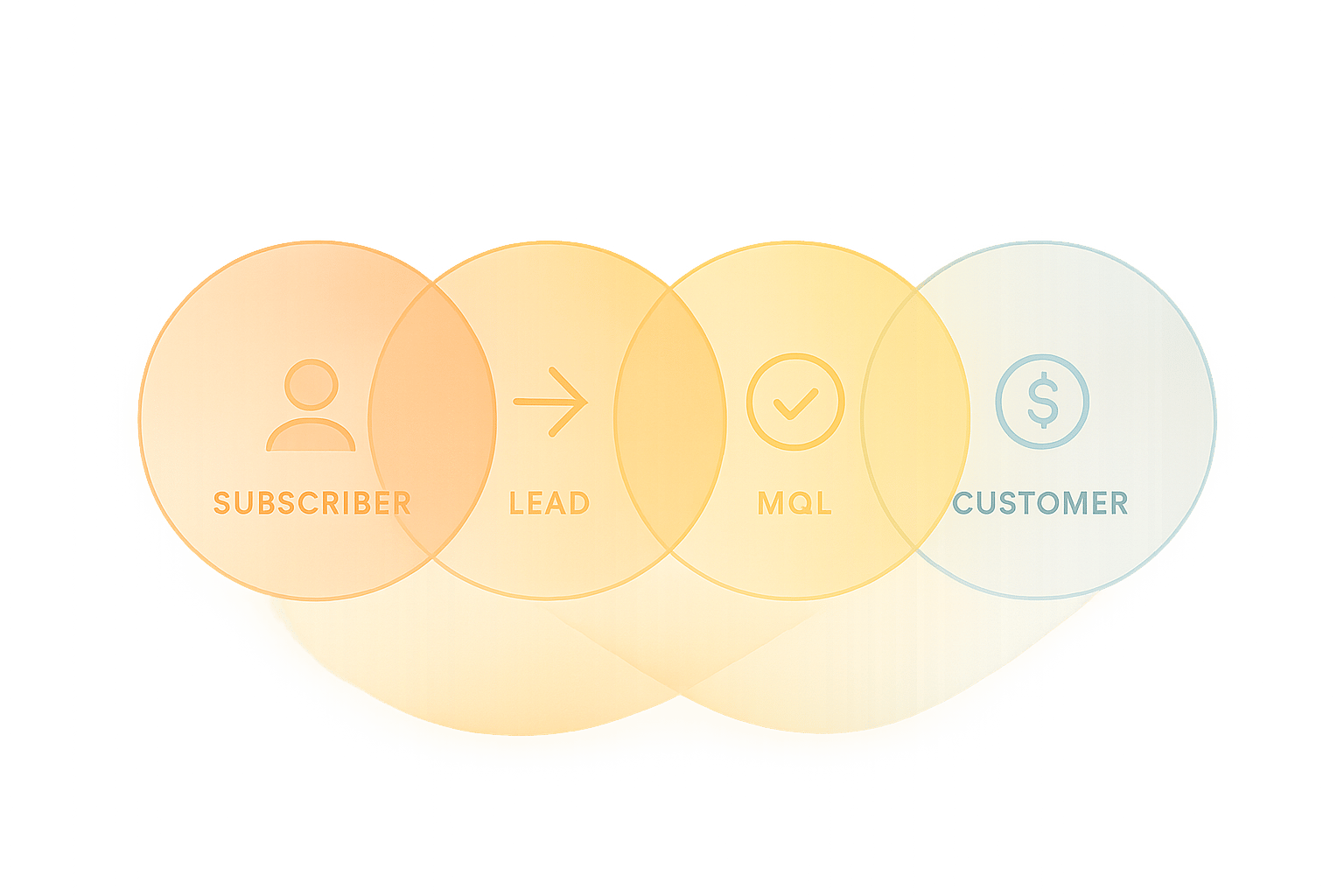
Lifecycle stages categorize leads based on their position in the buyer’s journey, enabling tailored communication and better resource allocation. By aligning your marketing efforts with these stages, you can:
- Boost Engagement: Deliver relevant content at the right time.
- Increase Conversions: Nurtured leads make purchases 47% larger than non-nurtured leads.
- Save Costs: Companies using lifecycle stages generate 50% more sales-ready leads while reducing costs by 33%.
- Shorten Sales Cycles: Address specific needs at each stage to move leads faster through the funnel.
The stages include:
- Lead Generation: Collect contact details through forms or gated content.
- Lead Qualification: Evaluate purchase readiness with criteria like budget and timeline.
- Awareness: Build trust with educational content.
- Consideration: Provide demos or case studies to highlight your value.
- Decision: Help finalize choices with testimonials or proposals.
- Post-Purchase: Ensure satisfaction with onboarding and support.
Key Takeaway: Aligning content and automation with these stages ensures better engagement, higher conversions, and stronger customer relationships. Tools like Breaker simplify this process with real-time analytics, automated workflows, and tailored content delivery.
Main Lifecycle Stages and Their Role in Lead Nurturing
Core Lifecycle Stages Explained
There are six primary stages that shape effective lead nurturing campaigns, each playing a unique role in guiding prospects through the buyer's journey.
Lead Generation is where it all begins. This stage focuses on collecting contact details from prospects using tools like forms, landing pages, or gated content. It's about creating that first connection.
Lead Qualification comes next. Here, you evaluate whether a lead is worth pursuing by analyzing their budget, authority, need, and timeline (often referred to as the BANT framework). This helps you prioritize leads that are most likely to convert.
During the Awareness stage, potential customers first learn about your company. Whether they discover you through blog posts, social media, or industry reports, the goal here is to provide educational content that builds trust and positions your brand as a helpful resource.
In the Consideration phase, prospects start comparing solutions. This is your chance to demonstrate your value through product demos, case studies, and side-by-side comparisons that highlight what sets you apart.
The Decision stage is where prospects are ready to make a choice. Help them take that final step with testimonials, ROI calculators, transparent pricing, and personalized proposals.
Finally, Post-Decision/Onboarding kicks in once the sale is closed. This stage is all about ensuring a smooth transition for new customers with onboarding materials, training resources, and ongoing support to strengthen the relationship.
Lifecycle Stage
Primary Focus
Key Activities
Lead Generation
Capture contact information
Forms, landing pages, gated content
Lead Qualification
Assess purchase readiness
Lead scoring, BANT evaluation
Awareness
Build initial interest
Educational content, blog posts
Consideration
Support solution evaluation
Demos, case studies, comparisons
Decision
Close the sale
Testimonials, pricing details, proposals
Post-Decision/Onboarding
Ensure customer success
Onboarding, training, support
How Lifecycle Stages Guide Nurturing Strategies
Each stage of the lifecycle requires a tailored approach to effectively nurture leads and move them closer to conversion. Let’s break it down.
In the Lead Generation and Qualification stages, your focus should be on gradual engagement. Use progressive profiling to gather more information about prospects over time, ensuring you don’t overwhelm them with too many questions upfront.
For the Awareness stage, patience is key. Prospects at this point are seeking value, not a hard sell. Share educational content like industry reports, trend analyses, or problem-solving guides to establish credibility. Keep your communication light and infrequent - bi-weekly or monthly touchpoints are usually ideal.
When prospects enter the Consideration phase, it’s time to step up your game. Increase the frequency of your outreach and make it more personalized. Provide resources like webinar invites, in-depth product demonstrations, and tailored case studies. Weekly touchpoints with content that speaks directly to their industry or challenges can be very effective here.
By the time leads reach the Decision stage, your nurturing efforts should be highly personalized and more frequent. Prospects need reassurance and detailed information to finalize their decision. Daily follow-ups, if needed, can address lingering concerns and help close the deal.
After the sale, the Post-Decision/Onboarding stage focuses on ensuring a seamless customer experience. Onboarding sequences should include step-by-step setup instructions, training materials, and easy access to support. This is also a great time to deepen customer loyalty with perks like exclusive events or advanced feature tutorials.
Companies that master this lifecycle-based approach can generate 50% more sales-ready leads at 33% lower cost. The secret lies in aligning your message and frequency with each stage of the buyer's journey. Overloading prospects early on can push them away, while neglecting them later can mean missing out on valuable opportunities.
Platforms like Breaker make this process more efficient by automating audience segmentation and providing real-time analytics. These tools ensure your outreach is always aligned with the prospect’s current stage, helping you refine your strategy and maximize results.
Matching Content and Automation to Lifecycle Stages
Creating Content for Each Lifecycle Stage
To succeed with lifecycle-based nurturing, you need to tailor your content to match each stage of the customer journey. Each phase requires a distinct approach, and aligning your content with these needs can drastically improve your conversion rates.
In the awareness stage, focus on educating your audience without pushing a sale. This is your chance to establish trust and showcase your expertise. Blog posts addressing common industry challenges, trend reports offering key insights, or beginner-friendly eBooks work well here. Think about answering questions like, "What challenges are common in our industry?" or "How are others solving these problems?"
As leads transition into the consideration stage, they’re actively exploring solutions. Here, your content should shift gears to highlight how your offering solves their specific issues. Webinars, product demos, and detailed case studies are excellent tools to provide this clarity.
When leads reach the decision stage, they’re close to making a commitment. Your focus should be on building confidence and addressing any lingering doubts. Customer testimonials, product comparisons, and success stories are highly effective at this point, offering the reassurance they need to move forward.
Post-purchase content is all about ensuring customers feel supported and get the most value from their purchase. Step-by-step guides, training materials, and best practices can make onboarding smoother. Regular check-ins and follow-ups also help maintain a strong relationship.
It’s worth noting that personalized emails perform significantly better than generic ones, boasting six times higher transaction rates. By combining stage-specific content with automation, you can ensure your messages reach the right audience at the perfect time.
Using Automation for Better Timing and Targeting
Automation takes lifecycle nurturing to the next level by delivering content based on behaviors, not arbitrary timelines. This approach ensures your audience gets relevant information exactly when it matters most.
Behavioral triggers are key to this strategy. For instance, if someone downloads an eBook, you could follow up with a series of related blog posts. Or, if they attend a webinar, you might invite them to book a product demo. These actions indicate genuine interest and are far more reliable than time-based triggers.
With dynamic segmentation, automation tools can adjust content delivery based on a lead’s behavior, industry, company size, or past interactions. This eliminates the need for separate campaigns for every segment, making the process more efficient and ensuring leads receive content that aligns with their current stage.
Progressive profiling takes things a step further by collecting more detailed information with each interaction. This allows for even more precise targeting and personalization over time.
Consider these real-world examples:
- In 2023, HubSpot implemented a lifecycle-based workflow for a B2B SaaS client. By automating stage-specific content - like blog posts for awareness, webinars for consideration, and case studies for decision - the client saw a 32% increase in lead-to-customer conversion rates and a 27% shorter sales cycle within six months.
- In 2024, Salesforce helped a manufacturing company integrate real-time analytics and lifecycle segmentation into their lead nurturing. This resulted in a 40% boost in email open rates and a 22% rise in qualified leads within four months.
Here’s a quick look at how automation can align with lifecycle stages:
Lifecycle Stage
Trigger Examples
Automated Response
Awareness
Downloaded whitepaper, visited pricing page
Educational emails, industry insights
Consideration
Attended webinar, requested demo
Product comparison guides, case study sequences
Decision
Multiple site visits, contacted sales
Testimonials, personalized proposal follow-ups
How Breaker Improves Lifecycle-Based Lead Nurturing
Breaker takes lifecycle nurturing to the next level by combining advanced analytics, streamlined workflows, and precise targeting. It focuses on three essentials: targeting the right audience, automating effectively, and leveraging actionable insights.
The platform uses AI to match leads with the most relevant content, ensuring prospects receive messages tailored to their stage in the journey. This level of precision is critical - sending the wrong type of content at the wrong time can harm your conversion rates.
With Breaker’s newsletter builder, you can quickly create content for each lifecycle stage. The tool allows you to design and schedule newsletters, add relevant links and calls-to-action, and focus on strategy rather than getting bogged down by technical details. This is especially useful when managing multiple campaigns across various stages.
Real-time analytics make it easy to track performance metrics like open rates, click-through rates, and subscriber growth. This data helps you fine-tune your campaigns. For example, if your consideration-stage content isn’t leading to demo requests, you can identify the issue and make adjustments. On average, Breaker users see open rates of 74% and click-through rates of 41% across active campaigns.
"We tripled our sponsor revenue and doubled our community memberships with Breaker. Well over a 10X ROI."
- Peter Lohmann, CEO, RL Property Management
"Breaker is our #1 source of booked calls."
- Josh Durham, CEO, Aligned Growth Media
Breaker also integrates seamlessly with CRMs, enabling you to push nurtured leads directly into the sales pipeline when they’re ready. This ensures your lifecycle nurturing efforts translate into measurable revenue growth.
Jordan Ross, CEO of 8 Figure Agency, shared that his newsletter grew by 5,000 subscribers monthly after adopting Breaker. This highlights how the platform’s lead generation and engagement capabilities directly enhance lifecycle-based nurturing.
Finally, Breaker’s managed deliverability ensures your emails land in inboxes - not spam folders. Even the best content and automation won’t work if your messages don’t reach your audience, making this feature a critical advantage for lifecycle campaigns.
Measuring and Improving Lifecycle-Based Nurturing
Important Metrics for Lead Nurturing Performance
Monitoring the right metrics - like lead velocity, conversion rates, email engagement, and overall lifecycle length - can reveal how effective your lifecycle nurturing efforts are.
Lead velocity measures how quickly prospects move through different lifecycle stages. If leads linger too long in the awareness stage without progressing, it’s a clear sign that adjustments are needed. For example, companies that excel in lead nurturing see 50% more sales-ready leads while reducing costs by 33%.
Conversion rates at each stage highlight where leads tend to drop off, offering clues about which stages might need stronger or more engaging content.
Email engagement rates - including open rates, click-through rates, and response rates - give you real-time feedback on how well your content resonates. For B2B marketers, open rates above 20% and click-through rates above 2–3% are common benchmarks.
Overall lifecycle length tracks how long it takes to convert leads into customers. If your lifecycle is longer than industry norms, you can pinpoint delays and make targeted improvements. This matters because nurtured leads tend to make purchases that are 47% larger than those made by non-nurtured leads.
Here’s an example: A B2B SaaS company noticed a significant drop-off during the consideration stage. By introducing webinars and personalized follow-ups, they improved stage-to-stage conversion rates by 15% and shortened their sales cycle by 20%. These types of insights make it easier to adjust strategies in real time.
Using Real-Time Analytics to Improve Workflows
Real-time analytics allow you to make adjustments on the fly, rather than waiting for periodic reports. Watching lead behavior as it unfolds helps you spot trends that might otherwise go unnoticed.
Immediate visibility into metrics like open rates, click-through rates, and subscriber growth enables quick optimizations. For instance, if an email series underperforms, you can test new subject lines or tweak content right away. This kind of rapid iteration keeps your nurturing campaigns moving forward.
Breaker users have seen how powerful this can be, reporting average open rates of 74% and click-through rates of 48% across active campaigns. Real-time analytics also make it easier to reallocate resources. If one stage of your lifecycle is outperforming others, you can shift focus to maximize results while addressing weaker areas more quickly.
To act on these insights, set up alerts and testing protocols that allow for immediate adjustments, keeping your campaigns nimble and effective.
Comparing Different Measurement Methods
The way you measure results can have a big impact on your ability to refine lifecycle-based nurturing. Whether you rely on manual reporting or automated tools, each method has its strengths and weaknesses:
Approach
Data Collection
Update Frequency
Accuracy
Actionability
Resource Intensity
Example Tool
Manual Reporting
Manual entry
Weekly/Monthly
Moderate
Low
High
Spreadsheets
Automated Tools
Automatic
Real-time
High
High
Low
Breaker
Manual reporting, often done through spreadsheets, requires significant time and effort. It’s prone to errors - like data entry mistakes or outdated information - which can lead to poor decisions and missed opportunities for optimization.
Automated tools like Breaker solve these issues by capturing data in real time. With features like performance analytics, you gain instant insights into open rates, click-through rates, and subscriber growth. This allows for quick adjustments that keep your campaigns on track.
While the average lead-to-customer conversion rate for B2B companies is around 1.46%, combining targeted nurturing with precise measurement can significantly improve those numbers. Choosing the right tools and methods is essential for driving better results.
Best Practices for Lifecycle Stage-Based Workflows
Creating Buyer Personas and Mapping Their Journey
Building effective workflows starts with a clear understanding of your audience. To do this, create detailed buyer personas by collecting data from CRM systems, sales teams, and customer interviews. Look at demographic, firmographic, and behavioral information to identify decision-makers and influencers. Pinpoint their challenges and goals to tailor your approach.
For instance, a SaaS company might develop separate personas for IT managers and CFOs. The IT manager persona might focus on technical details and integration capabilities, while the CFO persona is more concerned with cost savings and ROI.
After defining your personas, connect lifecycle stages - like Awareness, Consideration, and Decision - to the buyer's journey. Map out specific actions that indicate a lead is moving from one stage to the next. For example, downloading a whitepaper could signal a shift to the Consideration stage, while requesting a demo might indicate readiness for the Decision stage.
"Define your ideal customer, and Breaker handles the rest. Our algorithm delivers engaged, exact-match B2B subscribers - so you grow without guesswork or wasted spend."
– Breaker
Using Breaker's AI-driven targeting ensures that your buyer personas are paired with the right content from the start, helping your workflows begin on solid ground.
Once your personas are in place, the next step is segmenting leads to match them with the appropriate lifecycle stage.
Segmenting Leads Correctly by Lifecycle Stage
Accurate segmentation combines CRM data with behavioral signals like email opens, content downloads, event participation, and website activity. This mix provides a deeper understanding of where each lead stands.
Lead scoring models assign points based on these behaviors, helping marketers prioritize leads effectively. For example, a lead who attends a webinar and downloads a case study might move into the Consideration stage, while someone who only opens emails may stay in Awareness.
The best results come when you use both explicit data (information provided directly by the lead) and implicit data (their actions). For instance, if a lead downloads multiple whitepapers in a short period and spends time on a pricing page, that’s a strong signal they’re nearing the Decision stage - even if their initial form data didn’t fully suggest it.
In 2022, a B2B SaaS company used these segmentation strategies, combining buyer persona insights with automated processes, to boost their MQL-to-SQL conversion rate by 38% in just six months. They also updated content monthly based on engagement metrics and implemented real-time triggers for follow-up emails. These changes led to a 22% reduction in their sales cycle length.
Once leads are segmented, keeping content and workflow triggers updated is critical to maintaining momentum.
Updating Content and Workflow Triggers Regularly
Reviewing and refreshing your content and workflow triggers on a regular basis - quarterly or when there are shifts in buyer behavior or market trends - is essential. These audits can reveal outdated messaging, gaps in the buyer journey, or opportunities to refine your approach.
For example, if engagement drops for a specific email sequence, it might be time to adjust the timing or refresh the content. Changes in your market, product updates, or competitive shifts can all affect how your audience responds to your messaging. What worked a few months ago might no longer resonate.
Tailor your content to each lifecycle stage. In the Awareness stage, use educational blog posts and infographics to draw attention. During Consideration, focus on webinars, case studies, and comparison guides to keep prospects engaged. For the Decision stage, tools like product demos, free trials, and customer testimonials can help close the deal. Post-purchase, resources like onboarding guides and user communities can drive loyalty and long-term engagement.
As leads move further down the funnel, personalization becomes increasingly important. Early-stage interactions can be broader and more visually appealing, while later-stage communications - often handled by sales reps - should be more focused and personalized.
Maintaining open communication between marketing and sales teams is equally important. Sales teams often have the most current insights into prospect objections, questions, and content needs. Their feedback should directly influence updates to your workflows and content.
To avoid common mistakes, steer clear of over-segmentation, neglecting to update content, or ignoring engagement data. Start with clear definitions for each lifecycle stage and make sure your marketing and sales teams are aligned to keep your workflows running smoothly.
Automate Lifecycle Stages in HubSpot for Clean Data & Better Reporting | Strategic HubSpot Tutorial
Conclusion: Using Lifecycle Stages for Lead Nurturing Success
Lifecycle stages take B2B lead nurturing from a broad, one-size-fits-all approach to a focused strategy that delivers tailored messages at just the right moment. By identifying where each lead is in their buying journey - whether they’re exploring options or ready to make a decision - you can craft campaigns that truly connect and drive results.
The numbers back this up: businesses that excel in lifecycle-based lead nurturing see 50% more sales-ready leads at 33% lower costs. Even better, nurtured leads tend to make 47% larger purchases compared to those who receive generic messaging. These outcomes underscore the power of delivering relevant and timely content, which builds trust and naturally moves prospects closer to buying. Achieving these results often hinges on using the right tools to manage the process effectively.
Understanding your audience is the foundation for successful segmentation and messaging, but execution requires platforms that can handle the demands of modern B2B lead nurturing.
This is where Breaker shines. Its automated lead generation and precise targeting ensure you start with high-quality prospects that align with your ideal customer profile. With real-time analytics - showing an impressive 47% average open rate and 48% click-through rate - you can track exactly how leads engage with your content at every stage.
The platform’s newsletter builder makes it easy to create content tailored to specific lifecycle stages, while automated deliverability management ensures your messages land where they’re supposed to: your audience’s inbox.
But technology alone isn’t enough. Adapting to a changing market is just as critical. Lifecycle nurturing isn’t something you can set and forget. Buyer behaviors shift, industries evolve, and your content needs to keep up. For example, one B2B SaaS company that segmented leads by their buying journey saw a 30% jump in qualified leads and a 20% increase in conversions within six months.
The key to success lies in defining clear lifecycle stages, deeply understanding your buyers, and leveraging tools that simplify rather than complicate your efforts. With lifecycle stages as your roadmap and advanced platforms like Breaker to support you, turning prospects into loyal customers becomes a more streamlined and efficient process. This approach allows your B2B campaigns to consistently deliver results and build lasting relationships.
FAQs
What are lifecycle stages, and how can they improve lead nurturing for B2B email campaigns?
Lifecycle stages mark the key phases a lead experiences during their journey with your business - starting from discovering your brand to becoming a loyal customer. Recognizing these stages allows businesses to design focused and personalized lead nurturing workflows that address the unique needs and actions of their audience at every step.
To improve lead nurturing, categorize your leads based on their lifecycle stage, such as 'Subscriber,' 'Lead,' 'Opportunity,' or 'Customer.' This segmentation enables you to deliver customized content and messaging that matches their interests and level of engagement. For instance, share educational materials with early-stage leads to spark interest, while sending product-focused emails to those closer to making a purchase decision. This strategy not only boosts engagement and builds trust but also helps guide leads smoothly through the sales process.
How does automation help tailor content for each lifecycle stage and boost lead conversion rates?
Automation is a game-changer when it comes to delivering tailored content to your audience exactly when they need it. By using tools that segment leads based on their stage in the buyer's journey, you can design workflows that directly address the unique needs and concerns of each group. This precise targeting keeps your content relevant and timely, boosting engagement and building stronger relationships with your audience.
Beyond personalization, automation simplifies time-consuming tasks like scheduling emails, sending follow-ups, and tracking campaign performance. By handling these repetitive processes, automation not only frees up valuable time but also ensures your campaigns are consistent and accurate. The result? Higher conversion rates and better outcomes for your business.
What challenges do businesses face when creating content for different lifecycle stages, and how can they address them?
Understanding what your leads need and expect at different stages of their journey can be tricky. Without clear insights, it’s easy for businesses to miss the mark with their messaging. The solution? Use tools that offer detailed audience segmentation and analytics. These can help you dive into your leads’ behaviors and preferences, giving you the clarity needed to craft content that resonates.
Another hurdle is keeping your campaigns both consistent and personalized. Generic messages often fall flat, failing to connect with your audience. To tackle this, develop tailored workflows that match each stage of the customer lifecycle. This ensures your content feels relevant and addresses their specific goals. Tools like Breaker can make this easier, offering precise targeting and performance tracking to help you refine your strategy.
Related Blog Posts
Keep reading
All articlesGDPR Consent Requirements for Purchased Email Lists
Purchased email lists rarely meet GDPR's consent bar. Learn the legal basis rules, PECR overlap, and safer alternatives before you hit send.
7 Email Platforms With Inbox Placement Testing & Suppression
Compare 7 email platforms that combine inbox placement testing with suppression management, scored on features, pricing, and best-fit sender size.
Email Automation Workflow & Drip Campaign Data Structure
Learn the database schema behind email drip campaigns—tables, workflow states, and event logs that power reliable marketing automation.