
Shared vs Dedicated IPs: Impact on Deliverability
Explore the pros and cons of shared versus dedicated IPs in email marketing, and learn how each impacts deliverability and sender reputation.
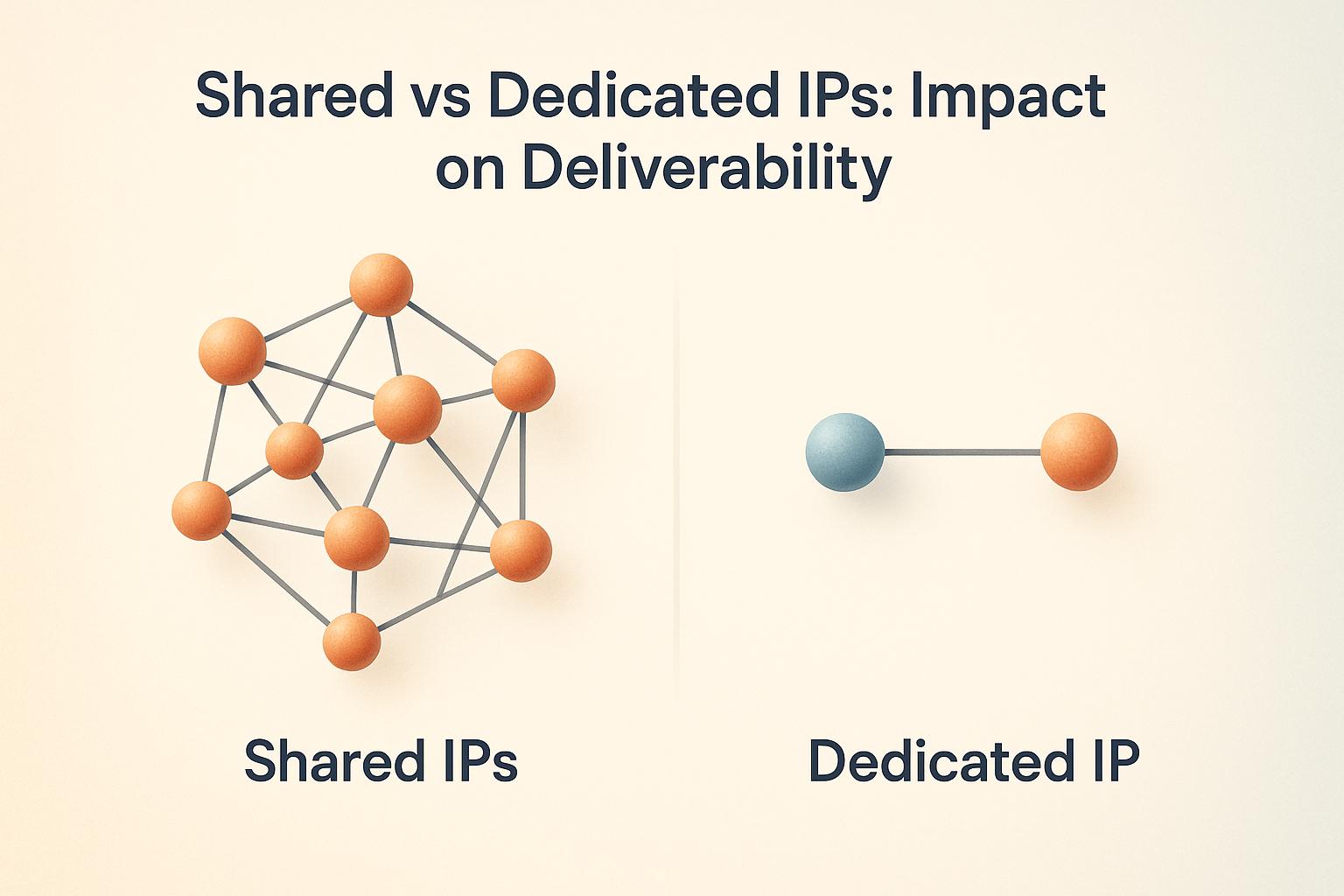
When it comes to email marketing, your choice between a shared or dedicated IP can directly affect whether your emails land in inboxes or spam folders. Here's the key takeaway:
- Shared IPs are cost-effective and easy to set up, making them ideal for businesses sending less than 100,000 emails per month. However, your deliverability depends on the behavior of others sharing the IP.
- Dedicated IPs offer full control over your sender reputation, which is critical for high-volume senders (100,000+ emails monthly) or businesses sending time-sensitive emails. They require more effort and cost to manage but can improve deliverability when done right.
Quick Comparison
Criteria
Shared IPs
Dedicated IPs
Cost
Low ($2.49–$15/month)
Higher ($15–$50/month)
Setup
Immediate, no warm-up required
Requires gradual warm-up
Volume Suitability
<100,000 emails/month
>100,000 emails/month
Limited, shared with others
Full, based on your practices
Risk
Affected by others’ actions
Solely your responsibility
For small businesses or those just starting with email marketing, shared IPs are usually sufficient. If you’re scaling up or need tighter control, a dedicated IP might be worth the investment. Your choice depends on your email volume, budget, and need for control over deliverability. IP choice is one of the more advanced email deliverability best practices; get authentication and list hygiene right first.
Shared IP vs Dedicated IP Address - Brief Summary by Mailtrap

1. Shared IPs
Think of shared IP addresses like living in an apartment building: multiple senders share the same "address", meaning your email reputation is tied to everyone else using that IP. This setup comes with both perks and challenges for your email deliverability.
Cost
Shared IPs are a budget-friendly option, costing between $2.49 and $15 per month. For 90% of low-volume senders, this price point makes them a great fit, especially for small businesses. To put it in perspective, dedicated IPs can cost anywhere from $100 to $250 monthly, making shared IPs a fraction of the expense.
"Shared IPs are intended for use by small senders that don't send on a regular cadence. The reasoning for this is that the small senders can band together to create a reputation." - Klaviyo Help Center
Not only are they affordable, but they’re also easy to set up.
Setup Requirements
One of the biggest advantages of shared IPs is how simple they are to get started with. Unlike dedicated IPs, which require weeks of warming up to establish a reputation, shared IPs are pre-warmed and ready to use immediately. Plus, your email service provider (ESP) takes care of reputation management and deliverability, so there’s very little you need to do on your end.
Suitability for Volume and Frequency
Shared IPs are ideal for businesses sending less than 100,000 emails per month. They’re especially useful for companies that send emails irregularly or are just dipping their toes into email marketing.
For example, EcoGoods, a small business sending 30,000 emails monthly, achieved a 25% open rate while keeping costs low by using a shared IP. However, while the cost and ease of use are appealing, shared IPs come with some risks.
Risk Exposure
The shared nature of these IPs means your email deliverability can be affected by the actions of others. If another sender on the same IP sends spam or uses outdated email lists, it could drag down the reputation for everyone.
Take the case of a local bookstore: they experienced a 15% drop in deliverability when another sender on their shared IP engaged in poor practices. This setback led them to explore switching to a dedicated IP for more control over their email reputation.
Deliverability Control
When it comes to shared IPs, you don’t have full control over your reputation - it’s shaped by the behavior of everyone sharing the address. That said, this setup can work to your advantage if you’re a low-volume sender. By pooling reputations with other responsible senders, small businesses can benefit from a solid reputation they might not be able to build alone.
The key is selecting a reliable email service provider that actively manages its shared IP pools and enforces strict standards. This oversight helps reduce risks while allowing smaller senders to tap into the benefits of a shared reputation. By weighing costs, setup ease, volume needs, and risk factors, you can make smarter decisions to optimize your email deliverability.
2. Dedicated IPs
Think of a dedicated IP like having your own private driveway - it gives you full control over your email reputation. Unlike shared IPs, where your reputation is tied to other users, a dedicated IP puts the responsibility and benefits squarely on your shoulders. Below, we’ll break down the key aspects of dedicated IPs, including their advantages, costs, setup process, and potential risks.
Deliverability Control
The standout benefit of a dedicated IP is total control over your sender reputation. With a shared IP, your deliverability can suffer if another sender on the same IP engages in poor email practices. A dedicated IP eliminates that risk, allowing you to manage your reputation independently. This is especially critical for emails that are time-sensitive or business-critical - think transactional notifications, security alerts, or real-time codes.
For instance, a fintech company sending login codes in real time can rely on a dedicated IP to ensure these urgent messages consistently land in inboxes.
"A dedicated IP allows businesses to build their own reputation, which is crucial for ensuring high deliverability rates." - Email Marketing Expert, EmailToolTester
But with great control comes great responsibility. Missteps like poor email hygiene or spammy content can quickly damage your hard-earned reputation.
Cost
Dedicated IPs come at a higher price compared to shared options. While shared IPs are often included in standard email service plans, dedicated IPs typically cost extra - usually between $15 and $50 per month. For businesses that rely heavily on email-driven revenue, this added expense can be well worth it for the improved deliverability and campaign performance.
Setup Requirements
Getting started with a dedicated IP isn’t as simple as flipping a switch. It requires a gradual warm-up process, where you slowly increase your email volume over several weeks. This helps establish a reliable sending reputation. Additionally, proper configuration of SPF, DKIM, and DMARC is essential to authenticate your emails and build trust with mailbox providers.
Suitability for Volume and Frequency
Dedicated IPs work best for senders with high and consistent email volumes. To maintain a strong reputation, it’s recommended to send at least 100,000 to 300,000 emails per month. Inconsistent or low volumes can negatively impact your deliverability, making dedicated IPs less suitable for smaller-scale senders.
Risk Exposure
With a dedicated IP, your reputation is entirely in your hands. While this control can be empowering, it also means there’s no safety net. Practices like poor list management, high bounce rates (above 3%), or erratic sending patterns can quickly harm your deliverability. To succeed, you’ll need to follow email best practices and closely monitor performance metrics to catch and resolve issues early.
Advantages and Disadvantages
When deciding between shared and dedicated IPs for your email marketing efforts, it’s important to weigh the pros and cons of each option. Both come with unique benefits and challenges that can directly impact your email deliverability and overall strategy.
Shared IPs are known for being budget-friendly and easy to use. Since the infrastructure and reputation are shared among multiple users, these IPs are often included in standard email service provider (ESP) plans at no additional cost. One of their biggest advantages is the ability to start sending emails immediately - no warm-up period required. This makes shared IPs perfect for businesses that want to hit the ground running. Plus, the ESP takes care of the technical maintenance and reputation management, which is a big help if you don’t have in-house technical expertise.
That said, shared IPs do come with some drawbacks. The biggest challenge is the lack of control. Your email deliverability depends not only on your practices but also on the behavior of others sharing the same IP. For instance, if another sender uses poor practices, like purchasing email lists or ignoring unsubscribe requests, it can harm the IP’s reputation. This shared responsibility can make troubleshooting and resolving issues more complex.
Dedicated IPs, on the other hand, give you full control over your sender reputation. This is especially important for businesses sending critical emails like password resets, order confirmations, or security alerts. With a dedicated IP, you can build and maintain your own reputation over time, even working toward whitelisting with email providers. If any issues arise, they’re easier to identify and fix because you’re the sole user of the IP.
However, dedicated IPs come at a higher cost and require more effort to manage. Most ESPs charge between $15 and $50 per month for a dedicated IP. Additionally, these IPs need a gradual warm-up period before they can handle large-scale email campaigns, which might delay your launch. Ongoing technical oversight is also necessary to monitor performance and ensure proper authentication. Businesses sending over 300,000 emails per month often find that the benefits of a dedicated IP - like stable deliverability and a strong reputation - justify the extra costs and effort.
Criteria
Shared IPs
Dedicated IPs
Deliverability Control
Limited; influenced by other users
Full; only your practices matter
Cost
Low; included with most ESPs
Higher; $15–$50/month
Setup Requirements
None; ready to use immediately
Requires warm-up and ongoing management
Volume Suitability
Low to moderate (<100,000/month)
High (>100,000/month), consistent senders
Risk Exposure
Shared; vulnerable to others' practices
Isolated; only your actions impact reputation
Maintenance
Managed by the ESP
Requires sender oversight and expertise
Best For
Small businesses, irregular senders
Large enterprises, business-critical emails
This table gives a clear snapshot of how shared and dedicated IPs compare. For businesses sending fewer than 100,000 emails per month, shared IPs often work well, as they help balance occasional issues by leveraging the collective reputation. On the other hand, companies with consistent, high-volume email needs typically prefer dedicated IPs for the added control they provide.
"Dedicated IPs are essential for businesses that rely heavily on email marketing, as they allow for better control over deliverability and sender reputation." - Email Marketing Expert, MarketingProfs
Ultimately, your choice will depend on your business’s specific needs. For instance, B2B marketers using Breaker might find a dedicated IP worthwhile if they’re sending time-sensitive notifications or operating under strict compliance requirements. Meanwhile, businesses with smaller volumes, irregular schedules, or limited technical resources can often achieve excellent results with well-managed shared IPs. In cases where bounce rates exceed 3%, even larger organizations may benefit from shared IPs to stabilize their deliverability. However, if precise control over revenue-critical emails is a priority, investing in a dedicated IP could be the smarter move.
Conclusion
For businesses with smaller email volumes and limited resources, shared IPs are often the way to go. They’re ideal for small to medium-sized businesses, startups, or teams sending fewer than 100,000 emails a month. Shared IPs allow marketers to focus on creating great content and refining their strategies without worrying about the technicalities of IP management.
On the other hand, dedicated IPs are better suited for high-volume senders - those dispatching over 300,000 emails monthly - who need tighter control over their email reputation for critical communications. However, this route comes with its own challenges, including the need for consistent sending volumes, technical know-how, and adherence to best practices.
Interestingly, research shows that high-quality shared IP pools can rival or even surpass the deliverability rates of dedicated IPs for moderate senders. This is thanks to collective reputation management, which can make shared IPs a more practical choice for many B2B marketers. Platforms like Breaker leverage this by focusing on engaged audiences, ensuring strong deliverability no matter the IP type.
Breaker users benefit from tools like precise audience targeting and real-time analytics, which help optimize deliverability. Its automated lead generation and emphasis on engaged, exact-match subscribers naturally support reputation management, whether you're using a shared or dedicated IP.
For most B2B marketers, starting with a shared IP is a smart move. Transition to a dedicated IP only when your email volume increases and the need for tighter reputation control outweighs the added complexity and cost. With the right platform and smart sending practices, a shared IP can deliver excellent results. As your business scales, a dedicated IP might eventually align better with your goals, but the choice should always reflect your campaign needs and resources.
FAQs
How can a business decide between using a shared or dedicated IP for email marketing?
When deciding between a shared IP and a dedicated IP, it all comes down to your email habits, goals, and how much control you want over your sender reputation.
If your business sends a low volume of emails, a shared IP might be your best bet. These are managed by email service providers, and the reputation is shared among multiple users. The upside? Less responsibility for you. The downside? Your deliverability could take a hit if others on the same IP don’t follow best practices.
For businesses that send a high volume of emails regularly, a dedicated IP offers more control. You’re the only one using it, so your sender reputation is entirely in your hands - but that also means you’ll need to actively manage it, including going through the IP warm-up process to build trust with email providers.
When choosing, think about how often you send emails, the size of your list, and whether you’re ready to handle the extra responsibility of managing a dedicated IP.
How can I properly warm up a dedicated IP to improve email deliverability?
Warming up a dedicated IP is a crucial step for building a solid sender reputation and boosting email deliverability. To get started, begin by sending small batches of emails to your most engaged and active recipients. Over the course of several weeks, gradually increase the volume. This gradual approach helps signal to email providers that your IP is reliable, improving your chances of landing in recipients' inboxes instead of their spam folders.
Keep a close eye on engagement metrics like open rates, click-through rates, and bounce rates during this process. High engagement and minimal bounces are key to establishing a positive reputation. On the flip side, sending too many emails too quickly can backfire - spam filters may flag your IP, negatively impacting your deliverability. Patience and consistency are your best allies here.
How can other users on a shared IP affect my email deliverability, and what steps can I take to protect it?
When you're on a shared IP, your email deliverability can be affected by the behavior of others. If other users send spam or have a bad sender reputation, it might hurt your chances of landing in inboxes.
To avoid this, consider moving to a dedicated IP address. This gives you complete control over your sender reputation. Services like Breaker focus on maintaining high deliverability, ensuring your emails reach the right audience - those who are genuinely interested in your content.
Related Blog Posts
Keep reading
All articlesGDPR Consent Requirements for Purchased Email Lists
Purchased email lists rarely meet GDPR's consent bar. Learn the legal basis rules, PECR overlap, and safer alternatives before you hit send.
7 Email Platforms With Inbox Placement Testing & Suppression
Compare 7 email platforms that combine inbox placement testing with suppression management, scored on features, pricing, and best-fit sender size.
Email Automation Workflow & Drip Campaign Data Structure
Learn the database schema behind email drip campaigns—tables, workflow states, and event logs that power reliable marketing automation.