
Case Study: Send Time Optimization for B2B Success
AI-driven send time optimization aligns B2B emails with work hours and time zones to boost opens, clicks, and revenue.
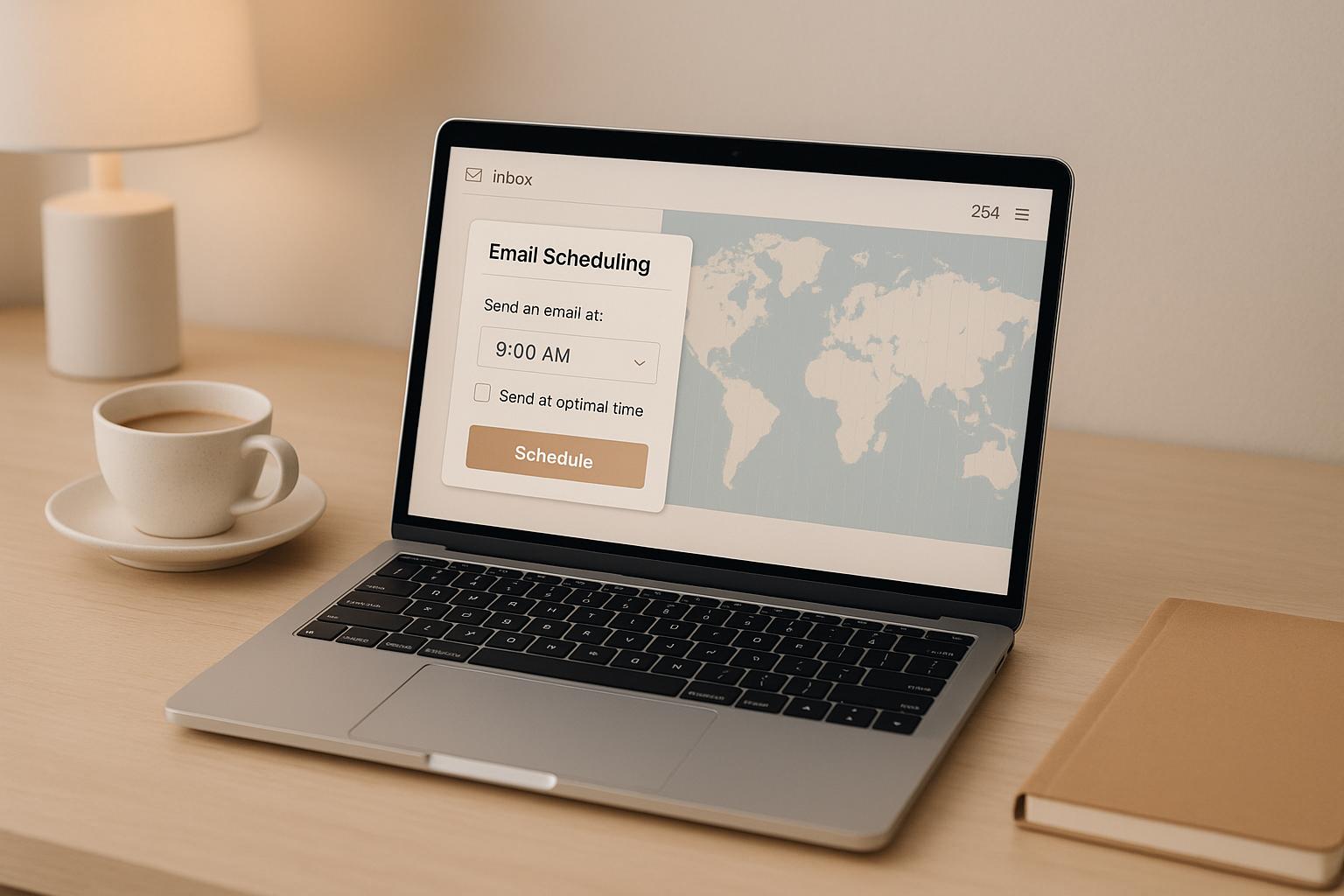
Timing matters in email marketing, especially for B2B audiences. Sending emails when your audience is most likely to engage can dramatically improve results. This approach, called send time optimization (STO), uses AI to analyze subscriber behavior and identify the best times to send emails.
Agricen, an agricultural company, implemented STO and saw:
- 93% more email opens
- 55% more clicks
- 26% fewer bounces
- 20% revenue growth
Key takeaways:
- B2B professionals engage with emails during work hours, especially mid-morning or early afternoon.
- AI tools can analyze historical data to personalize send times for each subscriber.
- STO improves engagement, reduces unsubscribes, and strengthens sender reputation.
This strategy isn't about sending more emails - it's about sending them at the right time. With tools like HubSpot and Breaker, companies can integrate STO into their systems, yielding better performance and long-term growth.
Optimize Your Send Times in JUST 60 SECONDS! | Email Marketing Tips
The Challenge: Low Engagement Despite Regular Campaigns
Many B2B companies have experienced the frustration of putting effort into regular email campaigns - crafting quality content and sticking to a consistent schedule - only to see engagement remain disappointingly low.
When companies rely on standard batch sending methods, open rates often stall between 15–25%, with click rates hovering around 2–5%. These numbers highlight a missed opportunity. Sending emails to an entire list at a single time, such as 10:00 AM Eastern Time on a Tuesday, may seem efficient, but it often leads to poor results. Why? Because timing matters.
Take a typical B2B contact list as an example. West Coast recipients get that 10:00 AM Eastern email at 7:00 AM Pacific - too early for many to even glance at their inbox. Meanwhile, those in Europe receive it at 3:00 PM London time, just as they’re winding down their workday. And for Asia-Pacific recipients, it might arrive late at night, long after their work hours. This lack of alignment with regional schedules creates a significant barrier to engagement.
Mistimed emails don’t just result in lower open and click rates - they also risk being buried under a flood of newer messages. A decision-maker checking their inbox at 11:00 AM could easily scroll past an email that landed hours earlier. Over time, poorly timed campaigns can lead to email fatigue, more unsubscribes, and even spam complaints. Worse, these issues can damage the sender’s reputation, making future emails less likely to land in inboxes at all.
Why Standard Timing Falls Short for B2B Audiences
These timing challenges reveal why standard "best practices" often fail when it comes to B2B subscribers. Generic advice like "send on Tuesdays at 10:00 AM" overlooks the nuances of how B2B professionals interact with their inboxes. Unlike B2C audiences, who might check personal emails in the evenings or on weekends, B2B professionals tend to engage during work hours - typically mid-morning or early afternoon.
Adding to the complexity, engagement patterns vary widely based on roles and industries. For instance, a retail manager may tackle emails first thing in the morning before the store opens, while a software developer might wait until after a morning coding session. Similarly, a healthcare executive may check emails between meetings, while remote workers might have entirely different rhythms.
Time zones further complicate matters. A B2B contact list often spans multiple regions, making it impossible for a one-size-fits-all strategy to align with everyone’s work hours. Without factoring in these geographic and behavioral differences, emails are unlikely to reach recipients at the right moment.
On top of all this, many B2B campaigns target multiple decision-makers within the same organization - people who are often juggling packed schedules, meetings, and travel. Without precise timing, emails risk being overlooked entirely.
Relying on guesswork or broad assumptions about when to send emails leaves companies struggling to connect with their audience. Even when experimenting with different send times or following industry norms, these approaches rarely account for the unique habits of individual subscribers. The result? Missed opportunities and underwhelming engagement.
The Solution: Data-Driven Send Time Optimization
Boosting engagement didn’t mean sending more emails - it meant sending them at the right time. By analyzing when each subscriber was most likely to open and click on emails, marketers could stop guessing and start sending messages at moments that truly resonated with their audience.
This shift required moving away from traditional batch-and-blast methods in favor of personalized timing, laying the groundwork for more data-informed strategies.
Understanding Subscriber Behavior and Engagement Patterns
The first step was to dig into historical data to uncover when subscribers were actually engaging with emails. This involved studying open times across different days and hours, tracking click-through behavior, and analyzing how often people engaged over weeks and months.
Machine learning played a pivotal role here, identifying consistent patterns. For instance, if a subscriber frequently opened emails at 7:15 AM on weekday mornings, that became a key signal. Similarly, someone who clicked links during a 12:30 PM lunch break provided another clear behavioral clue.
For B2B audiences, the data highlighted specific trends: professionals were most active on weekdays, particularly between 9:00 AM and 11:00 AM, with additional peaks in the early afternoon. But individual habits varied. A retail manager might check emails before their store opened at 8:00 AM, while a software developer might not engage until after their morning coding session.
The analysis also factored in bounce rates, unsubscribe trends, and time zone differences. For example, a subscriber in Seattle might follow a different schedule than someone in New York, making geographic data crucial for precision.
Leveraging AI for Perfect Timing
Once the engagement data was collected, AI and machine learning stepped in to predict the best send time for each subscriber. These systems didn’t just rely on past behavior - they continuously adapted as new data rolled in.
AI pinpointed diverse engagement windows, from early morning commutes to lunchtime breaks, and adjusted dynamically when a subscriber’s routine changed - whether due to a new job, a move to a different time zone, or other life shifts.
According to an Omnisend study, using AI to optimize send times can boost open rates by 22% and click-through rates by 13%.
For subscribers with little or no engagement history, AI employed a technique called send time randomization. This method used overall audience engagement trends to assign delivery times, ensuring that even new or less active subscribers received emails at times that were likely to work for them.
"Breaker provides similar functionality to other newsletter platforms but with automated growth and done-for-you deliverability – creating an unparalleled experience for B2B email marketers."
- Breaker FAQ
For B2B marketers using Breaker, AI-driven timing and automated deliverability worked hand in hand to create highly engaging campaigns. The platform’s algorithm combined custom targeting, AI-powered insights, and proprietary data to identify the best subscribers, while real-time analytics revealed what worked - helping marketers fine-tune their strategies.
Technical Integration Made Easy
Once optimal timing predictions were in place, the next challenge was integrating them seamlessly into existing systems. This required connecting email marketing platforms with AI tools, which worked alongside CRM systems to access historical engagement data.
The process operated in three layers: storing campaign data, analyzing it to determine the best send times, and incorporating CRM insights for additional context.
This integration didn’t just improve engagement; it also protected sender reputation. By staggering email sends instead of blasting them all at once, marketers reduced the risk of landing in spam folders and preserved their deliverability.
Take Agricen, for example. Comparing Q1–Q3 2020 to 2019, they saw a 93% jump in emails opened and a 55% rise in clicks. Hard bounce rates dropped by 26%, and unsubscribe rates fell by 14%. Their system not only boosted engagement but also reduced churn and maintained a strong sender reputation.
Similarly, OneRoof, a real estate platform, used Braze’s Intelligent Timing feature to tailor email delivery for each user. The results? A 23% lift in email click-to-open rates, a 57% increase in unique clicks, and a staggering 218% jump in total clicks to property listings.
Automation simplified what could have been a logistical nightmare. Instead of manually segmenting lists by time zone and scheduling multiple sends, marketers could focus on crafting campaigns while the system handled the timing. Behind the scenes, the AI managed everything - from mail streams to list hygiene and reputation monitoring.
For optimal performance, having 3–6 months of engagement data was key. Companies with frequent email campaigns accumulated this data faster, but even those with less frequent sends saw initial improvements within 2–4 weeks. Full optimization typically took 2–3 months of consistent sending, as the AI refined its understanding of subscriber patterns.
Results: Better Performance Across Key Metrics
By integrating precise AI-driven strategies, this campaign highlighted just how impactful data-informed send times can be. The results? A noticeable boost in email performance metrics and a clear transformation in subscriber engagement.
Before and After Metrics Comparison
Agricen, an agricultural company, collaborated with Prism Global Marketing Solutions to roll out an advanced send time optimization tool within HubSpot. The comparison between Q1–Q3 of 2020 and the same period in 2019 revealed some striking improvements: 93% more email opens, 55% more clicks, 178% more page sessions, and 62% more new contacts. On top of that, email quality saw a boost, with hard bounce rates dropping by 26%, unsubscribe rates falling by 14%, and bounce rates for email-driven sessions decreasing by 12%. Optimized send times led to 40% more monthly opens and 38% more clicks.
One standout result? Re-engagement rates for dormant subscribers - those inactive for at least 90 days - skyrocketed by 225%. All these combined efforts contributed to an impressive 20% year-over-year revenue increase.
Impact of Time Zone and Geographic Targeting
Timing is everything - especially when it comes to email marketing. Optimizing emails to land in a recipient's inbox at the right local time made a huge difference. For example, delivering emails at 9:30 AM GMT in London or 10:15 AM PST in San Francisco ensured professionals received messages during their most active and attentive hours. This approach significantly boosted engagement across diverse regions.
Scalability and Long-Term Benefits
The benefits didn’t stop with immediate results. Over time, the system became even smarter. As more data was collected, the AI fine-tuned its predictions, adapting to changes like job shifts, time zone differences, or new daily routines. Initial improvements were noticeable within 2–4 weeks, with full optimization achieved in 2–3 months. To reach peak performance, the system required 3–6 months of engagement data, analyzing patterns across campaigns to consistently refine send times.
Key Takeaways for B2B Marketers
Agricen's success offers practical lessons for B2B marketers. Getting the timing right for email sends is key to maintaining steady engagement. But success doesn't stop there - it also requires a solid grasp of B2B engagement habits, smart use of technology, and a focus on delivering clear business value.
Best Timing Patterns for B2B Audiences
B2B professionals tend to check their email during work hours, making 9:00 AM to 11:00 AM on weekdays the prime window for engagement. Unlike consumer audiences who often browse emails during evenings or weekends, B2B subscribers treat email as part of their work routine. Mid-week - especially Tuesday through Thursday - generally sees the highest engagement. In contrast, Mondays are often for catching up on tasks, while Fridays lean toward wrapping up the week.
That said, timing isn't one-size-fits-all. Agricen's case study showed that individual subscriber behavior matters. Some professionals may start their day earlier, others later, and preferences can vary - some might check emails after lunch, while others wait until later in the day. AI-powered tools can analyze historical engagement data to uncover these unique patterns, enabling personalized send times.
Other factors, like geography and industry, also influence timing. For example, teams spread across different time zones need emails delivered at optimal local hours. Similarly, healthcare professionals might follow different schedules compared to those in finance. The key takeaway? Let your data guide you to understand your audience's unique habits.
Once you’ve identified these patterns, the next step is using AI to implement predictive timing seamlessly.
How to Implement Predictive Send Time Optimization
To successfully implement predictive send time optimization, you need three things: data, the right tools, and patience. Here’s how Agricen achieved it:
- Build a solid dataset: Start with at least 1,000 active subscribers and 3–6 months of engagement data. This allows you to track behaviors like email opens, clicks, and other signals to create accurate subscriber profiles.
- Connect with your CRM: Agricen used HubSpot to merge behavioral data with sales funnel insights. This ensured that timing decisions aligned with both engagement patterns and the subscriber’s position in the sales cycle.
- Adapt to changes: AI systems continuously learn. If a subscriber’s habits shift - whether due to a new job, relocation, or routine change - the system adjusts send times dynamically.
Another important step is throttling email sends. Staggering delivery helps maintain a strong sender reputation by avoiding the appearance of mass email blasts.
Lastly, set realistic expectations. Agricen saw early improvements within 2–4 weeks, significant optimization within 2–3 months, and peak performance after 3–6 months. For meaningful results, plan for at least 90 days of data collection before assessing the system’s full potential.
The ROI of Send Time Optimization
Optimizing send times doesn’t just boost engagement - it delivers clear business benefits. Agricen’s case study highlights why this strategy makes sense for B2B marketers.
Here’s how the ROI breaks down:
- Immediate engagement gains: Optimized timing increases the likelihood that your message is seen and acted upon.
- Better email health: Improved timing maintains a strong sender reputation and keeps your email list active and engaged.
- Revenue impact: Higher engagement drives pipeline growth and, ultimately, revenue.
Even dormant contacts can be reactivated through better timing, helping to win back subscribers who might otherwise churn. These benefits build on each other: higher engagement strengthens sender reputation, which boosts deliverability and further amplifies results.
Research shows that AI-driven optimization can increase open rates by 22% and click rates by 13%. For B2B companies relying on email to drive revenue - whether through sales, event sign-ups, or lead nurturing - the advantages of send time optimization are hard to ignore.
Conclusion
Agricen's journey highlights how send time optimization can revolutionize B2B email marketing. By moving away from traditional batch sending and embracing AI-driven personalization, they achieved impressive results: a 93% increase in email opens, 55% more clicks, 26% fewer hard bounces, and a 14% drop in unsubscribes. These improvements translated into a 178% surge in website sessions and a 20% year-over-year revenue growth.
The takeaway? Treating every subscriber the same is a missed opportunity. B2B audiences have unique email habits influenced by their work schedules, time zones, and personal routines. Aligning email delivery with these patterns through data-driven timing naturally leads to better engagement. Plus, with AI-powered tools, your strategy evolves as subscriber behavior changes - whether they start a new job, relocate, or adjust their routines.
To implement this approach, having the right tools is essential. Platforms like Breaker offer a comprehensive solution, combining automated lead generation with real-time analytics. With features like unlimited email validations, CRM integrations, and expert deliverability management, Breaker users report an average 70% open rate across active campaigns. As Josh Durham, CEO of Aligned Growth Media, says:
"Breaker is our #1 source of booked calls".
The evidence is clear: send time optimization delivers measurable ROI quickly and continues to pay off over time. To re-engage inactive contacts, improve sender reputation, or drive revenue growth, focus on three steps: let your data guide your timing, invest in the right tools, and give the system time to adapt and learn.
FAQs
How can send time optimization boost engagement in B2B email marketing?
Send time optimization ensures your emails hit inboxes when recipients are most likely to engage. By studying audience habits and pinpointing their most active times, you can schedule emails to arrive during those key moments - boosting open rates and click-throughs.
For B2B marketers, timing plays an even bigger role since professionals tend to check emails during specific work hours. Using send time optimization can help create more impactful interactions, driving stronger results for your campaigns.
How does AI help determine the best times to send emails to B2B subscribers?
AI can significantly improve email send times by studying subscriber behavior, engagement trends, and past data. This helps pinpoint the ideal moments when recipients are most likely to open and engage with your emails, leading to better interaction rates.
Using these AI-powered insights, you can fine-tune your email strategy to align with the specific preferences and habits of your audience. This approach not only boosts engagement but also enhances the overall effectiveness of your B2B campaigns.
What steps should a B2B company take to get started with send time optimization?
To make send time optimization work for you, begin by digging into your audience's behavior. Look at historical data, like open and click rates, to figure out when your readers are most active and likely to engage with your emails.
Once you’ve spotted some patterns, experiment with different send times on smaller audience segments. Keep an eye on key metrics - such as open rates, click-through rates, and conversions - to see what resonates best. Use these insights to fine-tune your approach, ensuring your emails land in inboxes at the most effective times for maximum engagement.
Related Blog Posts
Keep reading
All articlesGDPR Consent Requirements for Purchased Email Lists
Purchased email lists rarely meet GDPR's consent bar. Learn the legal basis rules, PECR overlap, and safer alternatives before you hit send.
7 Email Platforms With Inbox Placement Testing & Suppression
Compare 7 email platforms that combine inbox placement testing with suppression management, scored on features, pricing, and best-fit sender size.
Email Automation Workflow & Drip Campaign Data Structure
Learn the database schema behind email drip campaigns—tables, workflow states, and event logs that power reliable marketing automation.