
Common CAN-SPAM Violations and How to Avoid Them
Learn the common CAN-SPAM violations in email marketing and how to ensure compliance while maintaining trust with your audience.

The CAN-SPAM Act sets rules for commercial emails, protecting consumers from misleading practices. Violating these rules can result in fines of up to $50,120 per email. To stay compliant, here’s what you need to know:
- Subject lines and sender info must be honest: Avoid misleading claims or deceptive email addresses.
- Provide an easy opt-out option: Include a visible unsubscribe link and process requests within 10 business days.
- Include your physical address: A valid postal address must be in every email.
- Don’t use purchased email lists: Only email recipients who’ve explicitly opted in.
- Monitor third-party marketers: You’re responsible for their compliance too.
Using tools like Breaker can help automate compliance by managing opt-outs, cleaning email lists, and ensuring proper targeting. Compliance isn’t just about avoiding fines - it’s about maintaining trust and credibility with your audience.
6 Legal Requirements You NEED to Comply With to Send Marketing Emails | CAN-SPAM Act Explained!
Most Common CAN-SPAM Violations
Avoiding common mistakes in email marketing is crucial for staying compliant and protecting your reputation. Violations of the CAN-SPAM Act can lead to fines of up to $53,088 per email, making it vital to understand where marketers often go wrong.
Misleading Subject Lines and Sender Information
Subject lines must accurately reflect the content of your email. For instance, claiming "exclusive deals" or "limited-time offers" when none exist, or using alarmist phrases like "Your Account Will Be Closed" for a sales pitch, is a direct violation. One marketer faced a $28,000 fine for misleading subject lines that promised exclusive deals but delivered irrelevant content.
Additionally, sender information needs to be transparent. The "From" and "Reply-To" fields must clearly identify the actual sender. For example, using "support@yourcompany.com" when the email is sent by a third-party agency can confuse recipients and damage trust. To stay compliant, use truthful subject lines and sender details that represent your business clearly.
Hidden or Broken Unsubscribe Options
Every marketing email must include a visible and functional unsubscribe link. This link should be easy to find, work without errors, and require no more than the recipient's email address to complete the opt-out process. Furthermore, unsubscribe requests must be processed within 10 business days.
Issues like concealed links or links leading to error pages frustrate recipients and can result in penalties. Ensuring a seamless opt-out process not only keeps you compliant but also maintains your credibility with your audience.
Missing Physical Address Requirements
Including a valid physical postal address in every email is non-negotiable. The address must be current and real - relying solely on a P.O. Box or outdated information doesn't meet the requirements. Emails without a proper address are 27% more likely to be flagged as spam, which can hurt your deliverability rates. A simple solution is to add your business's physical address in the email footer, typically alongside the unsubscribe link.
Buying Email Lists Without Permission
Using purchased email lists is a major violation of the CAN-SPAM Act. The law requires that emails be sent only to recipients who have explicitly opted in to receive communications from your business. Purchased lists often include contacts who never gave consent, leading to high spam complaints and poor engagement.
For example, one company had to pay $250,000 for using purchased email lists. Instead, focus on building a permission-based list through opt-in forms. This approach ensures compliance and leads to more engaged subscribers.
Poor Third-Party Marketing Oversight
When working with agencies or contractors for email marketing, both your business and the third party share the responsibility of maintaining CAN-SPAM compliance. If your partner sends emails with deceptive subject lines or missing unsubscribe links, both parties could face penalties.
To prevent this, regularly audit your marketing partners and include clear CAN-SPAM compliance clauses in contracts. Taking these steps helps protect your brand and ensures compliance with the law.
How to Avoid CAN-SPAM Violations
Stay on the right side of the law by using effective strategies to prevent CAN-SPAM violations. Here's how you can ensure compliance.
Writing Clear and Honest Emails
Start by crafting subject lines that are clear and truthful. Your subject line should reflect the actual content of the email - no tricks or misleading claims. For instance, avoid using phrases like "Final Notice" or "Account Suspension" unless those terms genuinely apply. Similarly, any pricing or promotional details must be accurate and not exaggerated.
Pay equal attention to the "From" field. Use your business's actual name or a variation that your recipients will immediately recognize. For example, if your company is TechSolutions, stick with names like "TechSolutions" or "TechSolutions Team." Avoid vague or misleading identifiers like "Support Team" or random email addresses that might confuse recipients.
Transparency is key. Make sure promotional emails are clearly marked, and include your current physical address (not a P.O. Box) in the footer. This builds trust and ensures compliance with the law.
Finally, set up a simple and visible unsubscribe system to make opting out easy.
Setting Up Simple Unsubscribe Systems
Your unsubscribe option should be easy to find and use. Place a clear "Unsubscribe" link in your email footer, ensuring it’s visible and not buried in fine print.
The process should be as straightforward as possible. A one-click unsubscribe system is ideal - don’t make recipients jump through hoops by logging into accounts or submitting additional details. Once someone opts out, you have up to 10 business days to process their request.
Automate the removal of unsubscribed contacts from all marketing lists to avoid accidental re-contact. Keeping detailed records of opt-out requests, including timestamps and affected lists, is also crucial for compliance.
Never sell or share the email addresses of people who have unsubscribed, except with a compliance service provider.
With these measures in place, focus on keeping your subscriber list accurate and up to date.
Keeping Clean Subscriber Lists
A consent-based subscriber list is the cornerstone of CAN-SPAM compliance. Everyone on your list should have explicitly agreed to receive your emails. This means steering clear of purchased email lists, as those contacts haven’t granted permission.
Implement a double opt-in process to confirm subscriber consent. This extra step ensures that only genuinely interested individuals join your list while providing documented proof of their agreement - valuable in case of any compliance inquiries.
Regularly audit your subscriber lists to remove outdated or invalid email addresses and those who have unsubscribed. Automated tools can help identify and remove bounced emails, which not only supports compliance but also improves your email deliverability and engagement rates.
Keep detailed records of subscriber consent, including the date and method of opt-in. These records can protect your business if you ever need to prove compliance.
Managing Third-Party Partners
If you work with marketing agencies or contractors, remember that you share responsibility for CAN-SPAM compliance with your partners. If they send emails with misleading subject lines or fail to provide functional unsubscribe links, both your business and the third party could face penalties.
To avoid issues, include clear compliance requirements in your contracts. These agreements should cover essential areas like accurate sender information, functional unsubscribe systems, physical address inclusion, and proper consent verification.
Regularly audit your partners’ practices. Request documentation of their compliance processes, review sample emails they send on your behalf, and confirm they’re working with consented subscriber lists. Ongoing oversight ensures that everyone involved meets the required standards.
Using Technology for Compliance
Managing compliance manually can feel like an uphill battle, especially when you're juggling large email lists and frequent campaigns. This is where automation steps in to minimize errors and streamline the process.
Automated Compliance with Breaker
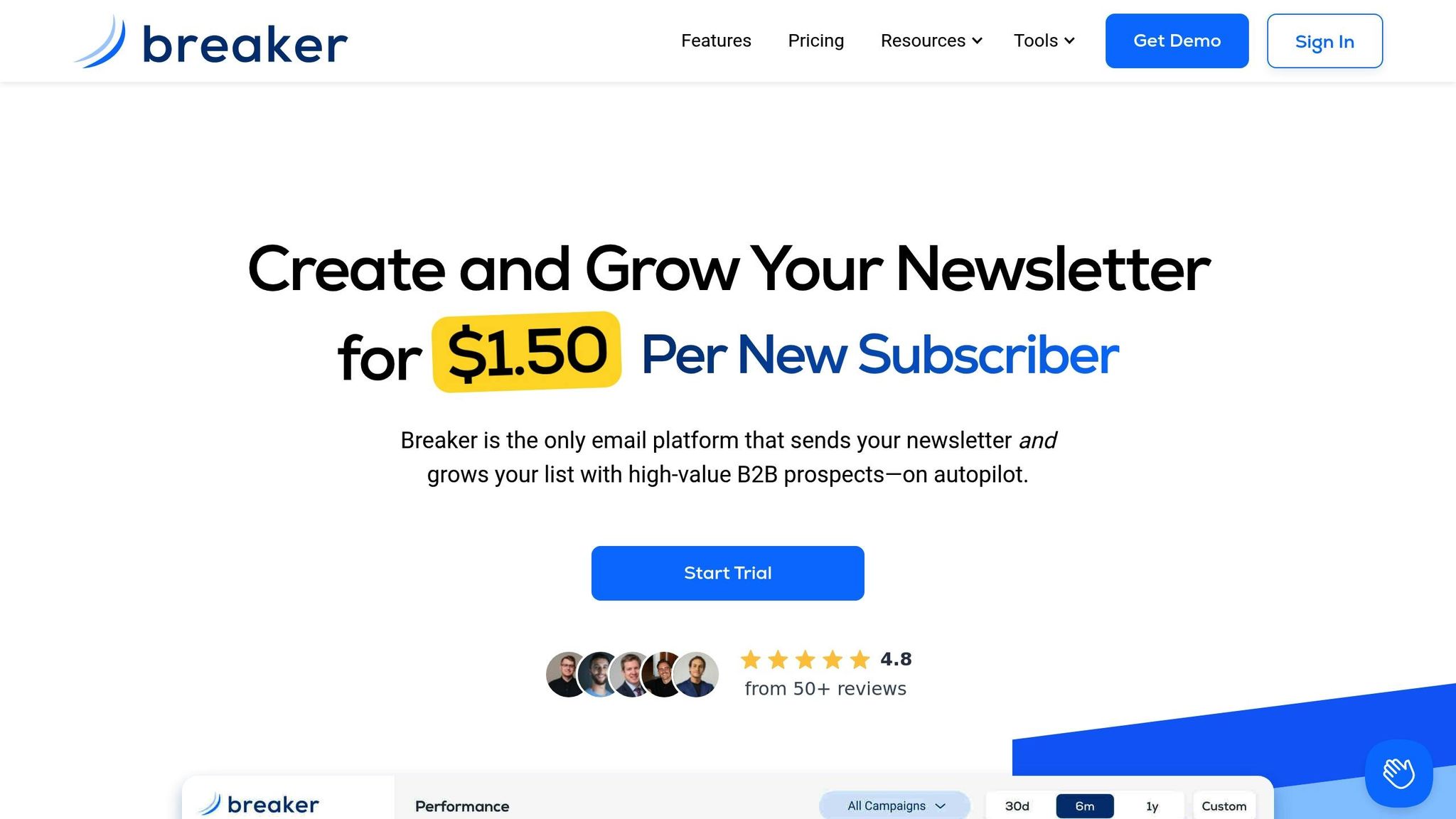
Breaker’s automated lead generation system tackles one of the biggest compliance challenges under CAN-SPAM: sending emails to recipients without their consent. By combining custom targeting, AI-driven data enrichment, and automated compliance checks, Breaker ensures your emails reach engaged B2B subscribers who have opted in to receive them. This eliminates the need for risky practices like purchasing email lists, which can lead to hefty fines and legal trouble.
Breaker also includes unlimited email validations and list hygiene tools that automatically clean your database. It removes invalid email addresses, reduces bounce rates, and optimizes deliverability. By managing mail streams, sending logic, and monitoring your sender reputation, Breaker helps ensure your emails land in inboxes - not spam folders.
Real-time analytics provide immediate feedback on metrics like open rates, clicks, and unsubscribes. This allows you to quickly address issues and ensures opt-outs are tracked automatically, keeping your campaigns compliant.
Better Email Campaign Management
Once compliance tasks are automated, Breaker simplifies the overall management of your email campaigns. The platform’s intuitive newsletter builder ensures every campaign includes all required CAN-SPAM elements, like your physical address and unsubscribe links. Built-in templates and compliance checks make it easy to avoid oversights.
With precise audience targeting, Breaker ensures your emails reach only those subscribers who match your Ideal Customer Profile and have explicitly opted in. This focused approach not only reduces the risk of spam complaints but also strengthens your sender reputation.
Breaker’s signup forms allow you to capture leads directly from your website and other channels, building a subscriber base that’s both engaged and permission-based. Plus, its integration with CRM systems keeps subscriber data up to date across all touchpoints. If someone unsubscribes on one platform, that preference is immediately updated everywhere, reducing compliance risks.
Considering that CAN-SPAM violations can cost up to $50,120 per email, using a platform like Breaker to automate compliance isn’t just a smart move - it’s a safeguard for your business and your reputation.
Conclusion: Staying Compliant and Building Trust
Following CAN-SPAM guidelines isn't just about avoiding hefty fines - though with penalties exceeding $50,000 per email, that's a compelling reason. It's also about safeguarding your brand's reputation and building trust with your audience. Non-compliance can erode credibility and cost far more than just money.
Fortunately, staying compliant is simpler than it might seem. Stick to the basics: use honest subject lines and sender details, offer a clear way to unsubscribe, include your physical address, and act quickly on opt-out requests. These straightforward steps demonstrate respect for your recipients and uphold the level of professionalism that B2B audiences value.
Automation tools can make compliance even easier. For example, platforms like Breaker handle compliance checks automatically, keep your subscriber lists tidy, and ensure every campaign aligns with CAN-SPAM rules. By focusing on engaged, opted-in subscribers and leveraging built-in compliance features, you can spend more time crafting compelling content and less time worrying about regulations. This seamless approach helps ensure your campaigns remain both compliant and effective.
FAQs
What are the risks for businesses that don’t comply with the CAN-SPAM Act?
Non-compliance with the CAN-SPAM Act can spell big trouble for businesses. Each violation can result in fines of up to $50,120, and with multiple emails in violation, those penalties can stack up fast. Beyond financial repercussions, ignoring these rules can tarnish your brand’s reputation, weaken customer trust, and even hurt your email deliverability.
To stay on the right side of the law, make sure your emails include a clear and easy way for recipients to opt out, accurate sender details, and avoid using misleading subject lines or content. Following these guidelines doesn’t just keep you legally safe - it also helps build stronger connections with your audience.
How can businesses ensure their email marketing campaigns comply with the CAN-SPAM Act when working with third-party agencies?
To comply with the CAN-SPAM Act while working with third-party marketing agencies, it's crucial to set clear expectations and maintain oversight. Start by outlining compliance requirements in your contract. Make sure the agency understands key rules, such as including a valid physical address in emails, offering a straightforward way for recipients to opt out, and avoiding deceptive subject lines or sender details.
It's also a good idea to request regular updates and reports to ensure the agency is following proper practices. Keep in mind, your business holds ultimate responsibility for compliance - even when tasks are outsourced. Partnering with a reliable agency and staying involved can help minimize the risk of any violations.
How can businesses create a consent-based email list and avoid the risks of using purchased email lists?
Building an email list based on consent is crucial for complying with the CAN-SPAM Act and earning your audience's trust. The best way to do this is by using opt-in methods like website sign-up forms, gated content, or event registrations. Be transparent - clearly explain what subscribers can expect and how their information will be used.
Steer clear of purchasing or renting email lists. These lists often include individuals who haven’t agreed to receive your emails, which can lead to complaints, damage your sender reputation, and even violate CAN-SPAM rules. Instead, focus on growing your list naturally by offering valuable content or incentives that make people want to subscribe. This strategy not only builds trust but also leads to a more engaged audience and improved email performance over time.
Related Blog Posts
Keep reading
All articlesGDPR Consent Requirements for Purchased Email Lists
Purchased email lists rarely meet GDPR's consent bar. Learn the legal basis rules, PECR overlap, and safer alternatives before you hit send.
7 Email Platforms With Inbox Placement Testing & Suppression
Compare 7 email platforms that combine inbox placement testing with suppression management, scored on features, pricing, and best-fit sender size.
Email Automation Workflow & Drip Campaign Data Structure
Learn the database schema behind email drip campaigns—tables, workflow states, and event logs that power reliable marketing automation.