
8 Staff Newsletter Ideas for B2B Growth Teams
Discover 8 proven staff newsletter ideas for B2B growth teams. Boost morale, align your teams, and drive performance with these practical examples.
Monday starts with three separate versions of the company story. Sales is pushing one message in live deals, marketing is testing another in campaigns, and product just shipped something customer success has not had time to absorb. By Friday, the gap shows up in slower handoffs, muddled positioning, and missed follow-through.
A staff newsletter can fix part of that if it is built as an operating tool, not a recap email. For B2B growth teams, the job is simple: get the right customer context, product changes, campaign lessons, and performance signals in front of the people who need them, fast enough to affect pipeline, retention, and execution.
That standard matters because internal communication now competes with Slack threads, dashboards, meeting notes, and constant notifications. As noted in modern communication tools for frontline teams, teams have limited attention and too many channels. A newsletter earns attention when it saves people time, clarifies priorities, and tells them what to do with the information.
The strongest versions are tightly edited and commercially useful. They help account teams repeat what is working, help marketers sharpen messaging, and help product teams see where revenue friction is building. Teams that already study B2B email personalization case studies will recognize the same principle internally. Relevance drives action.
Below are eight staff newsletter ideas designed for high-performance B2B teams that want stronger alignment and measurable business impact.
1. Company Wins & Customer Success Stories
The fastest way to make a staff newsletter worth opening is to prove that the work matters. Not in abstract culture language. In real customer outcomes, shipped work, and visible progress.
When a product launch helps customer success close a renewal risk, put that in the newsletter. When a sales rep uncovers a use case that sharpens positioning, put that in the newsletter too. Teams read internal updates when they can see the connection between effort and market response.

What belongs in this section
A good wins section isn't a brag reel. It's a short operating summary of momentum.
- Customer milestone: Share a meaningful adoption story, a successful launch, or a renewal that happened for a clear reason.
- Team attribution: Name the account manager, product manager, marketer, or engineer behind the result so the rest of the company sees how wins happen.
- Commercial lesson: Add one line on what others should learn from the win, such as a stronger use case, a better onboarding flow, or messaging that resonated.
For growth teams, this is also a strong place to showcase examples from your own content ecosystem. If you need inspiration on how to package outcome-driven stories, Breaker's collection of B2B email personalization case studies is useful as a format reference.
Practical rule: Every win should answer three questions in under a minute. What happened, why it mattered, and what the rest of the team should repeat.
What doesn't work is a vague line like "Great month for the team." Nobody learns from that. What works is a short story: a customer expanded usage after a clearer onboarding sequence, support surfaced the sticking point, product simplified the setup, and sales now has a sharper talk track because of it.
That kind of write-up does more than celebrate. It trains the company on how growth happens.
2. Industry Trends & Market Insights
Monday morning, sales is hearing a new objection, marketing is still using last quarter's messaging, and customer success has not adjusted onboarding yet. The issue usually is not access to information. It is the lack of a clear internal read on what changed in the market and what each team should do about it.
Industry coverage in a staff newsletter should help revenue teams act faster. For high-performance B2B teams, this section works best as a decision brief. It connects outside signals to pipeline quality, win rates, expansion opportunities, retention risk, and speed of execution across functions.
The format is simple, but the bar should be high:
- What changed: A platform policy update, a pricing shift from a competitor, a new buying pattern, a procurement trend, or a compliance development.
- Why it matters now: Which team feels the impact first, what part of the funnel is affected, and what risk or upside follows.
- What to do this week: Adjust messaging, revise sequences, update call handling, change onboarding guidance, or flag a product consideration.
Ownership matters here. Do not build this section from a pile of random links submitted by five department heads. Give one operator, usually product marketing, revenue operations, or a senior marketing lead, the job of curating the signal and writing the implication. A newsletter becomes useful when someone is accountable for the "so what."
Keep it short enough to read in under a minute. Dense enough to change behavior.
A practical example: Google and Microsoft tighten inbox expectations, open rates get less reliable as a planning input, and buyers ask harder questions about domain health and authentication. A strong newsletter item would not stop at linking the update. It would tell lifecycle marketing to review sender guidance, tell sales to expect more technical questions in evaluation calls, and tell customer success which onboarding emails deserve extra monitoring.
That is the true value of this section. It improves cross-functional timing. Teams do not waste a week figuring out whether a market change matters.
What fails is a stacked list of headlines with no interpretation. What works is curated market intelligence with a clear owner, a clear implication, and a clear next move.
3. Product Updates & Feature Deep-Dives
Release notes are necessary. They're not enough.
A growth team needs product updates that explain not only what shipped, but how to talk about it, where it fits in the customer journey, and which objections it removes. If your internal newsletter only lists features, sales won't use the language, success won't reinforce the value, and marketing won't know how to position the update.
Start with the shortest possible summary. Then offer one deeper layer for people who need it.
A simple structure works well: what changed, who it's for, why it matters, and where the team may run into questions. That gives executives a skim path and gives frontline teams enough detail to act.
For teams that learn better with demos, an embedded walkthrough works better than a wall of text:
Make the update reusable
The best product deep-dives create assets other teams can lift directly into their workflow.
- Sales talking points: Give reps two or three lines they can use in live calls.
- Support guidance: Note where users may get confused, and what answer should be consistent across tickets.
- Marketing angle: Spell out the positioning change, if there is one, so campaigns and site copy don't lag behind the product.
This is also where measurement matters. Internal newsletter performance shouldn't be judged by opens alone. PoliteMail recommends tracking open rates, click-through rates, read time, and scrolling behavior, while also comparing engagement by department, location, or role so teams can spot relevance gaps across segments (PoliteMail on internal newsletter analytics).
That matters for product updates because engineering may want a deeper explanation than account executives do. One block won't serve both equally well. Modular content usually wins here: a concise summary for everyone, plus role-based depth for the teams closest to the customer.
4. Team Member Spotlights & Culture Stories
A revenue meeting goes sideways fast when half the room does not understand what the other half does. The newsletter can fix some of that, if team spotlights are built for clarity instead of sentiment.
The strongest profiles show how a person helps the business move. For B2B growth teams, that means highlighting judgment, operating habits, and cross-functional impact. People work together faster when they know who owns what, where bottlenecks show up, and how strong teammates make decisions under pressure.

Ask questions that produce usable answers
Generic Q&As create polite content and weak alignment. A better spotlight gives every team something they can apply.
- Role clarity: What problem do you spend the most time solving?
- Cross-functional value: What do other teams usually miss about your work?
- Operating habits: What system, ritual, or decision rule helps you stay effective?
- Business impact: Which metric or customer outcome does your work influence most?
Those answers help sales, marketing, product, and customer teams collaborate with less guesswork. Personality still matters, but it should support context, not replace it.
Format matters too. A recurring structure makes the section easy to scan, while small changes in angle keep it from turning into filler. One month might feature a demand gen manager breaking down campaign handoff issues. Another might feature a solutions engineer explaining where deals stall during technical validation. Teams building their internal comms process can borrow a few format ideas from this guide on how to start a company newsletter.
The trade-off is simple. If every spotlight is too polished, people skim it and forget it. If it is too tactical, it reads like another project update. The right balance is one real story tied to one useful lesson.
One of the best versions of this section is a profile on a support lead explaining why the same implementation question keeps appearing. That gives product a clearer docs priority, gives marketing sharper onboarding language, and gives sales a better way to set expectations before the contract is signed.
Culture stories should also reinforce how the company develops talent. A short note on mentorship, manager coaching, or peer feedback works well when it is tied to performance, not slogans. If your team wants a more structured way to support manager growth between newsletter issues, a coaching platform can complement that effort.
Done well, this section does more than humanize the company. It improves alignment, shortens handoff friction, and makes strong execution more visible across the business.
5. Learning & Development Resources
Monday morning, the pipeline review exposes the same problems again. A rep mishandled discovery. A marketer shipped messaging that missed the buyer's real objection. A new manager gave vague coaching, so the issue stayed in circulation. That is where a good learning section earns its spot in the staff newsletter. It helps high-performance B2B teams fix live execution gaps before they turn into missed revenue.
The mistake is treating learning content like a resource dump. Webinars, books, certifications, and internal docs all get pasted into one block. People skim it, save nothing useful, and return to work the same way they left it.
Use this section like a targeted enablement layer. Match each resource to a current business priority, a role, and a problem the team is dealing with now. Sales can get objection-handling practice tied to an active segment. Marketing can get a short playbook on positioning for a new campaign. Managers can get coaching material that improves one-to-ones and deal reviews this quarter, not someday.
Keep the list tight and tied to execution
Three recommendations are enough when each one has a job to do.
- One skill builder: A course, certification, or internal training connected to current pipeline, onboarding, or expansion goals.
- One practical read: A short article, playbook, or summary people can apply this week.
- One peer-learning option: A lunch-and-learn, call review, study group, or coaching session.
Add context every time. State who should use the resource, what problem it addresses, and what action to take next. If you want a simple example of newsletter structure for internal education, Breaker's guide on how to start a newsletter is a useful reference for newer team members building the habit. Teams that want more manager follow-through can pair newsletter-driven learning with a coaching platform so the material shows up in one-to-ones, forecast reviews, and performance conversations.
A strong version of this section might feature one sales call review for account executives, one onboarding resource for customer success, and one manager prompt for coaching on handoff quality. That mix does more than share knowledge. It improves team skills, shortens ramp time, and keeps development tied to revenue, retention, and execution quality.
Keep it practical. Keep it current. If a resource does not help someone perform better this month, leave it out.
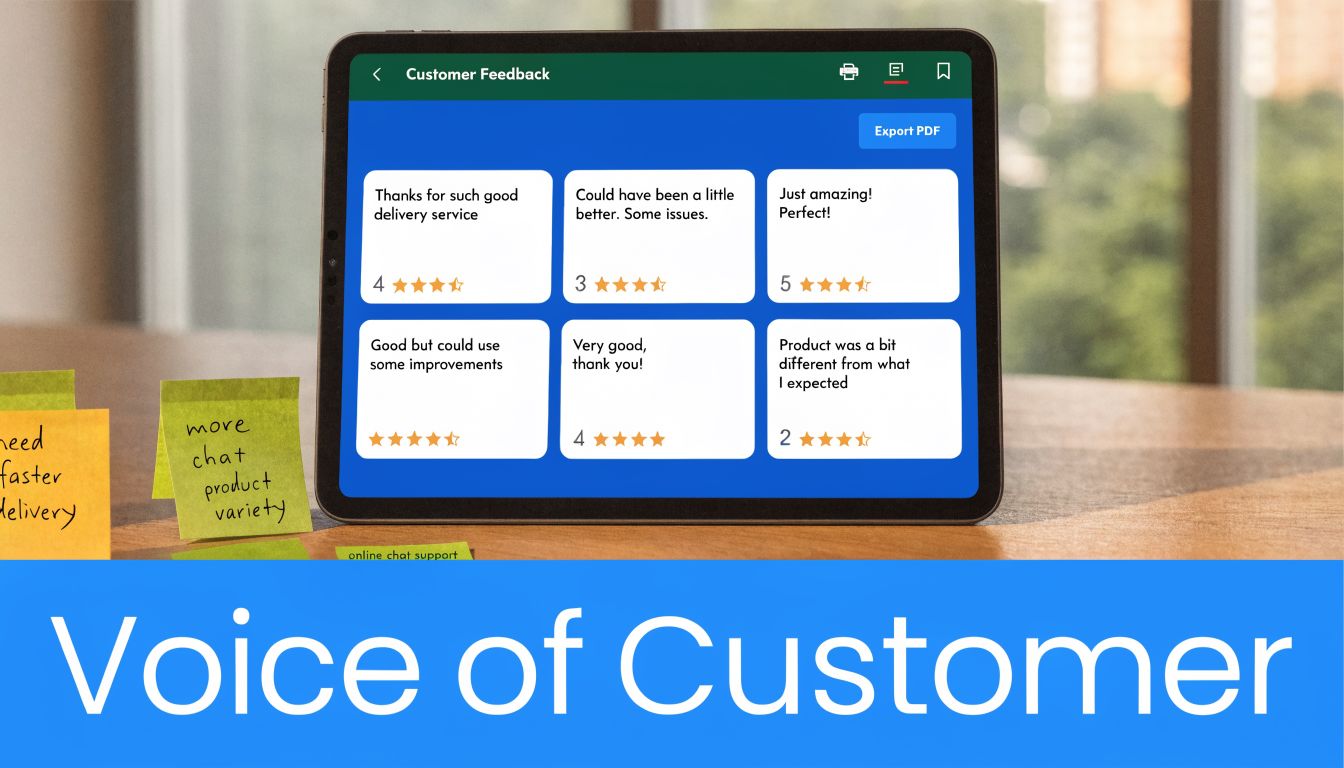
6. Customer Feedback & Voice of Customer
If your internal newsletter doesn't carry the customer's voice, the company starts operating on assumptions. Product guesses. Sales improvises. Marketing fills in blanks. That's how teams drift away from reality.
A strong voice-of-customer section creates one place where everyone can see recurring friction, emerging use cases, and sharp praise without joining every call or reading every ticket. This is one of the most impactful staff newsletter ideas because it cuts across every function.
What to include each issue
You don't need a giant research memo. You need synthesis.
- Recurring asks: The feature questions, onboarding gaps, or reporting issues that keep surfacing.
- Positive signals: Moments where customers describe clear value, easier workflows, or faster outcomes.
- Closed-loop updates: A quick note showing where feedback already influenced a launch, doc update, or process change.
Direct quotes can be powerful if you have them and can share them appropriately. If not, concise summaries still work. The important thing is honesty. Include praise and friction side by side. Teams trust this section when it doesn't read like a highlight reel.
Personalization matters here too. Nectar's discussion of employee newsletter trends points toward modular architecture, where teams combine shared core updates with role-based blocks to avoid one-size-fits-all messaging (Nectar on employee newsletter personalization and modular structure). That's a smart fit for customer feedback. Product may need feature detail, while sales may need objection patterns and language.
The best internal VOC sections don't just report customer feedback. They show who is acting on it this week.
Done well, this section becomes a forcing function. Teams stop saying "customers might want this" and start saying "we've heard this pattern repeatedly, and here's the response."
7. Performance Metrics & Company Health Dashboard
Some leaders avoid internal metrics because they're afraid context will create anxiety. In practice, the opposite is usually true. People create worse stories in the absence of facts.
A company health dashboard in the newsletter gives teams a regular, lightweight read on what is improving, where pressure is building, and how their work connects to actual business movement. The discipline here is clarity. Nobody wants a finance spreadsheet pasted into an email.
Report the few metrics that shape action
Pick the measures that help teams make better decisions now.
- Growth indicators: Pipeline movement, usage trends, retention patterns, or strategic initiative progress.
- Operational indicators: Hiring progress, onboarding health, support themes, or launch readiness.
- Context: A short explanation of why a metric moved, especially if the trend is mixed.
This is also where you should measure the newsletter itself with more rigor. One internal-comms guide shared by beehiiv reports that reducing send frequency from weekly to every two weeks improved open rates from 23% to over 70% for one team case, with employees saying they appreciated not feeling bombarded (beehiiv on employee newsletter cadence and engagement). That's a useful reminder that more updates don't automatically create more alignment.
For deeper reporting, your newsletter metrics should sit next to your broader operating metrics. If you're using a platform with campaign analytics, include a short trend line on what content people engage with. Breaker's article on email campaign performance metrics is a practical reference for the kinds of signals teams should understand. The same discipline applies in adjacent channels too, especially if you're also building a measurement culture around social media operations measurement.
A dashboard section works best when it tells the truth plainly. Green metrics without context feel polished and useless. Honest metrics build trust.
8. Sales & Marketing Wins, Strategies & Campaigns
This section should feel like internal field intelligence, not self-congratulation.
Growth teams need a place to document what messages landed, what objections stalled deals, which campaigns drove quality response, and where handoffs worked or broke. If that insight only lives in Slack threads and call recordings, the company keeps relearning the same lessons.
Share the playbook, not just the outcome
The strongest sales and marketing write-ups explain why something worked.
A useful campaign recap might note that a message resonated because it addressed a specific operational pain, not because the creative was clever. A useful deal summary might show that the winning conversation happened after the rep reframed the problem around workflow efficiency instead of feature depth.
This section should also include misses. A campaign that generated attention but low-quality response is worth documenting. So is a sales motion that created meetings but collapsed in procurement. Teams get sharper when they can study false positives.
One practical habit is to rotate ownership. Let one rep, one marketer, and one cross-functional pair contribute in alternating issues. That keeps the section grounded in real work and stops it from becoming a top-down narrative.
A plain format works well:
- What we ran or sold
- What we expected
- What happened
- What we'll repeat or change
When companies do this consistently, the newsletter becomes a lightweight revenue operating system. New reps ramp faster. Product marketing hears the market sooner. Demand gen stops guessing which language sales can use. That is the version of internal comms that growth teams should be building.
8-Item Staff Newsletter Comparison
Content Type
Implementation Complexity 🔄
Resource Requirements ⚡
Expected Outcomes 📊
Ideal Use Cases 💡
Key Advantages ⭐
Company Wins & Customer Success Stories
Medium, needs customer approval and case prep
Moderate, CS time, design, copy
Boosted credibility, internal morale, tangible ROI examples
Sales enablement, marketing collateral, internal recognition
Authentic social proof; repurposable content
Industry Trends & Market Insights
Medium–High, ongoing research and curation
Moderate, analyst time, data access
Better strategic decisions; informed roadmap and sales messaging
Product planning, sales talking points, thought leadership
Anticipates market shifts; demonstrates expertise
Product Updates & Feature Deep‑Dives
High, coordination with product/engineering
High, product, engineering, design, docs
Faster adoption; improved support and sales confidence
Launch enablement, training, technical enablement
Reduces support friction; aligns teams; drives adoption
Team Member Spotlights & Culture Stories
Low, simple interviews and edits
Low, communications/HR time, basic media
Stronger culture and cross‑team connection
Remote/hybrid culture building, onboarding
Humanizes org; boosts belonging and internal networks
Learning & Development Resources
Medium, curation and program coordination
Moderate–High, L&D budget, course access, time
Skill growth, higher retention, consistent messaging
Onboarding, career development, role‑specific upskilling
Elevates capability; reduces ramp time
Customer Feedback & Voice of Customer
Medium, continuous collection and synthesis
Moderate, CS, support, research effort
Clearer product priorities; increased empathy; validated needs
Product prioritization, support training, roadmap input
Direct, actionable customer insights for prioritization
Performance Metrics & Company Health Dashboard
High, requires accurate data pipelines
High, analytics, finance, cross‑team input
Transparency, strategic alignment, motivation
Leadership updates, company‑wide transparency, OKR reviews
Builds trust; informs hiring and strategic decisions
Sales & Marketing Wins, Strategies & Campaigns
Medium, curation with discretion on details
Moderate, sales/marketing time, campaign data
Shared best practices; repeatable GTM plays; momentum
Rep enablement, GTM alignment, campaign retrospectives
Scales playbooks; accelerates new rep ramp and wins
Putting Your Newsletter to Work Implementation and Measurement
Monday morning, the revenue team opens a staff newsletter. One group finds clear priorities, useful customer context, and a quick read on what changed last week. Another group gets a long internal memo with no obvious action. The difference is not design. It is operating discipline.
A staff newsletter for a B2B growth team should run like any other channel tied to business outcomes. Assign one owner. Set a fixed send cadence. Decide what the newsletter needs to improve: tighter product and sales alignment, faster onboarding for new reps, better visibility into pipeline risks, or clearer accountability around quarterly priorities.
Keep the format tight. Teams that need to move fast do not need a long recap of everything happening across the company. They need a short, credible update they can scan in minutes and use the same day. That usually means repeatable sections, clear headlines, and a bias toward decisions, customer signal, and performance context over filler.
Measurement separates a newsletter people tolerate from one people use. Track opens, click patterns, read depth, replies, and direct feedback from managers and team leads. Then connect those signals to behavior that matters to the business. Did product update clicks increase feature adoption? Did sales win summaries get reused in calls? Did customer feedback sections reduce repeated questions from go to market teams? Internal content should earn its place the same way external content does.
Segmentation improves results fast. A company-wide version can carry the core message, but growth teams usually need role-specific relevance layered on top. Sales needs deal insight and objection handling. Marketing needs campaign results and market shifts. Product needs customer friction and adoption signals. Leadership needs cross-functional patterns and execution risk. Sending the same issue to every audience usually lowers relevance and trains people to ignore it.
Start smaller than you think. Pick one or two high-value sections from this list and run them for three or four sends before you expand. That gives you enough signal to judge what people read, share, and act on. Keep the sections that drive useful behavior. Cut the ones that only fill space.
The trade-off is simple. A broader newsletter feels inclusive, but it usually gets weaker engagement and less practical value. A narrower newsletter takes more editorial judgment, but it improves alignment faster because every block has a job.
If you're already running newsletters as part of your growth motion, a platform like Breaker can fit into that workflow. It combines email sending, analytics, and audience growth tools, which helps teams manage execution with clearer visibility into opens, clicks, subscriber growth, and ROI. The bigger point is the standard you set. Treat the staff newsletter like a working growth asset, and it becomes a reliable system for alignment, adoption, and execution.
Keep reading
All articlesPost-Webinar Survey Questions Template (2026)
30+ post-webinar survey questions with NPS, CSAT, and CES templates, plus timing and length tips to boost completion and qualify leads faster.
GDPR Consent Requirements for Purchased Email Lists
Purchased email lists rarely meet GDPR's consent bar. Learn the legal basis rules, PECR overlap, and safer alternatives before you hit send.
7 Email Platforms With Inbox Placement Testing & Suppression
Compare 7 email platforms that combine inbox placement testing with suppression management, scored on features, pricing, and best-fit sender size.