
B2B Lead Generation LinkedIn: The 2026 Growth Playbook
Master B2B lead generation linkedin strategies in 2026. Optimize your profile, find high-value targets, and create content that converts prospects into ROI.
80% of all B2B social media leads come from LinkedIn, and it generates 277% more leads than Facebook and Twitter combined, according to LinkedIn statistics collected in this 2025 analysis. That should change how marketing professionals think about the channel.
Too many companies still treat LinkedIn as a brand side project. A few posts from the company page. A founder post when launch week rolls around. Some outbound connection requests from sales. Then they wonder why nothing ties back to pipeline.
That approach breaks because b2b lead generation linkedin only works when you run it like a system. The profile has to convert. Targeting has to reflect your ICP. Content has to create familiarity before outreach lands. Lead capture has to reduce friction. Measurement has to connect activity to meetings, opportunities, and revenue.
The teams that get results don't chase vanity metrics. They build a repeatable engine. One part outbound prospecting. One part inbound authority. One part retargeting and nurture. One part CRM discipline.
Your LinkedIn B2B Lead Generation Playbook for 2026
LinkedIn wins B2B because intent is already baked into the platform. People show up with their role, company, seniority, and professional context attached to every interaction. That makes the channel uniquely useful for growth teams that care about precision.
A workable playbook starts with a simple shift. Stop thinking about LinkedIn as a social profile plus a posting schedule. Start treating it as a revenue surface. Every element should help a qualified buyer understand who you help, what problem you solve, and what action they should take next.
Treat your profile like a landing page
Most profiles still read like resumes. Buyers don't care. They care whether your profile gives them a fast answer to three questions:
- Who is this for: Name the audience in plain language.
- What problem gets solved: Focus on business pain, not personal background.
- What should I do next: Give one clear next step.
The above-the-fold area matters most. Your headline should speak to the buyer, not your job title. Your photo should look credible and current. Your banner should reinforce the positioning, not waste the space with a logo.
Practical rule: If a target account visits your profile, they should understand your value in a few seconds without clicking “see more.”
Make the About section and company page pull their weight
The About section should read like a compact sales narrative. Lead with the problem. Show the point of view. Explain the outcome. End with a simple call to action.
The company page matters too, but it's rarely the first trust signal. Buyers often check the person before the brand. That means your personal profile usually does the heavy lifting, while the company page confirms legitimacy, reinforces category positioning, and houses proof through posts, offers, and team activity.
Strong LinkedIn lead generation isn't random posting plus hope. It's a connected operating model built to move buyers from first impression to measurable pipeline.
Build Your Lead Generation Foundation
A shaky foundation ruins everything downstream. If your profile is vague, your list quality won't save you. If your company page looks abandoned, content won't carry the trust gap. Before you touch outreach, fix the conversion layer.

Build the above-the-fold view for conversion
Think like a demand gen marketer, not a job seeker.
- Headline with a buyer outcome: Don't write “Founder at X” or “B2B Marketing Consultant.” Write the audience and business result. That gives qualified visitors a reason to stay.
- Photo that feels professional but human: You don't need studio perfection. You do need clarity, confidence, and consistency with how you show up in meetings.
- Banner as positioning real estate: Use it to reinforce category, offer, or problem-space. A blank default banner wastes prime attention.
- Featured section with one next step: Link to a core asset, offer, or proof point. Too many options dilute action.
The same principle applies to your company page. Keep the description tight, the visual identity consistent, and the latest posts relevant to active buyer concerns.
Use the About section to qualify and attract
The About section should filter as much as it persuades. You want the right people to lean in and the wrong people to move on.
A simple structure works well:
- Name the market or buyer you serve.
- Call out the core pain points.
- Explain your approach in practical language.
- Point to the outcome you help create.
- End with a low-friction next step.
That keeps the page focused on the prospect, not your career timeline.
A good profile doesn't try to impress everyone. It helps the right buyers self-identify.
Free search versus Sales Navigator
Free LinkedIn search can work if you're disciplined. You can still use role terms, company names, and Boolean logic to find relevant people. But it becomes manual fast, and the workflow gets messy when you're trying to scale account coverage or watch for intent signals.
Sales Navigator gives you the operational advantage. You can segment by title, seniority, function, industry, company characteristics, and engagement context with more precision. The primary benefit isn't just more filters. It's cleaner prospecting workflows and faster iteration when your first audience cut is off.
For teams without Sales Navigator, Boolean search is the fallback. Start with combinations like role plus industry plus exclusion terms. For example, include target titles and remove student, recruiting, or adjacent roles that clutter the result set. You're looking for relevance first, then volume.
Pinpoint Your Ideal Customers with Advanced Targeting
Targeting is where most LinkedIn programs fail. Not because the tools are weak, but because the ICP is fuzzy. If your audience definition is broad, your campaigns get expensive, your outreach gets ignored, and your content attracts the wrong people.

Start with a real ICP, not a wish list
A usable ICP is specific enough to guide search, messaging, and offer selection. It should include firmographics, likely buyer roles, and the context that makes your solution relevant now.
If your team needs a tighter definition, this guide on what an ICP means in marketing is a useful reference point before you build lists.
Good targeting starts to look sharper when you map:
- Company fit: industry, business model, size, region
- Role fit: decision-maker, influencer, operator, budget owner
- Situation fit: hiring, expansion, process change, active demand signal
- Exclusions: customers, competitors, recruiters, students, irrelevant functions
That last item matters more than many businesses realize. Exclusions protect quality.
Use Boolean logic to tighten the list
LinkedIn gives you enough data to work account-first or persona-first. Both can work. The key is using logic that reflects how your buyers appear on the platform.
A simple structure might look like this:
Search goal
Boolean example
Marketing leaders in SaaS
(VP Marketing OR "Head of Marketing" OR CMO) AND SaaS NOT agency NOT student
Revenue leaders in mid-market tech
(CRO OR "VP Sales" OR "Head of Revenue") AND software NOT enterprise NOT recruiting
Ops buyers with implementation influence
("Marketing Operations" OR RevOps OR "Demand Generation") AND B2B NOT consultant
This isn't about writing the cleverest string. It's about reducing noise. A narrower list with stronger fit outperforms a bloader list almost every time.
Build an ABM motion, not just a contact list
The strongest b2b lead generation linkedin programs don't stop at individual names. They map the buying group inside target accounts. One person may engage with your content. Another may own budget. Someone else may influence implementation.
That's why account-based work on LinkedIn should include:
- Named accounts: Start with companies you want, not just titles you can find.
- Multi-threading: Save multiple stakeholders at each account.
- Trigger monitoring: Watch for post activity, job changes, team growth, and category conversations.
- Message variation: Tailor outreach by role, not just by company.
Creative matters here too. If you're using paid distribution, format errors can undercut otherwise strong campaigns. Keep LinkedIn ad size and specs for 2026 handy so your creative team doesn't introduce avoidable friction.
A quick walkthrough helps if your team is building this from scratch:
Use content and targeting together
Targeting doesn't end when the list is built. It should shape the content your prospects see before anyone sends a message. A VP-level buyer doesn't need beginner education. An operator may want implementation detail. A founder may respond to category positioning and risk reduction.
That's where many teams miss the compounding effect. Good targeting improves content resonance. Better content warms the audience. Warmer audiences make outreach feel familiar instead of cold.
Create Content That Attracts and Engages Prospects
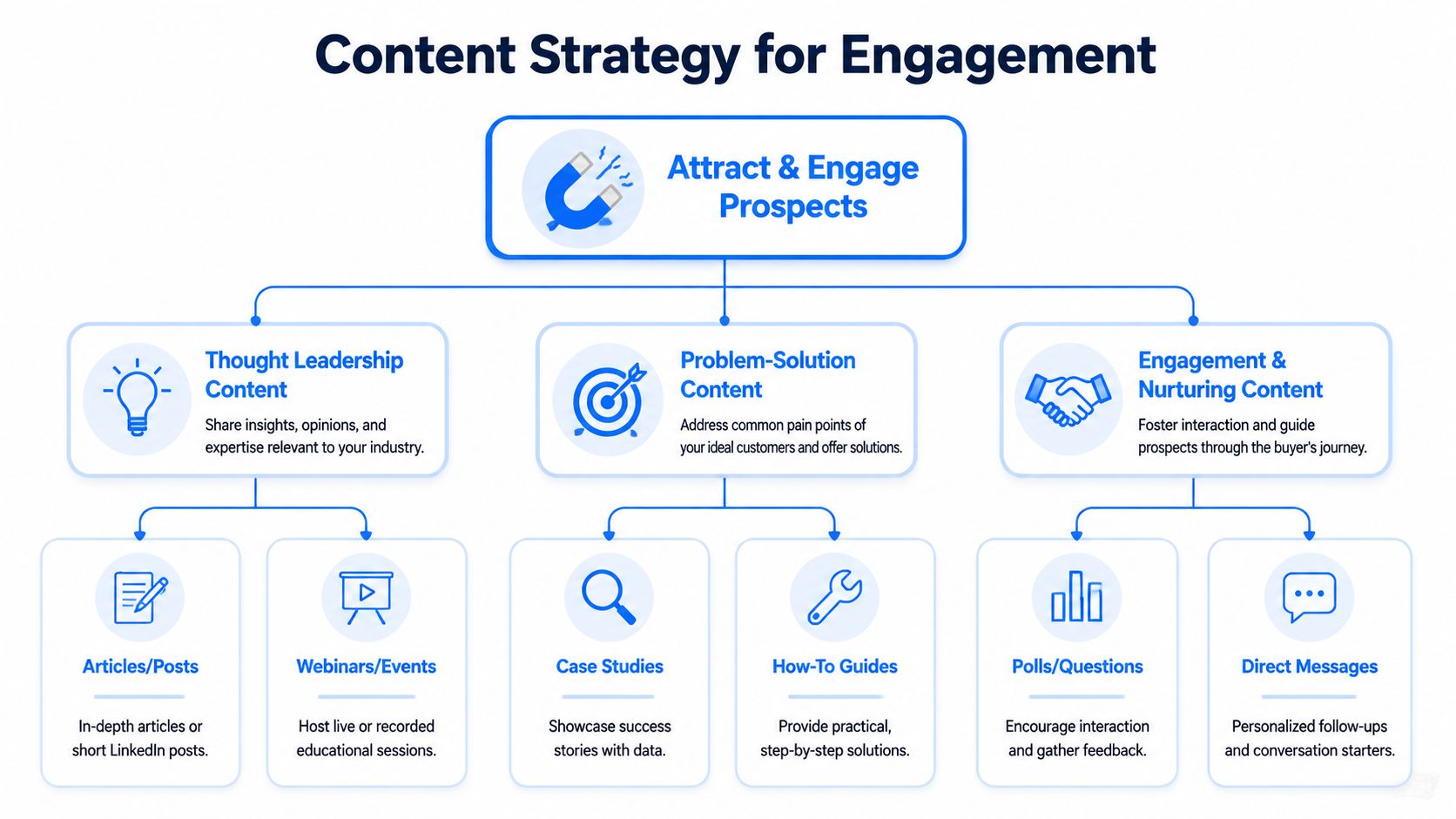
Thought leadership influences buying behavior. Edelman and LinkedIn found that many B2B decision-makers have taken action after consuming a single strong piece of thought leadership content, according to their B2B Thought Leadership Impact Report. On LinkedIn, that matters because content shapes whether your later outreach feels familiar, credible, or easy to ignore.
Content should do more than generate impressions. It should warm target accounts, surface intent, and give your team a clearer path from engagement to pipeline.
Use a pillar and post model
Strong LinkedIn programs are built on repeatable themes, not daily improvisation. Start with one point of view tied to a real commercial issue your buyers care about, such as lowering CAC, shortening sales cycles, improving demo-to-opportunity rate, or fixing handoff friction between marketing and sales.
Then turn that into a content package:
- A text post: one clear lesson from campaign data, sales calls, or category trends
- A carousel: a framework, teardown, or step-by-step process
- A short video: a sharp take on one objection or misconception
- A comment plan: several useful responses placed under posts your buyers already read
This format keeps your message consistent across touchpoints. It also makes attribution easier because the same core idea can show up in profile views, content engagement, inbound replies, and influenced opportunities. If you want offers that connect content to lead capture, review these lead magnet examples for B2B marketers.
Publish for buying progress
Good LinkedIn content helps a buyer make a decision, defend a decision, or avoid a bad decision. That is a better standard than chasing likes from peers.
Three content types carry most of the load:
Content type
What it does
Best use
Thought leadership
Gives buyers a point of view on the market, category, or strategy
Category positioning
Problem-solution content
Addresses active pain with practical fixes and examples
Mid-funnel trust
Conversion-support content
Handles objections, risk, and implementation questions
Pipeline acceleration
The trade-off is simple. Broad content usually gets more engagement. Specific content usually gets better-fit leads. Growth teams should bias toward specificity, then use distribution and repurposing to expand reach without diluting the message.
Publish ideas your buyer can reuse in an internal meeting, budget discussion, or vendor review.
Match the content to the buying committee
A single post rarely works for every stakeholder in a target account. Senior leaders respond to commercial outcomes. Functional owners want execution detail. Cross-functional influencers often care about change management, resourcing, and risk.
That means one topic may need multiple angles. A post about outbound efficiency can become a CFO-friendly take on cost per opportunity, an SDR-leader breakdown of workflow changes, and a revenue operations post on measurement. The theme stays consistent. The framing changes so each audience sees why it matters to them.
That is how content supports an account strategy instead of floating beside it.
Commenting is distribution, not cleanup work
Commenting deserves the same attention as publishing because it puts your thinking in front of buyers who may never see your post in the feed. Done well, comments create qualified profile visits and make later outreach warmer.
Focus on three places:
- Target account posts: Add context, a counterpoint, or a practical example
- Industry creators: Contribute something detailed enough to earn curiosity clicks
- Peer discussions: Show judgment on trade-offs, not generic agreement
The best comments carry a real point of view. They read like condensed strategy notes, not audience bait.
Keep the cadence tied to team capacity
A content plan fails when it looks good on paper and collapses under production load. Pick formats your team can sustain while still running campaigns, following up on intent, and building pipeline.
A workable rhythm for many growth teams looks like this:
- Publish one strong point-of-view post tied to a business problem.
- Repurpose it into a carousel or short video.
- Turn objections from comments or calls into follow-up posts.
- Track which topics drive profile visits, inbound messages, booked meetings, and influenced pipeline.
Consistency matters. Measurement matters more. If a post gets attention but never contributes to conversations with the right accounts, it is brand activity, not lead generation.
Design High-Converting Outreach and Capture Systems
LinkedIn only produces pipeline when outreach, offer design, and capture flow work as one system. A good message can start the conversation. A good form can convert existing interest. Growth teams need both connected to the same buying path.
Write messages that sound researched
Strong outreach earns the next step. It does not ask for the meeting before trust exists.
The connection request should be short, specific, and grounded in a real reason for reaching out. Generic flattery does not count as personalization. A credible note usually pulls from one of four inputs: role context, a recent company trigger, something they published, or a business problem common to their segment.
Use that context to make the message feel selected, not automated:
- Reference a role-specific challenge or current initiative
- Mention a recent post, hiring pattern, funding event, or product move
- Keep the note focused on relevance, not your company story
- Save the ask for later unless the buyer already showed intent
Benchmarks vary by audience and offer, but personalized outreach consistently outperforms generic requests. LinkedIn's own sales guidance and practitioner testing both point in the same direction. Relevance raises acceptance and reply quality because the buyer can immediately see why the conversation may matter.
Use a sequence with clear intent
A sequence should read like a thoughtful progression, not a stack of isolated templates.
Day
Action
Template Focus
Day 1
Connection request
Reference role, recent post, mutual context, or relevant business trigger
Day 3
First follow-up
Share a useful observation, resource, or practical angle tied to their likely priorities
Day 7
Second follow-up
Ask a low-pressure question that invites discussion, not a meeting request by default
Later
Nurture touch
Engage with their content or send a relevant asset when timing makes sense
The first follow-up should contribute something useful. A short point of view, a relevant benchmark, or a specific observation about their motion is enough. The second follow-up should test whether the timing is real.
That trade-off matters. More direct sequences can increase short-term meeting volume, but they usually lower reply quality and create weaker sales conversations. Teams targeting enterprise accounts should bias toward fewer, better touches. Teams working mid-market with a strong offer can push harder, as long as message quality stays high.
Short beats clever.
Don't pitch in the connection request
Pitching in the connection request is the easiest way to kill response quality. If the first touch reads like a compressed sales email, buyers ignore it.
Avoid:
- Product dumps
- Calendar links in the first message
- Claims with no context
- Generic personalization like “noticed we're both in B2B”
Do this instead:
- Start from their role and likely problem set
- Mention a credible reason for reaching out
- Give them something useful to react to
- Leave room for an actual reply
The goal of touch one is simple. Get the connection and earn permission for a real exchange.
Use Lead Gen Forms for the right offers
Paid capture works best when the offer matches the buyer's level of intent. LinkedIn reports that Lead Gen Forms can reduce submission friction because the fields are pre-filled with profile data, which makes them a strong fit for mid-intent conversions such as event signups, assessments, gated research, and selected demo requests.
That does not mean forms are always the better choice. A landing page is usually better when the buyer needs more context, proof, or qualification before converting. Use forms when speed matters. Use pages when education matters.
A few execution choices usually have the biggest impact:
- Keep the form short and ask only for data sales will use
- Match the offer to a specific pain point, not a broad category
- Align ad copy, form headline, and thank-you step so the experience feels consistent
- Route submissions into the right nurture or SDR workflow immediately
Teams that treat this as part of marketing campaign optimization on LinkedIn and beyond usually outperform teams that run forms as isolated lead collection tactics. The difference is follow-up speed, audience segmentation, and offer-to-funnel fit.
Connect outreach to capture
Outreach and lead capture should reinforce each other. If a prospect engages with content but does not reply, paid retargeting can present a lower-friction conversion path. If a prospect submits a form but is not ready for sales, follow-up should shift into nurture, not disappear into a CRM queue.
That is how LinkedIn becomes a pipeline system instead of a pile of disconnected activities.
Build the flow so every meaningful signal has a next step:
- Profile visit after outreach. Retarget with an offer tied to the same problem
- Content engagement from a target account. Trigger a warmer outbound sequence
- Form fill without meeting intent. Move into nurture with role-relevant follow-up
- Positive reply without conversion. Hand off with context so sales does not restart the conversation
The best growth teams do not judge LinkedIn by connection counts. They judge it by whether these handoffs create qualified conversations, opportunities, and revenue.
Measure and Optimize Your Lead Generation Engine
The biggest LinkedIn mistake isn't bad creative or weak outreach. It's stopping measurement at activity. Teams celebrate impressions, profile views, and connection counts, then struggle to explain what the channel produced.
Track the metrics that map to revenue
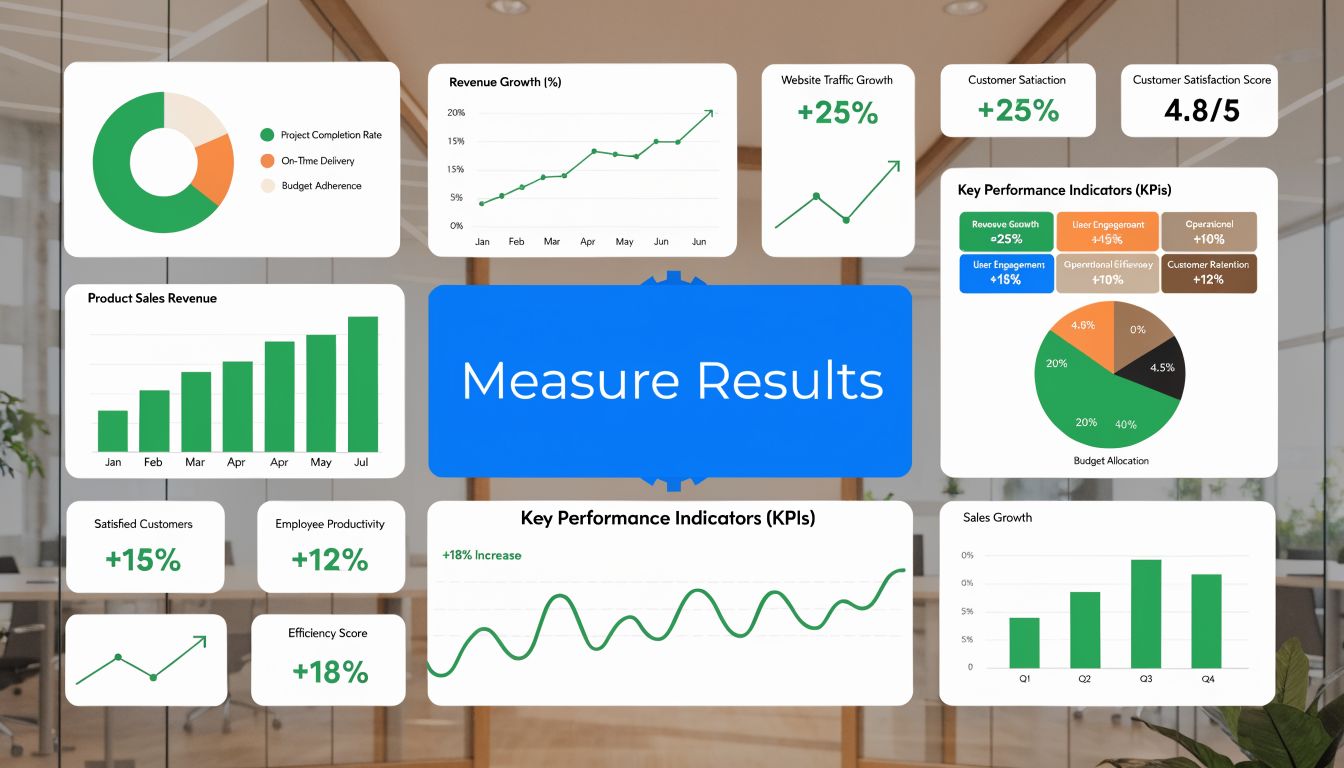
Activity metrics still matter. They help diagnose where the system is breaking. But they are not the finish line.
Use a simple progression:
- Top of funnel: acceptance rate, reply rate, content engagement, form fills
- Mid funnel: qualified conversations, MQLs, sales acceptance
- Pipeline: SQLs, meetings held, opportunities created
- Revenue: closed-won influenced or sourced by LinkedIn touches
Effective CRM hygiene is essential. Every lead source, campaign touch, audience segment, and conversion event should map cleanly enough that marketing and sales can see the same story.
Close the loop with CRM sync and matched audiences
The strongest teams connect LinkedIn directly to the CRM and use that data to improve both targeting and follow-up. According to Directive's LinkedIn B2B lead generation playbook, teams using CRM-synced matched audiences achieve 2-3x higher pipeline velocity, while integration gaps still leave up to 40% of leads untracked.
That second number is the warning sign. If your systems don't talk to each other, your reporting is incomplete and your optimization gets distorted.
For ongoing refinement, this resource on marketing campaign optimization is useful once you have source and pipeline data flowing properly.
If LinkedIn generates demand but your CRM can't attribute the next steps, the channel looks weaker than it is and underfunding follows.
Use a practical ROI model
You don't need a perfect attribution model to make better decisions. You do need a consistent one.
A simple way to evaluate LinkedIn-attributed ROI is:
Input
What to include
Return side
Opportunity value or closed-won revenue influenced by LinkedIn
Cost side
Ad spend, tools, content production time, and outsourced execution if relevant
View
Separate sourced pipeline from assisted pipeline so you don't over-credit or under-credit the channel
Last-click attribution usually undervalues LinkedIn because a lot of its impact shows up earlier in the buyer journey. A prospect may see a post, click an ad later, join a webinar, then book through direct outreach. If your team only credits the final touch, you'll miss the channel's real contribution.
Review performance like an operator
A monthly review should answer four questions:
- Which audience segments produced qualified conversations?
- Which content or offers created the strongest downstream movement?
- Where did leads stall between capture and sales follow-up?
- Which campaigns deserve more budget because they influenced real pipeline?
That's how LinkedIn becomes a growth engine instead of a noisy activity stream.
If you want a cleaner way to turn LinkedIn demand into owned audience growth, Breaker helps B2B teams capture, expand, and nurture the right subscribers while tracking opens, clicks, subscriber growth, and ROI in one place. It's built for marketers who want lead generation systems, not disconnected campaigns.
Keep reading
All articlesBreaker for B2B, SME and Consumer Newsletter Senders
Learn how B2B, SME, and consumer audiences differ in newsletters, plus a framework for segmenting, messaging, and monetizing each without losing relevance.
What Is a B2B Content Engine
Learn what a B2B content engine is, how it differs from a content calendar or strategy, and why it's essential for AI-driven search in 2026.
8 Best Email Tracking Software Tools in 2026
Compare 8 top email tracking tools for 2026, how tracking pixels work, and why Apple's privacy rules make open rates unreliable. See our top pick.