
Mastering B2B Marketing Campaign Optimization
Master marketing campaign optimization with our B2B guide. Get a step-by-step framework for KPIs, ICP targeting, A/B testing, and scaling growth.
You launch a campaign, watch the opens come in, see a few clicks, and then hit the wall every B2B marketer knows too well. Sales asks whether the campaign produced pipeline. Leadership asks whether the budget was worth it. Marketing has a dashboard full of activity, but not a clean answer.
That gap is where most campaigns underperform.
The problem usually isn't effort. Teams write decent copy, build reasonable segments, and send on time. The problem is that they optimize the visible parts of the campaign while ignoring the operating system underneath it: goal setting, audience quality, list health, test design, and attribution. A newsletter can look healthy on the surface and still miss revenue, or look average in-channel and nonetheless produce high-intent opportunities later.
Marketing campaign optimization works when you treat it as a rhythm, not a cleanup task after launch. You define the business outcome first. You tighten targeting. You protect deliverability. You test one thing at a time. You connect response data to CRM outcomes. Then you document what worked so the next campaign starts from a stronger baseline.
That matters even more in B2B newsletters, where the send itself is only one part of the job. If inbox placement slips, if the list is broad, or if the CTA attracts curiosity instead of intent, your reporting gets noisy fast. Teams dealing with inbox placement issues should fix that before touching creative. A practical starting point is this guide on why emails go to spam and how to correct the underlying issues.
Introduction Why Most Campaigns Underperform
Most underperformance starts long before the send.
A campaign gets briefed as “drive awareness” or “promote the launch,” which sounds fine until reporting day. Then the team defaults to opens, clicks, and top-line engagement because those are easy to grab. Nobody agreed upfront on whether success meant qualified meetings, product signups, sourced pipeline, or lower acquisition cost.
Good campaigns still fail if the system is weak
I've seen newsletter programs fail for three common reasons:
- The audience was too loose: The list included people who could engage with content but had no buying intent.
- The CTA asked for too little commitment: “Learn more” generated curiosity clicks, not serious hand-raisers.
- The reporting stopped at the email platform: Marketing knew what happened in the inbox, but not what happened after the lead hit the CRM.
Most B2B teams don't need more campaigns. They need tighter feedback loops between targeting, messaging, and revenue data.
The fix isn't glamorous. It's operational. You choose a business KPI, build segments around a clear ICP, protect sender health, and run disciplined tests that produce learnings you can reuse. That approach won't make every campaign a winner, but it does make results easier to explain and improve.
Optimization is a weekly operating habit
Strong teams don't wait for quarter-end to optimize. They review campaign behavior continuously and make measured adjustments. That usually means checking list quality, segment response, CTA performance, and downstream conversion signals on a steady cadence.
When newsletter campaigns become part of lead generation, optimization stops being “email tuning” and starts becoming demand generation infrastructure.
Aligning Campaign Goals with Business Impact
If your campaign goals don't map to money, pipeline, or customer quality, you're not optimizing. You're decorating a dashboard.
That sounds harsh, but budget pressure has changed the standard. According to Firework, 83% of marketing leaders now prioritize demonstrating ROI as their top objective in its 2025 marketing ROI statistics. That shift shows up in how teams get questioned internally. Nobody asks for more graphs. They ask whether the campaign helped the business move.
Stop reporting activity as success
Opens, impressions, and clicks still matter. They tell you whether the campaign got noticed. They don't tell you whether it produced the kind of response your business can monetize.
In newsletter campaigns, that distinction matters more than marketers admit. A subject line can inflate opens from low-intent readers. A punchy CTA can generate traffic from people who will never become a customer. If your reporting ends there, you'll optimize toward noise.
Use activity metrics as diagnostic inputs, not executive outcomes.
Vanity Metrics vs. Business Impact KPIs
Vanity Metric (What It Looks Like)
Business KPI (What It Actually Means)
Optimization Question to Ask
Open rate
Qualified traffic to a landing page or product flow
Did the people who opened match our buying audience?
Click-through rate
Conversion rate from click to lead or signup
Did clicks turn into meaningful next steps?
Total subscribers
Engaged subscribers who fit the ICP
Are we adding the right readers or just adding volume?
Impressions
Cost to acquire a qualified lead
Are we paying for visibility that never creates pipeline?
Social shares
Sales conversations or sourced opportunities
Did this attention create buyer movement?
Time on page
Progression into the funnel
Did the content move prospects closer to purchase?
That table changes the conversation inside the team. Instead of asking whether the newsletter “performed,” you ask whether it produced efficient acquisition, stronger lead quality, or faster pipeline movement.
Tie each campaign to one primary business outcome
Most B2B newsletter campaigns get muddled because they try to do too much. They educate, announce, nurture, and sell at the same time. The result is soft messaging and vague analysis.
A better approach is to assign one primary outcome per campaign:
- Pipeline creation: Use content and CTAs designed to generate meetings, demos, or product-qualified actions.
- Subscriber acquisition: Focus on adding relevant readers who match your ICP and can be nurtured into future demand.
- Expansion or retention: Use role-specific messaging for existing customers, users, or accounts already in motion.
- Partner or sponsorship revenue: Optimize around sponsor performance, referral actions, or monetizable engagement.
Once that primary outcome is clear, the rest of the campaign gets sharper. The segment tightens. The CTA becomes more direct. Reporting gets less political because everyone agreed on the target before launch.
Build reporting around decisions
Most dashboards fail because they answer the wrong question. They show what happened, but not what to do next.
A useful dashboard for marketing campaign optimization should help you decide:
- Should this segment keep receiving this message?
- Should we keep funding this acquisition source?
- Should this CTA become the default?
- Should sales follow up differently based on source or content consumed?
If your reporting can't support those calls, it's not a decision system.
For teams refining newsletter performance, this guide to email campaign performance metrics that actually matter is useful because it helps separate diagnostic engagement data from business-impact reporting.
Practical rule: Report opens and clicks to the team. Report acquisition cost, lead quality, and revenue contribution to leadership.
That one distinction cleans up a lot of bad optimization work.
Mastering Audience Targeting and List Hygiene
Most newsletter campaigns don't fail because the copy is weak. They fail because the wrong people received a decent message, or because the right people never saw it in the inbox.
Audience targeting and list hygiene are foundational to newsletter performance success. If you get them right, your creative has a chance. If you get them wrong, every downstream metric becomes harder to trust.
Build the ICP from buying signals, not brand assumptions
A usable ideal customer profile isn't “B2B SaaS marketers” or “mid-market leaders.” That's too broad to drive campaign decisions. You need enough definition to choose content, CTAs, and acquisition sources with confidence.
For newsletter acquisition and optimization, look at four layers:
- Firmographic fit: Company size, industry, business model, team structure.
- Role fit: Who directly feels the pain your offer solves. A VP may sign, but a manager may trigger the evaluation.
- Technographic context: What tools or workflows suggest your solution is relevant now.
- Behavioral intent: Past engagement, content consumption, signup source, and downstream actions.
Many teams waste spend by targeting what sounds plausible instead of what historically converts.
A disciplined audit helps. A rigorous performance audit methodology can reduce Customer Acquisition Cost by 20-35% through precise audience alignment and pausing underperforming ad groups, according to ClicksGeek’s campaign optimization guidance. The key idea isn't just cutting poor performers. It's comparing who you thought you were targeting with who converted.
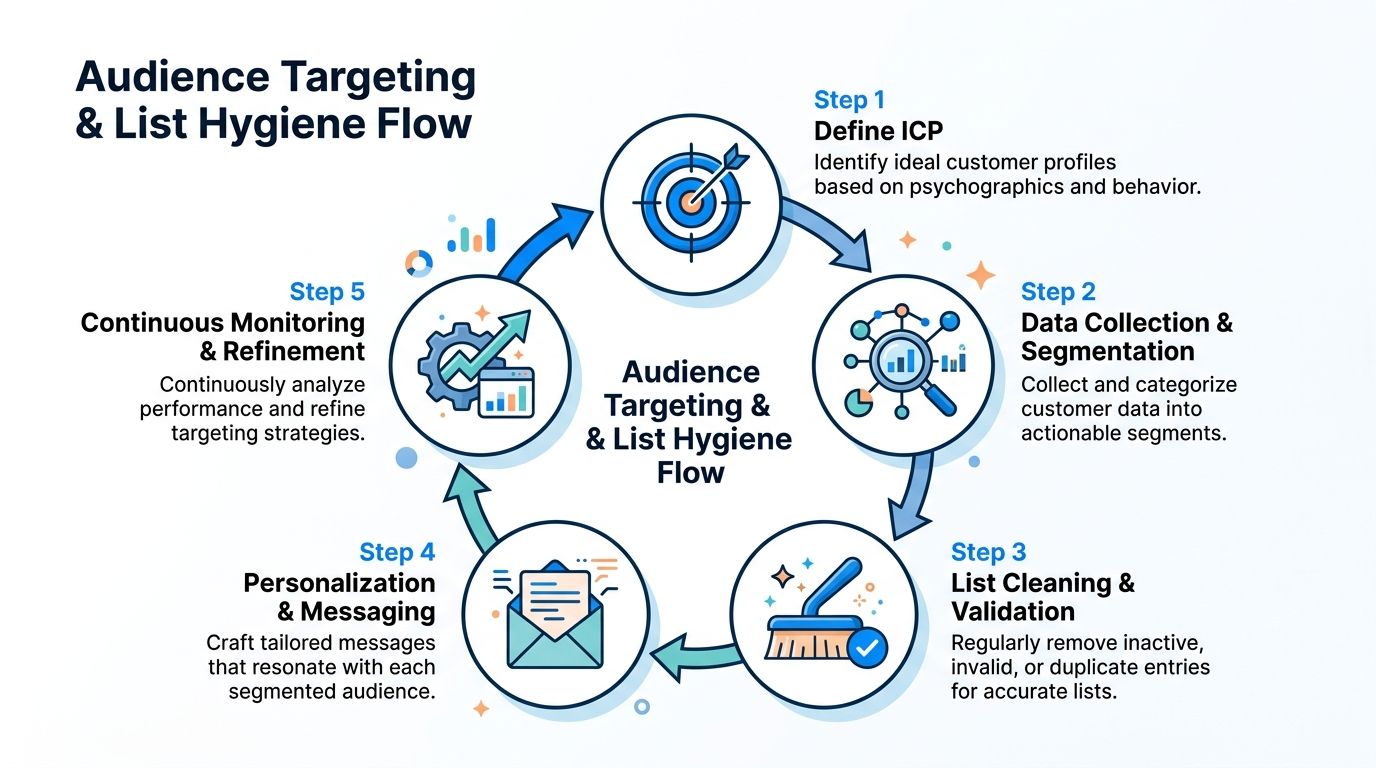
Use segmentation that reflects how buyers act
Most lists are segmented too late and too loosely. Teams often start with generic buckets like industry or persona, then wonder why engagement looks flat. Better segmentation comes from campaign intent.
A stronger newsletter segmentation model often includes:
- Acquisition source segment
Subscribers from a founder-led webinar don't behave like subscribers from a paid lead magnet.
- Job-to-be-done segment
People trying to improve acquisition reporting don't need the same message as people trying to scale outbound.
- Lifecycle segment
New subscribers need orientation. Mature subscribers need stronger asks. Warm accounts need a sales-aware CTA.
- Engagement recency segment
Someone who clicked last week should not get the same nurture cadence as someone who's been inactive for months.
That's where tooling starts to matter. Some platforms can automate list expansion and enrichment so marketers aren't manually stitching together CSVs, scraped firmographics, and CRM exports. Breaker is one example. It combines email sending with ICP targeting, AI enrichment, data hygiene, and real-time analytics so teams can acquire and message engaged B2B subscribers in one workflow.
For teams evaluating enrichment options more broadly, this overview of data enrichment services for B2B growth helps clarify what good input data should look like before a campaign starts.
If your “target audience” includes everyone who might care, the campaign isn't targeted. It's just constrained.
List hygiene protects performance before reporting starts
A dirty list creates fake optimization problems. Subject lines look weak when inbox placement is the issue. CTAs look ineffective when inactive contacts dominate the segment. You end up fixing copy when the underlying problem is list quality.
Good list hygiene means:
- Removing invalid and duplicate contacts
- Suppressing stale or chronically inactive subscribers
- Monitoring complaint and bounce patterns
- Watching reputation signals before they become delivery problems
- Keeping acquisition sources traceable so low-quality inputs can be cut
Deliverability transforms from a technical side quest into a growth function. Newsletter teams need inbox placement discipline if they want trustworthy experiments.
Treat list health as a standing review
The healthiest B2B newsletter programs run list review as an operating habit, not a rescue project.
A simple review rhythm works:
Review cadence
What to inspect
What to do
Weekly
New subscriber sources, unsubscribe patterns, segment engagement
Pause weak sources and isolate risky segments
Monthly
Inactive cohorts, bounce trends, complaint signals
Suppress stale records and clean acquisition pipelines
Before major sends
Deliverability risk, audience overlap, CTA relevance by segment
Tighten segments and adjust messaging before launch
Teams usually overfocus on headline metrics and underfocus on audience integrity. That's backwards. Clean targeting and healthy lists make every other optimization lever more reliable.
Driving Action with Creative and CTA Testing
Once the audience is right, small creative decisions start carrying real weight.
That matters because email is still one of the highest-impact channels in the mix. Email marketing delivers an average return of $42 for every $1 spent, based on Optimizely’s marketing statistics. That doesn't mean every newsletter is printing money. It means weak creative and lazy CTAs are expensive mistakes.
Weak B2B creative usually sounds polite, not useful
The most common newsletter copy issue isn't bad grammar or ugly design. It's low specificity.
Here’s the kind of shift that improves response quality:
Before
After
“Learn more about campaign analytics”
“See which newsletter segments create qualified pipeline”
“Read the latest product update”
“See what changed in your reporting workflow”
“Download our guide”
“Get the playbook for cleaner attribution in B2B newsletters”
The “before” version describes content. The “after” version describes value.
Subject lines and CTAs should match buyer intent
A lot of newsletter optimization stalls because marketers try to make one email do two jobs. The subject line creates curiosity, while the CTA asks for commitment. That mismatch lowers conversion quality.
A cleaner approach:
- If the ask is educational, use a low-friction subject line and a content-first CTA.
- If the ask is commercial, make the offer clearer earlier and stop hiding behind soft language.
- If the segment is already warm, skip broad framing and get to the point.
One practical way to sharpen visual engagement in creative-heavy sends is to study motion examples outside the inbox. This roundup of a high-impact marketing animated GIF is useful because it shows how movement can focus attention without overwhelming the message. The takeaway for newsletters isn't “add more animation.” It's to make visual hierarchy do real work.
The best CTA copy doesn't sound clever. It sounds like the next logical step for the right buyer.
Use before and after edits, not rewriting for sport
Creative optimization works better when you edit with a hypothesis.
For example:
- Subject line before: “New guide for marketers”
- Subject line after: “How B2B teams turn newsletters into qualified pipeline”
- Body copy before: “We created a resource to help you improve your campaigns.”
- Body copy after: “If your newsletter generates opens but not qualified leads, the problem is usually targeting, attribution, or a weak CTA.”
- CTA before: “Learn more”
- CTA after: “Get the B2B newsletter playbook”
Each revision increases clarity about who it's for and why they should care now.
Good creative makes testing easier
Teams often think creative optimization is a matter of taste. It isn't. Strong creative gives you cleaner test conditions because the variable is obvious. Weak creative muddies everything. You can't tell whether the audience rejected the offer, misunderstood the value, or never saw the point.
That's why the best newsletter operators treat copywriting as part of experiment design, not a finishing touch.
Building an Iterative Experimentation Engine
Random testing creates random learnings. Useful testing follows a process.
In newsletter programs, that process matters because B2B conversion paths are slower and noisier than most email dashboards suggest. If you test casually, you end up declaring winners too early, scaling weak ideas, or learning the wrong lesson from a small sample.
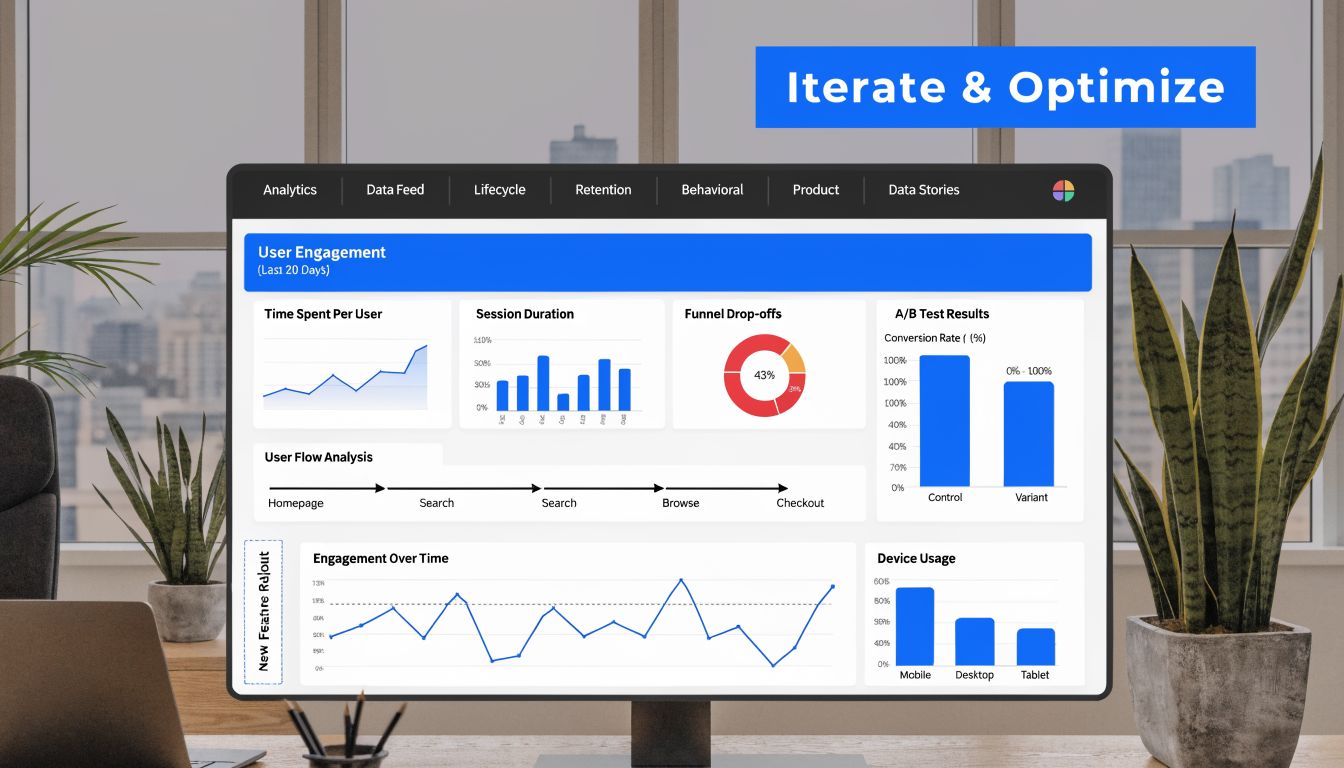
Use a formal six-step testing process
A rigorous A/B framework is still the cleanest way to improve campaign performance. A six-step A/B testing process can yield a 20-30% uplift in key metrics, while short attribution windows can underreport B2B conversions by 25-50%, according to Optimove’s guide to statistical significance in marketing.
The structure is straightforward:
- Write a specific hypothesis
Start with a falsifiable claim. “A clearer CTA will improve click quality” is weak. “Changing the CTA from a generic education prompt to a value-led offer will increase downstream conversion” is testable.
- Split the audience cleanly
Randomize test and control groups as evenly as possible so one segment isn't carrying hidden bias.
- Change one variable
Subject line, CTA, layout, audience definition, send time. Pick one. If you change multiple things, you won't know what caused the result.
- Run the test long enough
Match the testing window to your actual buying cycle. B2B teams often stop too soon because the inbox data arrives immediately.
- Validate the result statistically
Don't stop at “Variant B looks better.” Confirm whether the lift is reliable enough to act on.
- Ship the winner and log the lesson
A result without documentation gets lost by the next campaign cycle.
What breaks newsletter tests
The most common testing mistakes are operational, not mathematical.
- Stopping at early engagement: Opens and initial clicks show immediate reaction, not business impact.
- Testing multiple message shifts together: New audience, new offer, and new CTA in one send tells you nothing useful.
- Ignoring attribution lag: A newsletter can influence a meeting or signup later, especially in B2B buying teams.
- Declaring victory on tiny lifts: Some gains are statistically real but commercially irrelevant.
Field note: Practical significance matters more than a neat chart. If the winning variant doesn't improve lead quality or acquisition efficiency, it isn't a meaningful win.
Turn tests into a weekly engine
The strongest teams don't ask, “What should we test this quarter?” They maintain a running queue of hypotheses tied to bottlenecks.
A workable queue often looks like this:
Funnel problem
Test idea
Success signal
High opens, weak clicks
Rewrite CTA and intro paragraph
Better click quality
Strong clicks, weak conversion
Align landing page promise to email message
More qualified actions
Good engagement, poor lead quality
Tighten audience definition
Higher-fit leads
Flat re-engagement
Test a different offer for inactive cohorts
More meaningful return activity
Experimentation's compounding effect takes hold. One test clarifies messaging. The next sharpens segmentation. The next improves landing page continuity. Over time, you aren't just collecting winners. You're building pattern recognition about what your buyers respond to.
Keep a test log that forces accountability
Every test should leave behind a short record:
- Hypothesis
- Audience
- Variable tested
- Primary metric
- Observed result
- Decision taken
- Next hypothesis
Without that log, teams repeat failed ideas with new packaging and call it iteration.
Measuring What Matters with Modern Analytics
Attribution gets messy fast in B2B newsletters because the email is rarely the whole story. A subscriber may open three issues, click one sponsor, visit the site later through branded search, and convert after a sales conversation. If your analytics only credit the last click, newsletter performance will look smaller than it is. If your reporting gives full credit to every email touch, it will look inflated.
That tension is why analytics maturity matters.
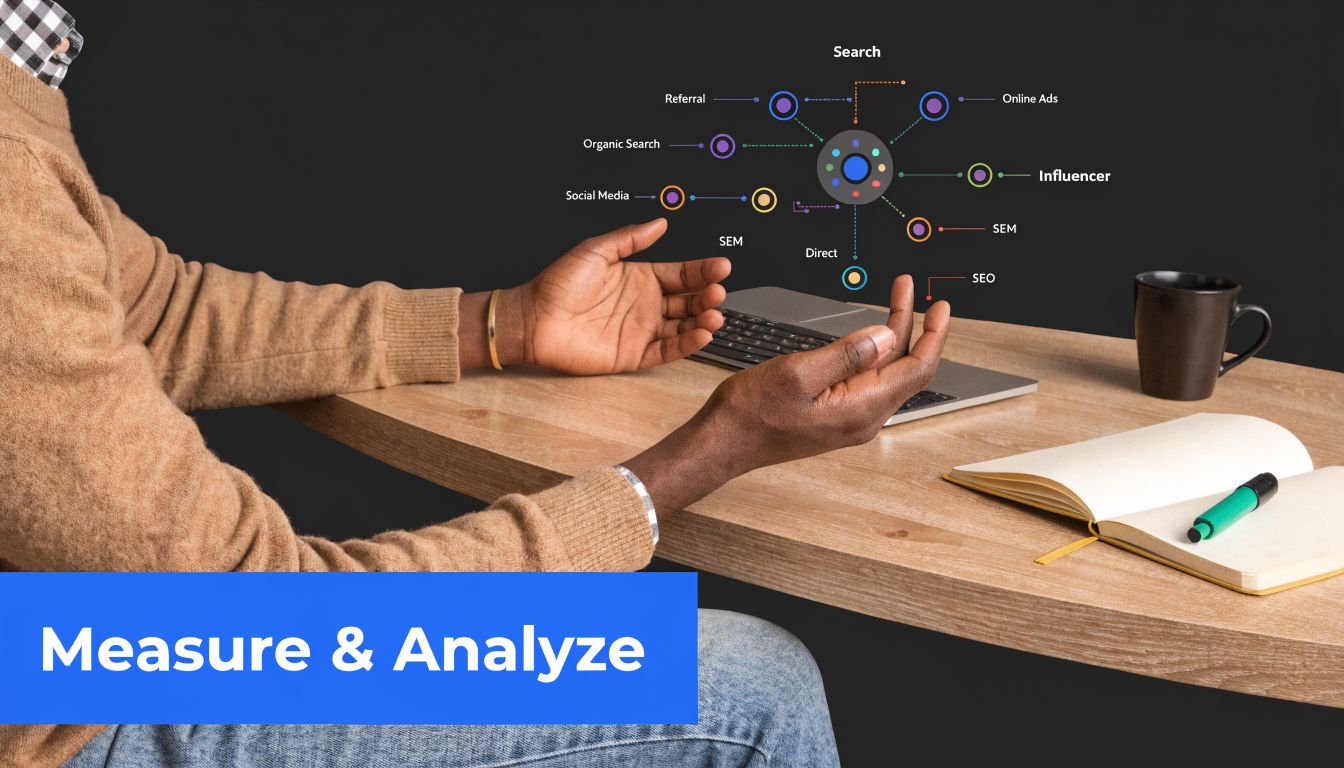
Choose an attribution model that matches the buying journey
Different models answer different questions:
- First-touch attribution helps you understand what introduced the buyer.
- Last-touch attribution shows what closed the action immediately before conversion.
- Multi-touch attribution gives a more balanced view when several campaign touches contributed.
- Data-driven attribution can be useful when your stack and volume support it, but it still needs human judgment.
For newsletters, first-touch and last-touch both have blind spots. First-touch can overvalue the initial subscribe event. Last-touch often ignores the role the newsletter played in warming the account over time. A multi-touch view is usually more realistic for B2B teams because it captures influence across a longer path.
Unified analytics changes optimization speed
Analytics isn't just about reporting accuracy. It's about how fast you can make a decision.
Integrating marketing teams and channels boosts campaign efficiency by 31%, according to Optimizely. In practice, that means fewer handoffs, fewer spreadsheet arguments, and faster changes when a segment or CTA starts drifting. In newsletter operations, unified reporting matters because sends, subscriber growth, engagement, CRM activity, and downstream revenue often live in different systems unless someone intentionally connects them.
A good primer for that discipline is Fame’s guide to Master Measuring Marketing Effectiveness, which is useful for teams trying to connect channel metrics to actual business outcomes instead of isolated campaign reports.
Connect campaign data to CRM outcomes
Closed-loop measurement is where newsletter programs stop being “content” and start being accountable acquisition channels.
At minimum, your analytics setup should answer:
- Which acquisition source produced the subscriber?
- What content or CTA did they engage with?
- Did they become a qualified lead, opportunity, or customer later?
- How long did that take?
- Which segments produce high engagement but weak revenue outcomes?
Those answers usually require email analytics, CRM records, and campaign naming discipline to work together.
Here's a practical explainer that captures the broader measurement mindset:
Build dashboards for action, not vanity
The best analytics views are boring in the right way. They let you isolate issues quickly.
A useful newsletter dashboard often includes:
Dashboard view
What it tells you
Action it supports
Subscriber acquisition by source
Which channels bring relevant readers
Reallocate spend or cut weak sources
Engagement by segment
Who actually responds to the content
Refine ICP and content mapping
CTA performance by campaign
Which asks create next-step behavior
Standardize stronger offers
CRM progression by source
Which subscribers become pipeline
Prioritize high-value acquisition paths
Good attribution doesn't eliminate uncertainty. It reduces the amount of guessing your team has to do.
That's enough to make optimization practical. You don't need perfect measurement. You need measurement that helps you act with confidence.
Turning Optimization Wins into Scalable Playbooks
A campaign win that lives in one person's memory isn't a system. It's luck with a short shelf life.
Teams get more value from marketing campaign optimization when they convert individual learnings into repeatable playbooks. That doesn't mean freezing creativity. It means documenting what worked well enough that the next campaign starts from a proven base instead of a blank page.
Capture the pattern, not just the result
Most post-campaign notes are too vague to reuse. “Strong CTA,” “good audience fit,” and “solid engagement” won't help the next person build a better send.
A reusable playbook should capture:
- Business goal
What the campaign was meant to influence.
- Audience definition
Which segment received it and why that segment was chosen.
- Offer and message
What pain point the email addressed and what the CTA asked the reader to do.
- Creative decisions
Subject line style, copy angle, layout choices, and any tested variants.
- Measurement approach
Which metric determined success and which diagnostics supported the read.
- Operational notes
Timing, suppression logic, follow-up process, and handoff to sales or lifecycle teams.
Use a simple checklist teams will actually maintain
A lightweight template works better than a perfect one nobody fills out.
Here’s a practical checklist:
- Name the campaign clearly
Make the title searchable by audience and objective.
- State the one KPI that mattered most
Don't bury the decision metric under secondary charts.
- Record the audience logic
Include the segment criteria and exclusions.
- Save the winning copy and CTA
Preserve the exact language that performed best.
- Note what failed
Losing tests are useful if the lesson is explicit.
- Explain where the result should and shouldn't be reused
A CTA that works for warm subscribers may fail with net-new readers.
Templates help scale consistency
As teams grow, repeatability matters almost as much as creativity. If your campaign builder, CRM process, and reporting setup can encode the best version of a successful send, new team members ramp faster and campaign quality becomes less dependent on memory.
That applies to newsletter operations more than most channels because so much of the work is recurring. Segmentation rules, naming structures, CTA patterns, and follow-up motion can all be standardized without making campaigns robotic.
A playbook should reduce decision fatigue, not replace judgment.
The strongest optimization culture isn't obsessed with single wins. It keeps asking a better question: what did this result teach us that should change the next ten campaigns?
If your team wants a cleaner way to run B2B newsletter growth, Breaker is built for that workflow. It combines sending, audience expansion, targeting, deliverability support, and campaign analytics in one platform so marketers can manage subscriber growth and newsletter performance without stitching together separate tools.
Keep reading
All articlesNewsletter Agency Services: How Agencies Scale Client Newsletters
Managing multiple client newsletters? Learn what a true newsletter agency platform needs to prevent list mixing, voice drift, and invisible ROI.
Building Owned Audiences: Move Followers to Your Newsletter in 2026
Social platforms can vanish overnight. Learn how to convert Instagram, TikTok, and YouTube followers into a newsletter list you actually own.
Newsletter Analytics: Which Metrics Actually Matter in 2026
Open rate and clicks don't predict buyers. Learn the 7-step method to track click depth, recency, and topic affinity for a revenue-predictive intent score.