
How Do Internet Sites Make Money? 10 Proven Models
Wondering how do internet sites make money? Explore 10 proven monetization models, from ads and affiliates to subscriptions. Actionable tips included.
Most answers to how do internet sites make money stop at “ads.” That's outdated, incomplete, and not very useful if you run a newsletter, a niche media brand, or a B2B content business. Traffic still matters, but for modern creators and operators, the better question is this: what are you selling, to whom, and why would they buy from your audience instead of someone else's?
That shift changes everything. A broad consumer site can still lean on scale and ad inventory. But most expertise-driven sites, newsletters, and communities make better money by monetizing trust, intent, and access. They sell attention to sponsors, insight to paid subscribers, distribution to employers, expertise to clients, or proprietary knowledge through reports, courses, and memberships. The site is the channel. The business model sits on top of it.
That distinction matters because ad economics are heavily traffic-dependent. Coursera's overview of website monetization notes that sites commonly earn from PPC or CPM ads, and that Google AdSense typically pays publishers about 68% of ad revenue generated on their pages. That works for scaled publishers. It's a weak foundation for most niche operators who haven't built a massive audience yet.
For B2B creators, the strongest monetization playbook usually looks more like a revenue stack than a single model. One newsletter issue can carry a sponsor. The same audience can also buy a premium subscription, join a community, hire you for consulting, and attend a paid workshop. That's where digital properties become durable businesses instead of traffic experiments.
Below are 10 proven ways internet sites make money now, especially for newsletters, communities, and expertise-led B2B brands.
1. Sponsored Content & Native Advertising
If you have audience trust and a clear niche, sponsorships usually become available before meaningful ad revenue does. A brand doesn't just want impressions. It wants borrowed credibility, focused reach, and placement inside content your readers already pay attention to.
This is why sponsored content works so well for newsletters and media brands with a defined point of view. A cybersecurity newsletter can sell to security vendors. A product-led growth newsletter can sell to onboarding tools, analytics platforms, or agencies. The audience doesn't need to be enormous if the fit is obvious.
What sponsors actually buy
Most deals fall into a few practical formats:
- Dedicated placement: A clear sponsor block near the top or middle of the issue.
- Native integration: A product mention woven into a relevant editorial section.
- Package deals: Newsletter placement bundled with podcast mentions, social posts, or webinars.
The mistake is cramming in too many sponsors too early. Readers can tell when the issue shifts from editorial to inventory dump.
Practical rule: Start with fewer sponsor slots than you think you can sell. Scarcity protects trust and makes renewals easier.
A good sponsorship system includes audience notes, example placements, send cadence, and performance reporting. If you're building that side of the business, this guide on how to advertise in newsletters is a solid reference point.
What works and what doesn't
What works is sponsor fit, repetition, and clean expectations. One strong B2B sponsor that stays for multiple sends is often better than a rotating cast of random logos. Multi-month deals give you predictable revenue and give the sponsor enough runway to judge performance.
What doesn't work is taking money from brands your audience would never buy from. That hurts future opens, future clicks, and future sponsor credibility. The better your audience targeting, the more premium your sponsorship inventory becomes.
Real-world examples are easy to spot. The Hustle, Morning Brew, Lenny's Newsletter, and The Vergecast all built monetization around sponsor alignment, not generic ad space.
2. Paid Subscription Tiers
Subscriptions turn a media audience into recurring revenue. That's a different business from “publishing and hoping.” When readers pay, they're telling you your insight saves them time, makes them money, or gives them access they can't get elsewhere.

This model is especially strong for B2B operators because businesses pay for specificity. General commentary rarely converts. Tactical analysis, templates, internal benchmarks, teardown libraries, office hours, and vetted tools do.
What readers will pay for
The paid layer needs a sharp reason to exist. “More content” isn't enough. Better content sometimes isn't enough either.
Readers usually pay for one of these:
- Decision support: Deep analysis that helps them choose faster.
- Operational tools: Templates, playbooks, swipe files, and frameworks.
- Access: Private community, Q&A sessions, or direct responses.
- Timeliness: Early access, private briefings, or premium research.
A free tier still matters. It's your top-of-funnel engine. But your free content should create demand for the paid product, not replace it. If you want to structure that offer well, this guide to a paid newsletter platform for growing your B2B audience is useful, and so is this breakdown of subscription pricing models.
The practical trade-off
Subscriptions create recurring income, but they raise the bar on consistency. Once people pay, they expect a reliable cadence and a clear outcome. If your publishing rhythm is erratic or your insight isn't distinct, churn will find you quickly.
Ben Thompson's Stratechery, The Information, and Lenny's Newsletter all show the same pattern. Paid content works when expertise is hard to replicate and the audience uses it for work, not just entertainment.
Paid subscriptions don't reward volume. They reward usefulness.
3. Affiliate Marketing & Product Recommendations
Affiliate revenue is simple in theory. You recommend a product, someone buys, you earn a commission. In practice, it only works well when the recommendation is credible and the buying intent is already there. For what those commissions typically look like, from percentage models to payout schedules, see our breakdown of how affiliate programs pay.
For B2B newsletters, this can be one of the cleanest monetization models because your audience already needs software, services, and infrastructure. If you write for founders, marketers, operators, or developers, readers are constantly choosing tools.
The trust test
Affiliate content works when it behaves like editorial. It fails when it reads like a bonus sales page.
Strong affiliate recommendations usually have three elements:
- Real use case: Why this tool belongs in the workflow.
- Specific buyer fit: Who should buy it and who shouldn't.
- Disclosure: Clear language that the link is affiliate-based.
That last part matters legally and reputationally. If the audience feels tricked, you don't just lose affiliate revenue. You weaken every other monetization channel too.
If you're using email as the primary channel, these examples of affiliate marketing emails show the mechanics well. For a consumer-style contrast, even gift and recommendation content like finding gifts for discerning men shows how recommendation-led publishing can drive action when the angle is clear.
Where this model breaks
Affiliate revenue is weak when you promote too many products, switch opinions too often, or recommend tools you've barely used. Readers notice. B2B buyers notice faster because they're spending company money and often integrating the tool into a real workflow.
The best operators narrow their recommendations. They become known for a short list of trusted tools, not a giant catalog of links. Product Hunt-style curation, niche SaaS reviews, and dev tool roundups all work because the curation itself adds value.
If you're asking how do internet sites make money without selling their own products yet, affiliate partnerships are often one of the fastest valid tests. But they only scale if your audience trusts your taste.
4. Course & Digital Product Sales
Selling your own digital product is where media starts behaving like intellectual property. You've already done the hard part by earning attention. Now you package your know-how into something buyers can apply without needing ongoing hand-holding.
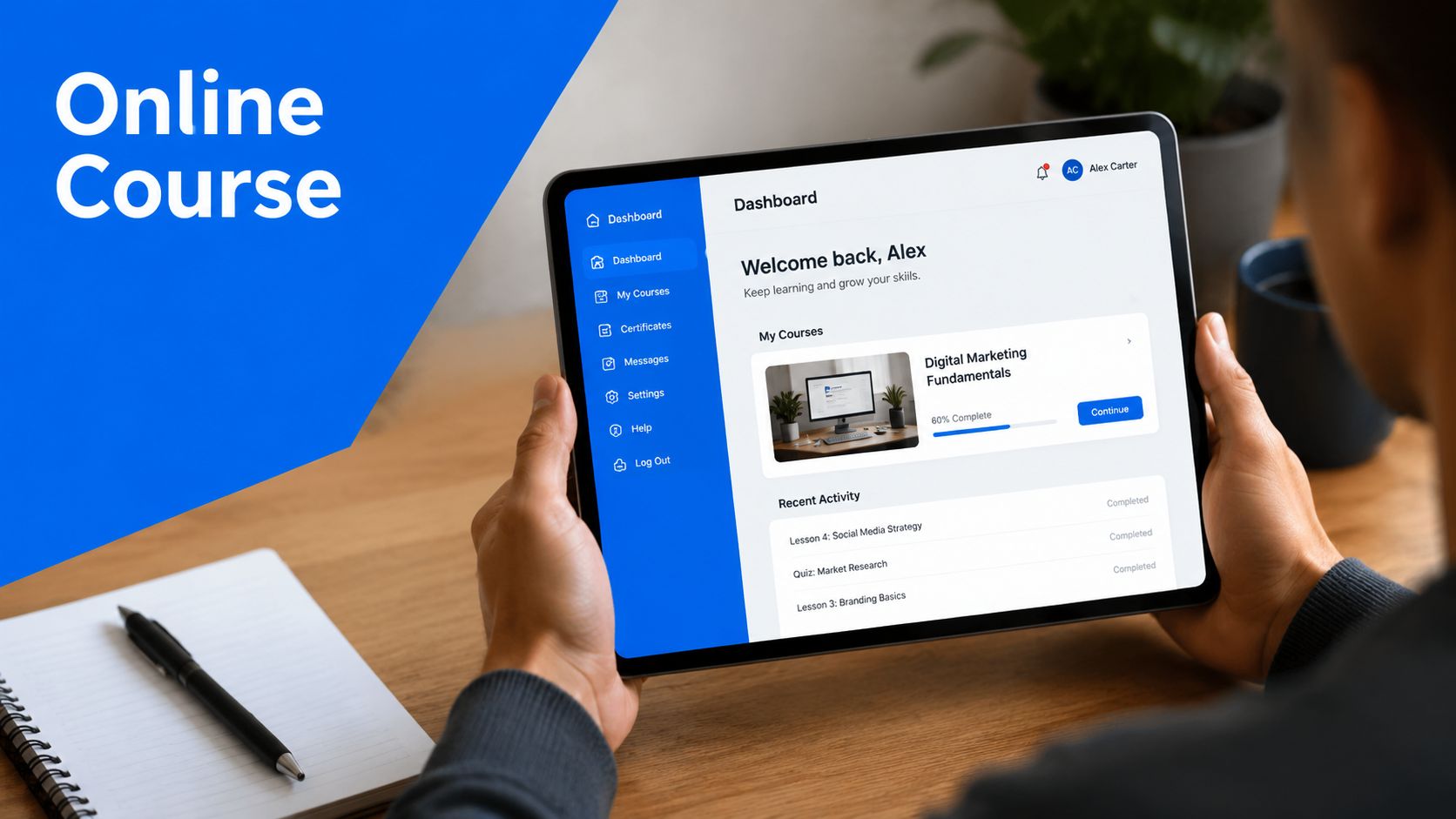
That product doesn't need to start as a full course. In many cases, the better first move is a template pack, teardown library, operating manual, worksheet bundle, or niche playbook. Those are easier to produce and easier for readers to buy quickly.
Start smaller than your ambition
A lot of creators overbuild. They spend months recording a course before proving anyone wants the outcome.
A better path looks like this:
- Template first: Solve one painful task.
- Workshop next: Teach the process live.
- Course later: Expand once demand is obvious.
That sequence reduces production risk and gives you language from real buyers. It also helps you identify what people value. Often it's not the theory. It's the implementation asset.
Creators like Nathan Barry, Marie Forleo, and Austin Rief all reflect versions of this approach. Their audiences weren't buying “content.” They were buying transformation, speed, and structure.
Here's a useful example of how video can support the sale, education, or delivery of a digital product:
The margin is good. The support burden is real.
Digital products are attractive because you own the asset and don't share economics with an ad network or sponsor marketplace. But many founders underestimate support, updates, and positioning. A template that works today may need revision later. A course can go stale if the market shifts.
What works is tying the product tightly to a painful business outcome. Product strategy, onboarding systems, newsletter operations, outbound messaging, and analytics workflows all lend themselves to paid educational products because buyers can use them immediately.
What doesn't work is vague education with no implementation path. If the buyer can't apply it on Monday, the product usually disappoints.
5. Job Board Listings & Recruitment
A niche site with a qualified professional audience has recruiting value whether it realizes it or not. Employers pay to reach concentrated talent pools. If your readers are marketers, engineers, designers, operators, or executives, hiring can become a serious revenue category.
This model works because intent is already embedded in the audience. Some readers are actively job hunting. Others are open to the right move. Employers don't just buy a listing. They buy context and relevance.
Why niche beats broad
A general job board competes on volume. A niche publisher competes on fit.
That's a better business if your readership is specific. A newsletter for lifecycle marketers can attract SaaS companies hiring CRM leads. A product management site can sell placements for PM roles. A design community can attract teams that need senior creative talent.
You don't need a complex product to start. Many operators launch with a simple listing in the newsletter, then add a hosted jobs page later.
- Single listing: Good for occasional employers.
- Featured slot: Best for urgent or high-priority roles.
- Recurring package: Useful for companies that hire every quarter.
The strongest job boards are curated. If you let low-quality roles in, readers tune out. If the jobs are consistently strong, the section becomes part of the reason they stay subscribed. For a market benchmark on how platforms frame employer offers, you can view recruitment platform pricing.
The hidden advantage
Recruitment monetization can feed other revenue streams. Once you have hiring companies in your pipeline, some also become sponsors, report buyers, event partners, or consulting clients. That's especially useful in B2B markets where the same company may want talent, distribution, and brand exposure.
What doesn't work is treating jobs as filler inventory. Readers can tell when a listing was included because someone paid, not because the opportunity is relevant.
6. Consulting & Professional Services
Many expertise-driven sites make more money from services than from media itself. The site builds trust. The newsletter proves thinking quality. The consulting offer turns that attention into high-value revenue.
For B2B operators, this is often the fastest path to meaningful monetization because you're not waiting for ad scale or subscription volume. A single good client can outperform months of lower-ticket experiments.
Your content is the sales call before the sales call
The best consulting newsletters pre-qualify buyers. They show how you think, how you diagnose problems, and what standards you use. A reader should be able to tell whether you're a fit before they ever book time.
That means your content should demonstrate:
- Point of view: Not generic summaries, but judgment.
- Problem selection: The kinds of issues you solve.
- Method: Enough process clarity to build confidence.
- Client fit: Who benefits most from hiring you.
Lenny Rachitsky, Harry Dry, Wes Kao, and Sujan Patel all illustrate versions of this model. Their audiences don't just consume content. They infer strategic capability from it.
A strong newsletter doesn't replace selling. It shortens the distance between interest and trust.
What scales and what doesn't
One-off advisory calls are easy to launch but hard to stabilize. Retainers, project packages, and fractional roles create better economics and better planning. Group advisory can work too if the audience shares similar needs.
What doesn't scale well is selling undifferentiated time. If your offer is “I can help with marketing,” buyers compare you to everyone. If your offer is “I fix activation messaging for PLG SaaS teams” or “I build newsletter monetization systems for B2B media brands,” the buying decision gets easier.
The trade-off is obvious. Services generate cash and insight, but they can consume the time you need to keep publishing. The operators who do this well productize part of the service over time and use the site to bring in better-fit clients, not just more of them.
7. Community & Membership Programs
A paid community monetizes access, belonging, and peer learning. That makes it different from a paid newsletter. Subscribers pay for your thinking. Members pay for the room you assemble and the experience inside it.
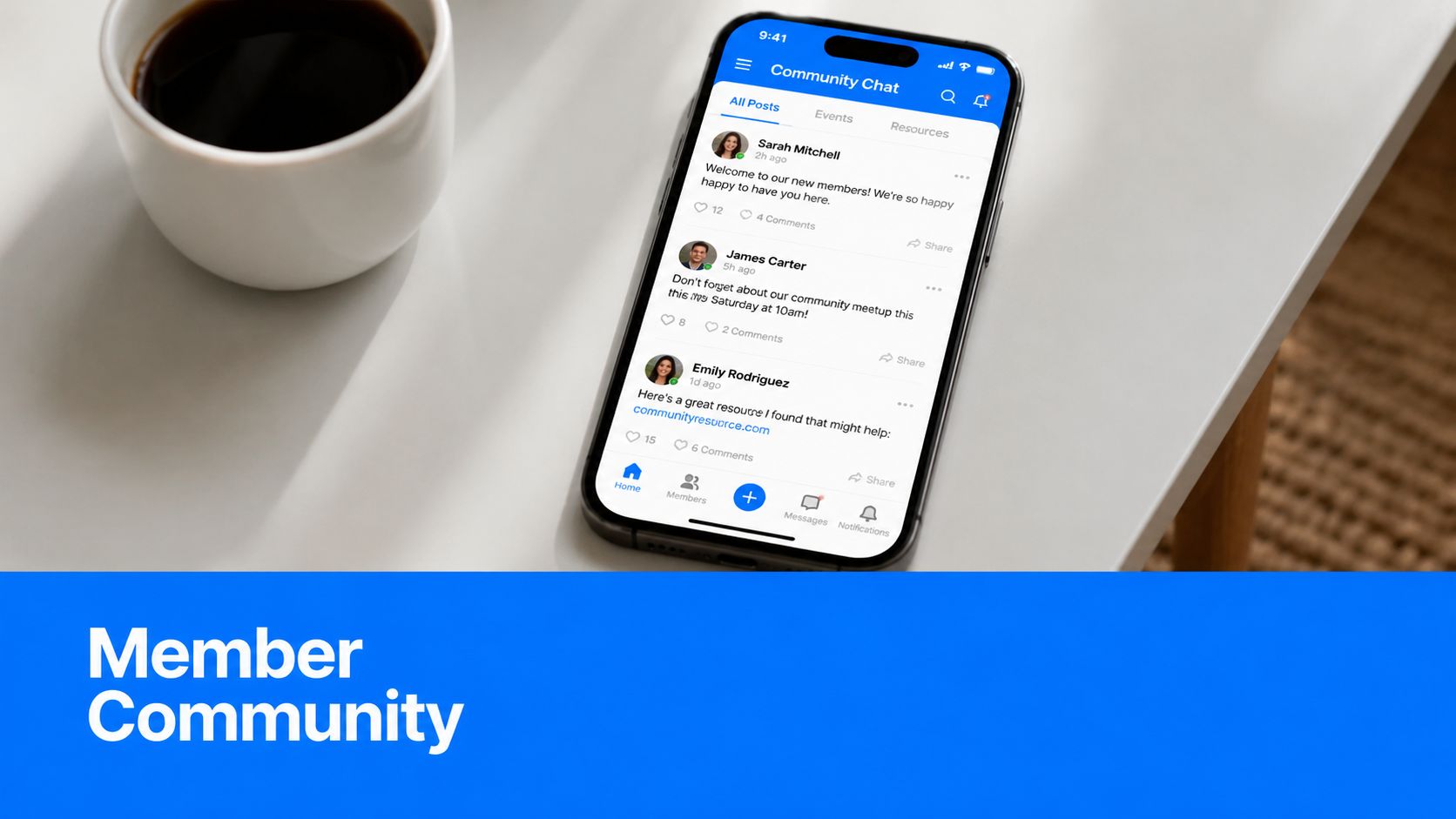
This is one of the strongest models for B2B audiences because the value often comes from the other members as much as from the host. A sharp operator network can save members time, create partnerships, surface vendors, and open hiring opportunities.
Community is not “comments with a price tag”
A lot of memberships fail because they launch as empty containers. Access alone rarely keeps people paying. Structure does.
Useful community benefits usually include:
- Peer access: Curated conversations with people at a similar level.
- Live programming: AMAs, office hours, workshops, or roundtables.
- Resource library: Templates, recordings, frameworks, and vetted tools.
- Introductions: Active facilitation, not passive member directories.
Platforms like Circle, Slack, Discord, and Mighty Networks can all work. The platform is rarely the deciding factor. The operating model is. Lenny's Product Community and creator-led professional groups succeed because they create repeated reasons to show up.
The retention challenge
Communities don't collapse from lack of signups. They collapse from low engagement after signup. If nobody replies, nobody returns. If conversations are noisy, serious members leave. If the host disappears, the community feels abandoned fast.
What works is a narrow promise and active curation. “A private space for growth marketers at SaaS companies” is much stronger than “a place for marketers.” The narrower the member identity, the easier it is to create useful interactions.
If you already run a newsletter, community can become the premium layer that justifies recurring membership. If you launch it too early, though, you're asking members to pay for potential rather than proven value.
8. Data & Research Reports
B2B sites can move from content business to intelligence business. If you collect useful first-party data, you can package it into reports, benchmarks, market maps, salary guides, or performance briefings that people buy for decision-making.
This model has more substance than many operators realize. In BARC's data monetization survey, respondents most commonly monetized data through analysis results and reporting or benchmarking, while fewer used digital platforms or entirely new data-based business models. The same survey found strong tool adoption around BI software, data integration, and custom development, which reinforces a practical lesson for publishers: packaging data into reports is often a more realistic entry point than trying to build a standalone marketplace from scratch. The full breakdown appears in BARC's data monetization infographic.
The best source is usually your own audience
If you run a newsletter, community, or niche site, you already have a survey panel and behavior signal set. That can support:
- Benchmark reports: Performance data by segment or role.
- Buyer research: Priorities, budgets, constraints, and tooling.
- Market pulse briefs: Regular snapshots of what changed.
- Premium dashboards: Ongoing access for teams that need updates.
The strongest reports solve an active business question. Buyers pay for clarity, not just novelty. A PDF full of charts is not enough. The report has to help someone make a budget, hire, reposition, compare vendors, or justify a plan internally.
Good research products answer a question a team already has in budget season.
Why this model fits modern monetization
This category has become more important as first-party relationships matter more. If audience tracking gets weaker, a publisher's direct knowledge of its own readers becomes more valuable. That's one reason reports, benchmarks, and audience intelligence products fit so well for niche B2B media properties.
What doesn't work is running a survey with no distribution, weak segmentation, or no clear buyer. What works is starting with one painful question your market wants answered, collecting clean inputs, and turning the results into a product with both editorial and commercial use.
9. White-Label & B2B Licensing
Some sites make money not by selling to the end reader, but by licensing what they've already built. That can mean newsletter frameworks, research formats, educational modules, templates, internal playbooks, or content systems that another brand wants to use under its own name.
This is a quieter model, but it can be powerful for operators who have repeatable intellectual property. Agencies, software companies, and media brands often need content assets they don't want to build from zero.
What is actually licensable
Not every asset deserves a licensing offer. The most viable ones tend to be standardized and easy to deploy.
Examples include:
- Template libraries: Email sequences, playbooks, decks, worksheets.
- Editorial systems: Content calendars, newsletter formats, interview structures.
- Training materials: Internal enablement or client education assets.
- Research frameworks: Survey design, taxonomy, and reporting packages.
White-label arrangements are especially appealing when your buyer already has distribution. They don't need help creating demand. They need a proven asset they can deploy faster.
The trade-off is control
Licensing creates revenue without requiring you to serve every end user directly. But it also creates governance questions. What can the buyer change? Where can they use it? Does the agreement renew? Can they adapt the framework into something new?
What works is documenting the asset clearly and defining rights in plain terms. What doesn't work is casual reuse with fuzzy boundaries. If the asset is central to your own differentiation, licensing it too broadly can weaken your market position.
For the right operator, though, this is one of the best examples of how do internet sites make money beyond traffic. They monetize systems, not just audience attention.
10. Event & Workshop Monetization
Events convert audience interest into concentrated value. A newsletter issue spreads your insight over time. A workshop compresses it into a single buying moment. That's why events often produce stronger urgency and stronger pricing power than ongoing content alone.
For B2B creators, events work particularly well when the subject is tactical and the attendees can apply the learning immediately. That could be a live teardown session, a training workshop, an executive roundtable, or a niche summit.
Start narrower than “conference”
Most operators shouldn't begin with a big event. The operational load is too high and the downside is obvious. Small paid workshops are easier to fill, easier to run, and easier to improve.
A practical progression looks like this:
- Live training: One topic, one expert, one clear outcome.
- Mini summit: Several speakers around a tightly defined theme.
- Member-only sessions: Premium perk for subscribers or community members.
- Flagship event: Broader gathering once demand is proven.
Product School and many creator-led business brands have used this path effectively. The event isn't just a ticketed experience. It also creates sponsorship inventory, recorded content, and follow-up offers.
Why events strengthen the whole business
Events tend to improve every adjacent monetization model. Sponsors get a deeper activation opportunity. Community members get more reasons to stay. Consulting prospects see your expertise live. Product buyers get a taste of the methodology before they commit.
What doesn't work is generic programming with no strong audience promise. “A marketing summit” is weak. “A workshop on fixing activation drop-off in PLG onboarding” is strong because the outcome is clear.
Events are demanding, but they're one of the best ways to turn a site from a publishing channel into a business ecosystem.
Top 10 Website Monetization Comparison
Monetization Method
🔄 Implementation Complexity
⚡ Resource Requirements
📊 Expected Outcomes
Ideal Use Cases
⭐ Advantages · 💡 Tip
Sponsored Content & Native Advertising
Low–Medium, sales + ad ops setup
Low, outreach, metrics tracking
Predictable recurring revenue; scales with engagement
Engaged newsletters, B2B verticals
Low overhead; 💡 Start with 1–2 sponsors per send
Paid Subscription Tiers
Medium–High, paywall & content ops
Moderate–High, premium content, billing, community
High LTV recurring revenue; conversion ~1–5%
Expertise-driven, B2B, niche analysts
Highest LTV; 💡 Offer annual discounts and clear premium value
Affiliate Marketing & Product Recommendations
Low, link placement and disclosure
Low, testing, affiliate tracking
Variable passive income; lower revenue per subscriber
Product review, tools/SaaS, gift guides
Easy to start; 💡 Only recommend products you use and disclose links
Course & Digital Product Sales
High, product creation and funnel building
High upfront, content production, platform, marketing
High one-time and scalable revenue; premium ticket sales
Experts, consultants, educators
High revenue per sale; 💡 Launch with templates/guides and case studies
Job Board Listings & Recruitment
Low–Medium, listing system + vetting
Moderate, employer outreach, curation
High revenue per listing; repeat employer clients possible
Niche career/tech/design communities
High per-item revenue; 💡 Send separate job emails and curate listings
Consulting & Professional Services
High, sales, contracting, delivery
High, personal time, credentials, case studies
Very high revenue per engagement; limited scalability
Seasoned experts, B2B strategists
Highest per-engagement revenue; 💡 Build case studies and a waitlist
Community & Membership Programs
Medium–High, platform + moderation
Moderate, community managers, platform fees
Recurring membership revenue; retention tied to engagement
Networks, peer-learning, professional communities
Network effects boost retention; 💡 Offer founding pricing and clear benefits
Data & Research Reports
High, research, analysis, design
High, survey tools, analysts, production
Premium one-off/annual sales; builds authority
Industry newsletters with sizable audiences
High perceived value; 💡 Publish free executive summary to drive sales
White-Label & B2B Licensing
Medium, legal & packaging content
Moderate, contract mgmt, templates
Passive B2B licensing revenue; repeat contracts possible
Agencies, platforms, international expansions
Scales without extra creation; 💡 Systematize content and use clear licenses
Event & Workshop Monetization
High, logistics, programming, promotion
High, venues/platforms, speakers, marketing
High per-attendee revenue; sponsorship upside
Large engaged audiences, strong networks
Strong engagement and content repurposing; 💡 Start with small workshops before scaling
From Audience to Asset: Your Monetization Roadmap
What turns a website into a real business asset instead of a content habit?
A reliable revenue stack built around a specific audience.
That is the modern answer to how internet sites make money, especially for creators, operators, and B2B publishers. The strongest sites do not depend on pageviews alone. They monetize trusted attention, niche access, specialist expertise, business outcomes, and proprietary insight. If your site is mainly a blog, our breakdown of whether money can be made blogging covers realistic income ranges and timelines.
The first decision is model choice. Build a scale media business, or build an expertise-led business that uses content as distribution. The difference changes everything from metrics to hiring to monetization. Scale publishers can still make advertising work with enough reach. Expertise-driven sites usually earn more per visitor through subscriptions, sponsorships, services, events, community, and research products. I have seen teams miss this point and spend months chasing traffic that never converts, when the better move was improving audience fit and commercial intent.
That matters even more now that ad-driven publishing is less stable and direct audience ownership matters more. As noted earlier, many free sites historically relied on advertising and user data. The stronger long-term position for modern creators and B2B brands is a direct relationship with subscribers, members, buyers, and sponsors you can reach without depending on a platform algorithm.
Start with the asset you already have.
If you have attention but no product, sponsorships and affiliate offers are usually the fastest way to test commercial intent. If people already trust your analysis, paid subscriptions, advisory work, or workshops often produce better margins. If your audience repeatedly asks the same operational questions, research reports, benchmark data, and licensed insights can become the highest-value offer in the business.
The smart move is to connect these models. A B2B newsletter can sell a sponsorship, recommend a narrow set of trusted tools, offer a paid tier, run workshops, and create consulting demand. A professional community can support memberships, hiring products, events, and research. A strong report can generate direct sales, enterprise licenses, speaking invitations, and sponsor interest. Each offer should reduce the cost of selling the next one.
Diversification protects the business too. Sponsors cut budgets. Affiliate terms change. Subscriber churn rises. Events are profitable when execution is strong and painful when it is not. Services bring high revenue, but capacity becomes the constraint. A mixed model gives you room to absorb those shifts while you learn what your audience will buy more than once.
Audience quality sits underneath every one of these models. If the right people are not opening, clicking, replying, and converting, monetization gets expensive fast. For B2B teams and creators building a targeted newsletter audience, Breaker can support distribution and audience growth infrastructure. The goal is to build an audience asset that can support multiple high-value revenue streams over time.
Choose one offer that matches your audience. Validate demand. Then add the second offer with a clear reason, not because another publisher uses it. That is how a website becomes durable, sellable, and much more valuable than its traffic alone.
Keep reading
All articlesDrip Campaign Template: Ready-to-Use Email Sequences
Get 6 ready-to-paste drip campaign templates with subject lines, body copy, and send timing—plus a step-by-step guide to building your own.
Post-Webinar Survey Questions Template (2026)
30+ post-webinar survey questions with NPS, CSAT, and CES templates, plus timing and length tips to boost completion and qualify leads faster.
GDPR Consent Requirements for Purchased Email Lists
Purchased email lists rarely meet GDPR's consent bar. Learn the legal basis rules, PECR overlap, and safer alternatives before you hit send.