
B2B Email List Building: The 2026 Playbook for Growth
Master B2B email list building in 2026. This playbook covers ICP targeting, high-converting lead magnets, acquisition tactics, and scaling for real revenue.
Some months your pipeline looks healthy. Then paid costs jump, organic reach slips, a partner campaign underdelivers, and suddenly the lead flow you thought was stable feels rented.
That's why serious B2B teams keep coming back to email list building. Not because it's flashy, but because it gives you a direct, permission-based path to buyers you can reach without begging an algorithm for distribution. Email was projected to reach nearly 4.6 billion global users in 2025, with 375 billion emails sent per day that same year, and email marketing delivers about $36 for every $1 spent according to these 2025 email marketing statistics. The opportunity is huge. So is the competition for attention.
The answer isn't “grow the biggest list possible.” It's building a list of people who fit your market, want what you publish, and are likely to move into pipeline. That's the difference between a vanity asset and a revenue asset.
The End of Unpredictable Leads Starts with an Email List
If your demand gen plan still depends on borrowed reach, you're accepting volatility as normal. Social platforms can change distribution overnight. Paid channels can get more expensive without warning. Referral and partner programs can be excellent, but they're still outside your control.
An email list changes that. It gives you an owned audience, not a temporary audience. You decide when to publish, what to test, how to segment, and how to follow up. That control matters more in B2B because buying cycles are long and intent is uneven. Most prospects won't convert on first touch, but they will read, click, revisit, and resurface if you stay relevant.
Practical rule: Build distribution before you need it. The worst time to start list growth is the quarter when pipeline already slipped.
There's another reason email list building still deserves executive attention. Reach is massive, but the inbox is crowded. The fact that email use keeps growing while daily volume keeps rising means weak acquisition gets punished. If you attract the wrong subscribers, they ignore you. If you keep mailing them anyway, your engagement erodes and deliverability gets harder to maintain.
That's why the useful conversation isn't “should we build a list?” It's “what kind of list are we building?”
A good B2B list is made of people who fit your ICP, recognize the problem you solve, and have enough intent to keep engaging after the first signup. That's also why the usual advice falls short. Telling marketers to add a popup and offer a generic ebook isn't a playbook. It's a tactic without targeting.
If you want the strategic case for ownership, this breakdown of the advantages of email marketing is a useful companion. The operational playbook starts with defining who should be on your list in the first place.
Laying the Foundation for Quality Subscribers
Most list problems start before the first subscriber joins. Teams build an offer for everyone, place forms everywhere, and then wonder why engagement feels soft. The issue usually isn't email. It's targeting.
Permission-based acquisition is now the baseline. Salesforce defines email lists around explicit opt-in and recommends organic collection methods such as opt-in forms, landing pages, content upgrades, lead magnets, webinars, and in-person sign-ups with clear consent. In the same broader context, benchmark reporting tied to over 3 million campaigns found a 42.35% global average open rate and a 2% global average click rate, which is a good reminder that list quality shapes downstream performance from day one, as explained in Salesforce's guide to building an email list.
Start with your actual buyer
A useful B2B subscriber profile is more specific than a persona slide in a deck. You need the details that influence whether someone will subscribe, open, click, and eventually buy.
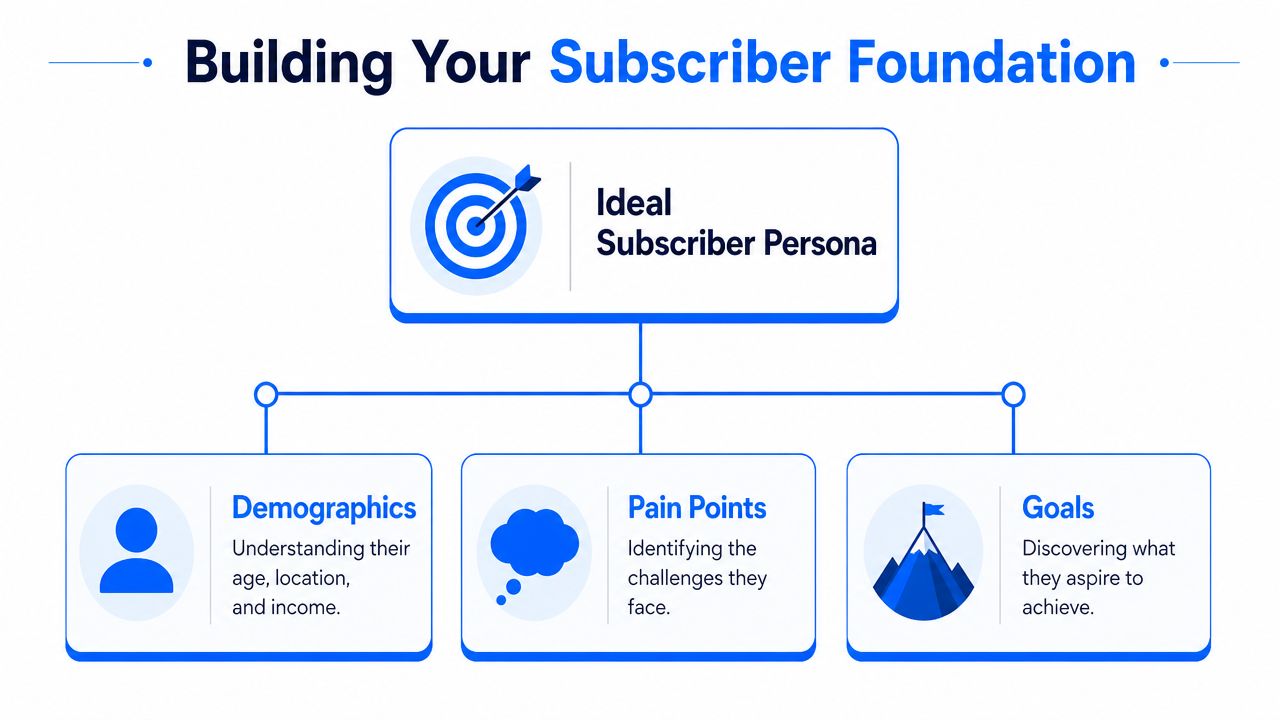
Build your subscriber definition around three layers:
- Firmographic fit. Industry, company size, team structure, business model, and growth stage. A VP of Marketing at a B2B SaaS company doesn't evaluate your content the same way a founder at a services firm does.
- Role-based reality. What does this person own? Pipeline? Expansion? Product adoption? Sales efficiency? Job responsibility changes what they'll trade an email address for.
- Problem intensity. What pain are they trying to solve right now? “Wants better marketing” is too broad. “Needs a reliable sourced pipeline outside paid search” is usable.
That level of specificity keeps you from attracting subscribers who like free content but will never become customers.
The best lists repel as much as they attract. If everyone wants your lead magnet, it's probably too broad.
Translate ICP into the offer
The lead magnet should feel like a shortcut for a specific person, not a generic library asset. At this point, most B2B email list building efforts get diluted.
Here's the difference:
Offer type
What it sounds like
Who it attracts
Generic
“Download our ebook on growth marketing”
Broad, mixed-intent traffic
ICP-aligned
“Q3 planning template for SaaS VPs of Marketing”
Higher-intent, role-specific buyers
The second offer does two things well. It signals relevance fast, and it pre-qualifies the subscriber before the form submission ever happens.
What a strong lead magnet includes
A high-performing B2B asset usually has these characteristics:
- It solves a live workflow problem. Templates, frameworks, checklists, calculators, audit tools, and implementation guides beat vague thought leadership when the goal is subscriber quality.
- It names the audience directly. Job title, team function, or company type should appear in the headline when possible.
- It creates a natural next step. The asset should lead into a welcome sequence, demo path, newsletter topic, or product narrative.
Weak example: “The Ultimate Guide to Digital Transformation.”
Stronger example: “Customer onboarding audit checklist for B2B SaaS operations leaders.”
The stronger version narrows the audience, sharpens intent, and makes follow-up easier. Your welcome emails can continue the same conversation instead of pivoting to something broad and disconnected.
Keep your forms honest and useful
A short form often converts more visitors, but B2B teams shouldn't strip every field without thinking. If one extra field helps you route people properly or personalize the next email, it can be worth the trade-off. The point isn't minimum friction at all costs. The point is informed friction.
Use fields that help qualification, not curiosity. Job role, company name, or company size can be useful. Asking for five extra details because sales “might want them later” usually hurts more than it helps.
A good form also sets expectations clearly:
- What they're getting
- How often you'll email
- Whether they're joining a newsletter, downloading a resource, or both
- How consent works
That clarity improves trust before the first send. It also sets up better lifecycle messaging after signup.
Driving Organic Growth with Owned Channels
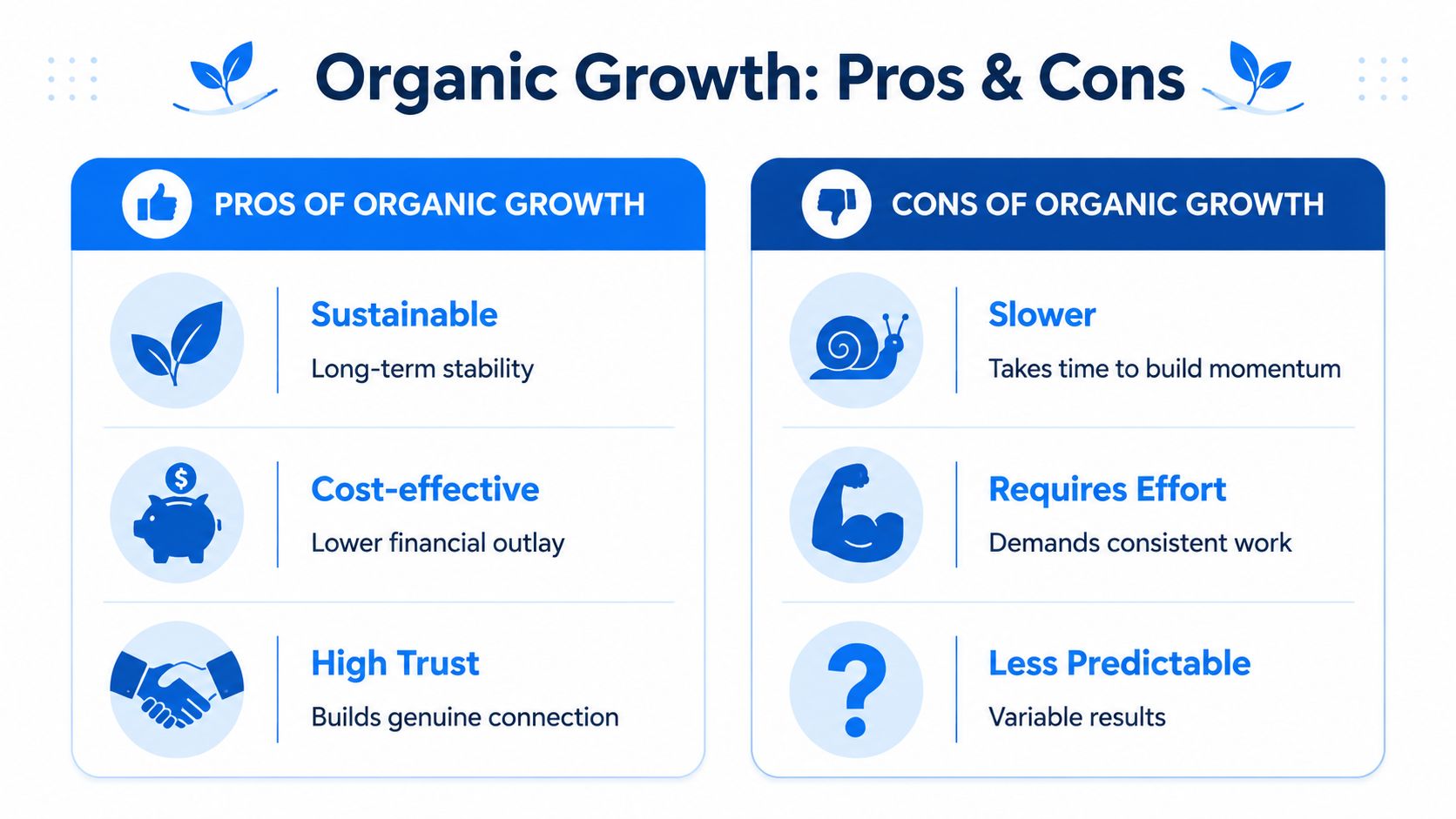
Organic email list building isn't the fast lane. It's the compounding lane. The upside is that every asset you create can keep producing subscribers after the week you launch it.
The simplest way to think about it is this. Your site, your content, and your professional presence should all point toward one clear subscription path. Not ten unrelated CTAs. One coherent reason to join.
Turn your website into a signup path
A lot of B2B sites treat email capture like a footer afterthought. Then they blame traffic quality. In practice, the problem is usually weak placement and weak messaging.
A SaaS company selling to RevOps teams might do this well by placing three distinct opportunities across the site:
- Homepage CTA with a role-specific promise
- Blog post inline form tied to the article topic
- Resource landing page for a practical template or checklist
Each placement serves different intent. A homepage visitor may want the broad newsletter value proposition. A blog reader researching one problem is more likely to opt in for a related asset. A resource page should close the loop with a focused offer and a low-distraction form.
If you need inspiration for offer formats, these lead magnet examples for list growth are helpful because they map offer style to audience intent instead of treating every form the same.
Let content do the filtering
Search-driven content works best when it attracts the right visitor and gives them a relevant next step. That sounds obvious, but many teams break the chain by publishing problem-aware content and then offering a generic newsletter signup that has nothing to do with the topic.
A stronger pattern looks like this:
Content asset
Reader intent
Better conversion step
“How to improve demo follow-up”
Tactical sales workflow interest
Demo follow-up template and newsletter opt-in
“B2B onboarding email mistakes”
Email operations and retention interest
Onboarding checklist and lifecycle newsletter
“How to qualify inbound leads”
Pipeline quality interest
Lead scoring worksheet and subscriber form
The article earns attention. The CTA captures it. The email program continues the exact conversation that brought the person in.
Organic channels work when message match is tight. The page topic, the CTA, and the welcome email should feel like one continuous experience.
A short explainer on organic growth mechanics can help teams align expectations before they start testing:
Use LinkedIn like a bridge, not the destination
For B2B, LinkedIn often drives stronger subscriber quality than broader social channels, but not because of vanity posting. It works when you use it to route interested professionals into owned capture points.
A consultant, fractional CMO, or growth lead can post three kinds of content that translate well into email signups:
- Breakdowns of current problems. For example, a post on why broad lead capture creates weak pipeline can direct readers to a more detailed framework in your newsletter.
- Process posts. Share the operating model, checklist, or planning method you use with clients. Then offer the working template by email signup.
- Event-led content. Promote webinars, live audits, or roundtables with a clear registration flow and explicit consent.
What doesn't work is expecting followers alone to become a list. Platforms are discovery layers. Your list is the retention layer. Treat them accordingly.
Accelerating Growth with Paid Acquisition and Partnerships
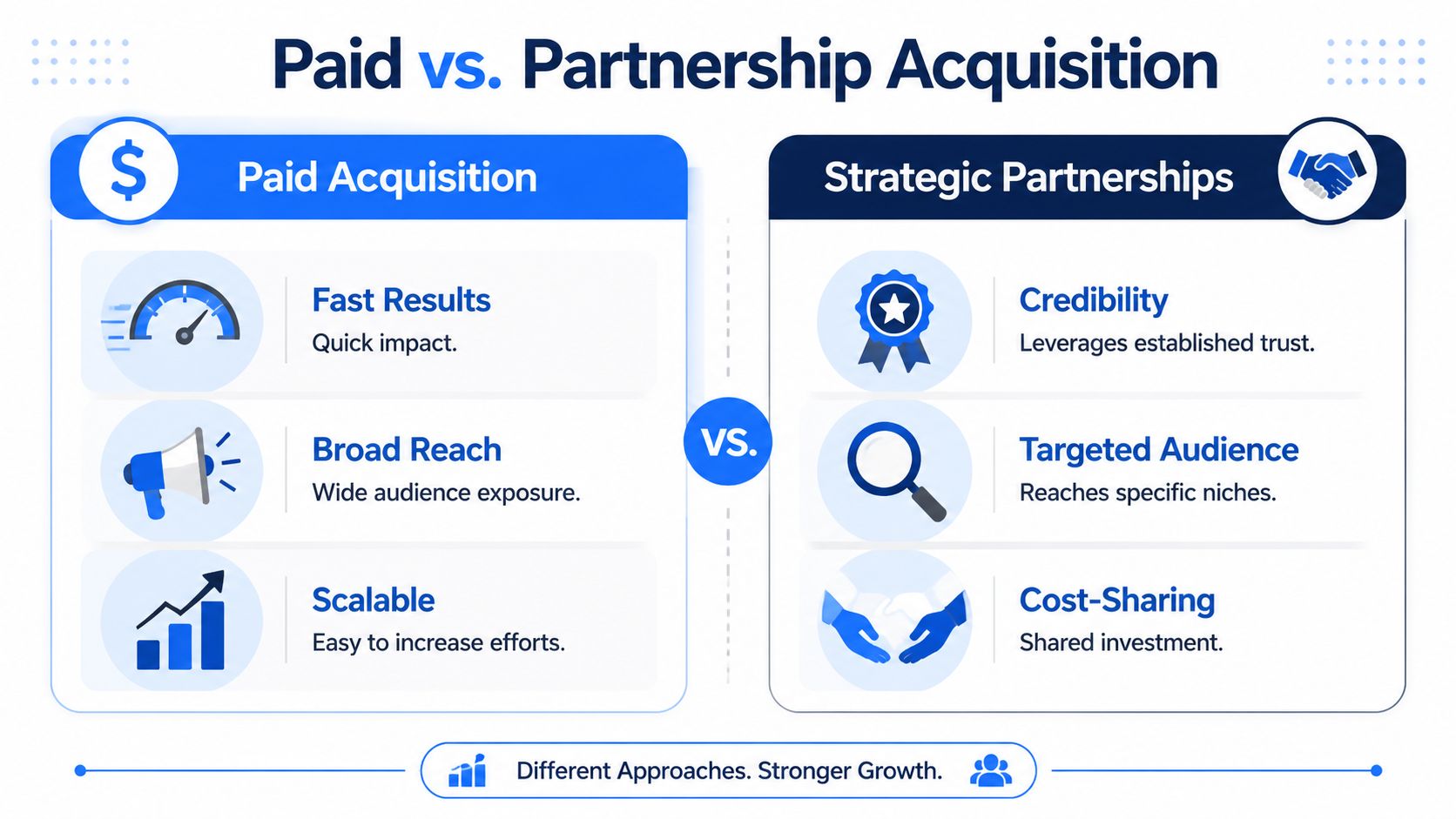
Once your organic engine is working, paid acquisition and partnerships can speed up email list building without lowering standards. The key is to buy access to the right audience, not just more impressions.
That means evaluating channels on three criteria: targeting precision, subscriber intent, and post-signup engagement quality. Cost matters, but cheap subscribers who never open aren't cheap.
Comparing the main accelerators
Channel
Best use case
Main advantage
Main risk
LinkedIn Lead Gen Forms
Tight professional targeting
Strong role and company filters
Weak offer can still attract low-intent leads
Newsletter sponsorships via platforms like Paved
Borrow trust from niche publishers
Audience context is already established
Audience mismatch is easy to miss
Paid content promotion
Scale an existing high-performing asset
More control over landing page experience
Broad targeting can dilute list quality
LinkedIn Lead Gen Forms are useful when your ICP is narrow and role-driven. If you need Heads of Demand Gen at mid-market software companies, LinkedIn lets you get closer to that audience than broad social promotion. But the form alone doesn't save you. If the offer is generic, you'll still buy weak intent.
Newsletter sponsorships work differently. You're effectively renting access to an audience that already trusts the publisher. That can produce stronger subscribers when the publication topic closely matches your own. It fails when marketers sponsor newsletters just because the audience looks adjacent on paper.
What to look for in a partner
A good sponsorship partner is more than “same industry.” Look for deeper alignment:
- Audience job function. Are you reaching operators, executives, practitioners, or founders?
- Problem overlap. Does the publication speak to the same pain your email program addresses?
- Tone and expectation. A tactical newsletter audience behaves differently from a trend-focused audience.
Ask for recent examples of sponsored placements, how they frame offers, and what kind of subscriber journey follows the click. Even without precise public benchmarks, you can usually tell whether a partner understands performance or just sells inventory.
Paid distribution works best after an offer proves itself
Don't put budget behind a weak magnet. First, validate the asset through organic traffic, direct outreach, or small internal promotion. If the messaging doesn't convert warm visitors, paid traffic won't fix it. It will just make the problem more expensive.
A stronger operating pattern looks like this:
- Launch a role-specific asset organically.
- Review signup quality and welcome-sequence engagement.
- Tighten the landing page if the wrong people are opting in.
- Scale with LinkedIn, content syndication, or newsletter sponsorships once the asset is clearly attracting the right audience.
Paid channels should amplify fit, not compensate for the lack of it.
Buy distribution only after you've earned message clarity. Scale makes weak positioning more visible, not more effective.
Partnerships deserve the same discipline. Co-branded webinars, ecosystem swaps, and community placements can work very well in B2B because trust transfers. But if the audience is off-target, you'll get names that look promising in a CRM and go silent in the inbox.
Protecting Your Asset with Smart List Hygiene
A neglected list gets expensive fast. You waste sends on invalid contacts, train mailbox providers to expect weak engagement, and misread campaign performance because the audience quality keeps slipping. Clean lists don't just look better in reports. They preserve inbox placement.
That's why permission-based acquisition and verification matter more than volume. Industry guidance warns against buying lists because they're linked with low engagement and reputation damage. The recommended practice is to use verified, permission-based contacts, implement double opt-in to reduce spam complaints, and regularly remove inactive or invalid addresses, as outlined in this guidance on common email marketing mistakes.
What smart hygiene looks like in practice
Start with double opt-in where it makes sense for your motion. Yes, it can reduce raw signup completion. It also filters out mistyped addresses, casual submissions, and lower-intent signups before they affect your sender reputation.
Then automate the basics:
- Remove invalid and bouncing addresses before they keep damaging performance
- Tag inactive subscribers so you can separate low engagement from active readership
- Run a re-engagement sequence before deleting cold contacts outright
- Suppress people who no longer want the content instead of continuing to chase opens
This isn't list shrinkage. It's audience refinement.
Hygiene protects deliverability and spend
Every acquisition source has a downstream cost. If you're paying to drive signups, sending to low-quality contacts means you're spending twice. Once to acquire them, and again to keep mailing them even after they stop responding.
For teams trying to get more rigorous about deliverability practices, this guide on How to avoid landing in spam is worth reviewing alongside your own sending policies. It's useful when you need to connect subscriber quality, engagement, and inbox placement into one operational picture.
If your database is already messy, it helps to review how mailing list cleaning services fit into a broader hygiene workflow. The point isn't outsourcing responsibility. It's making sure invalid data, stale segments, and poor suppression rules don't keep undermining good campaigns.
Scaling and Measuring What Actually Matters
The teams that win at email list building stop obsessing over total subscriber count. They focus on whether the list is getting more useful.
That shift matters because quality compounds. A smaller list of active, ICP-matched subscribers can drive better outcomes than a larger list filled with weak-fit signups, stale records, and people who never wanted the content in the first place. That mindset also matches broader optimization data. 66% of SMBs prioritize list quality over increasing conversion rates or list size, and guidance from the same source recommends segmentation without over-fragmentation plus A/B testing to isolate what improves performance, according to Campaign Monitor's guide to email list building.
The metrics worth looking at
Subscriber growth still matters, but it isn't the lead metric. Better questions are:
- Which acquisition sources produce engaged subscribers
- Which segments are aligned to our ICP
- Which offers create readers who keep interacting after the welcome sequence
- Which campaigns produce replies, demo interest, or deeper product intent
That forces a more honest read of performance. A viral giveaway or broad partnership might spike new contacts, but if those subscribers never behave like your target market, the campaign didn't build a durable asset.
Build a system, not a collection of campaigns
Scaling gets easier when every acquisition path feeds the same measurement model. Your forms, landing pages, welcome flows, and campaign analytics should answer one question consistently: are we adding more of the right subscribers?
That's where tooling matters. Some teams stitch this together with separate form tools, email platforms, enrichment workflows, and CRM reporting. Others use systems that combine sending, audience growth, and deliverability management in one place. Breaker is one example built for B2B teams that need to define an ICP, add engaged matching subscribers, manage hygiene and deliverability, and connect campaign analytics back to growth outcomes.
Keep segmentation useful
Segmentation helps when it sharpens relevance. It hurts when teams slice the audience into so many micro-groups that they can't learn anything clearly. Start broader than you think you need. Segment by role, industry, buying stage, or core pain point. Then test.
A simple review cycle works well:
- Check source quality. Which channels bring people who keep engaging?
- Audit offer fit. Which lead magnets attract subscribers closest to your ICP?
- Test the next step. Compare welcome sequences, CTAs, and newsletter framing.
- Prune what weakens focus. Retire segments, forms, or offers that consistently pull in poor-fit signups.
You don't need a perfect attribution model to improve list quality. You need a repeatable process for spotting which inputs create useful subscribers and which ones create noise.
Email list building becomes much more valuable once you stop treating it like audience collection and start treating it like audience design.
If your team wants a simpler way to run that system, Breaker combines newsletter sending with B2B audience growth, ICP-based subscriber targeting, analytics, data hygiene, and deliverability support. It's a practical option for marketers who want to grow a permission-based list without separating acquisition, sending, and measurement into disconnected tools.
Keep reading
All articlesNewsletter Agency Services: How Agencies Scale Client Newsletters
Managing multiple client newsletters? Learn what a true newsletter agency platform needs to prevent list mixing, voice drift, and invisible ROI.
Building Owned Audiences: Move Followers to Your Newsletter in 2026
Social platforms can vanish overnight. Learn how to convert Instagram, TikTok, and YouTube followers into a newsletter list you actually own.
Newsletter Analytics: Which Metrics Actually Matter in 2026
Open rate and clicks don't predict buyers. Learn the 7-step method to track click depth, recency, and topic affinity for a revenue-predictive intent score.