
10 Best B2B Lead Generation Companies for 2026
Find the best B2B lead generation companies for your GTM strategy. We compare 10 top services on features, pricing, and ideal ICP to help you choose.
Choosing a B2B lead generation partner feels high stakes because it is. You're not buying a simple vendor relationship. You're picking the system that will shape how prospects first hear from you, how fast leads reach sales, and whether pipeline creation becomes repeatable or stays dependent on heroic effort.
That's why so many teams get stuck. One agency promises meetings. Another sells data. A platform claims it can replace half your stack. The hard part isn't finding options. It's separating vendor type from vendor quality, then matching both to your actual bottleneck.
The market has shifted hard toward integrated platforms that combine data, signals, and execution. ZoomInfo describes its product as an AI GTM platform built on one of the largest verified B2B data foundations, while Apollo positions itself similarly and claims 230M+ contacts and 30M+ companies. That matters because modern buyers usually need more than a list. They need a way to identify accounts, prioritize them, and activate outreach without stitching together five tools.
At the same time, agencies still have a place. Some teams need meetings next month, not another tool rollout. Others need an owned channel that compounds over time instead of rented attention. If that's your situation, this shortlist of the best vendors for lead generation outsourcing is the practical version. It groups the best b2b lead generation companies by how they work, who they fit, and where the trade-offs show up after the kickoff call.
1. Breaker
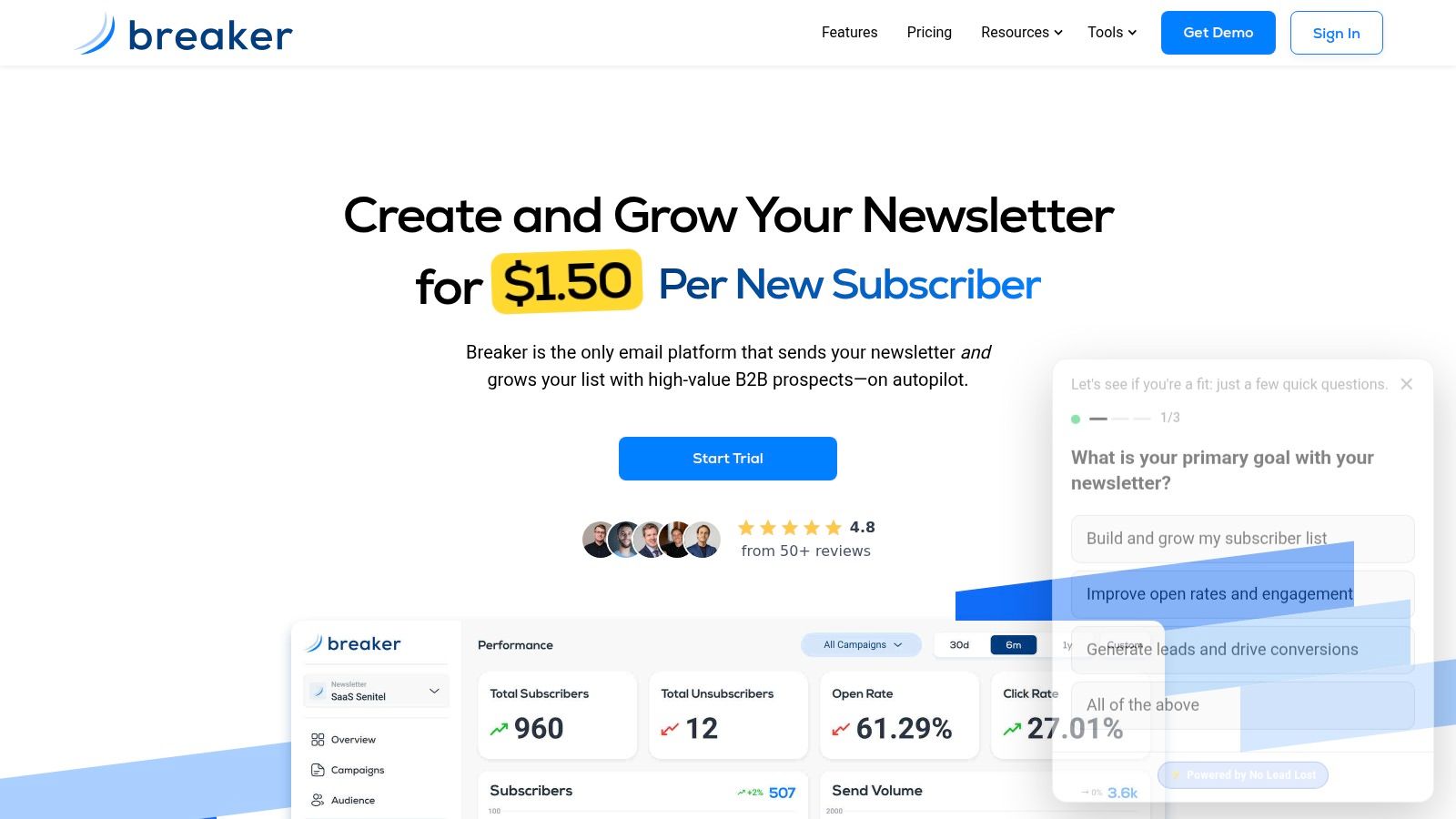
Breaker stands apart because it doesn't act like a classic appointment-setting agency or a generic email platform. It's built around a different bet. Your newsletter can become a lead-generation asset if audience growth, sending infrastructure, and deliverability are handled as one system.
That holds more significance than many teams perceive. A lot of outbound programs create temporary pipeline. A strong owned newsletter creates repeat touches with the exact people you want to educate, warm, and convert over time. For B2B growth teams, that's a distinct form of influence.
Why Breaker earns the featured spot
Breaker combines email sending with automated list growth for B2B audiences. Its targeting engine is designed to find and add engaged, exact-match subscribers based on your ICP, using AI enrichment, proprietary data, ongoing hygiene, and compliance controls. You're not just blasting a list. You're building one continuously while running campaigns from the same environment.
The product is also practical in the ways that matter day to day. Marketers get a builder for campaign creation and scheduling, fast CTA and link setup, and real-time analytics around opens, clicks, subscriber growth, and ROI. Deliverability is handled through TruSend, which covers reputation monitoring, list hygiene, and sending management so the operational burden doesn't sit entirely on your team.
Practical rule: If your team already creates useful content but struggles to turn that into repeatable pipeline, an owned newsletter channel is often a better fix than adding another cold outbound agency.
You can also connect Breaker to CRMs and sponsorship platforms like Paved and LiveIntent, which makes it useful for both pipeline generation and newsletter monetization. If you want a framework for making that channel work, Breaker's guide to B2B lead generation best practices is worth reviewing before you buy any service at all.
Where Breaker fits best
Breaker is best for B2B growth teams, agencies, consultants, and newsletter-led operators who want to own audience growth instead of renting access to prospects every quarter. It's especially strong when your sales process benefits from repeated education, category positioning, and consistent visibility with a defined ICP.
What I like most is the model fit. Agencies are useful when you need meetings fast. Breaker is better when you want a system that keeps producing engaged subscribers and lets you keep marketing to them over time.
A few trade-offs are real:
- Best for B2B teams: Breaker is optimized for B2B growth, not hobby newsletters or broad consumer publishing.
- Not a CRM: It can feed downstream systems, but it won't replace your sales workflow.
- Content still matters: Breaker can help with growth and distribution, but your team still needs a point of view and a content plan.
If your company wants lead generation that compounds, not just campaigns that expire, Breaker is one of the most interesting options on this list. You can explore the platform at Breaker.
2. Belkins
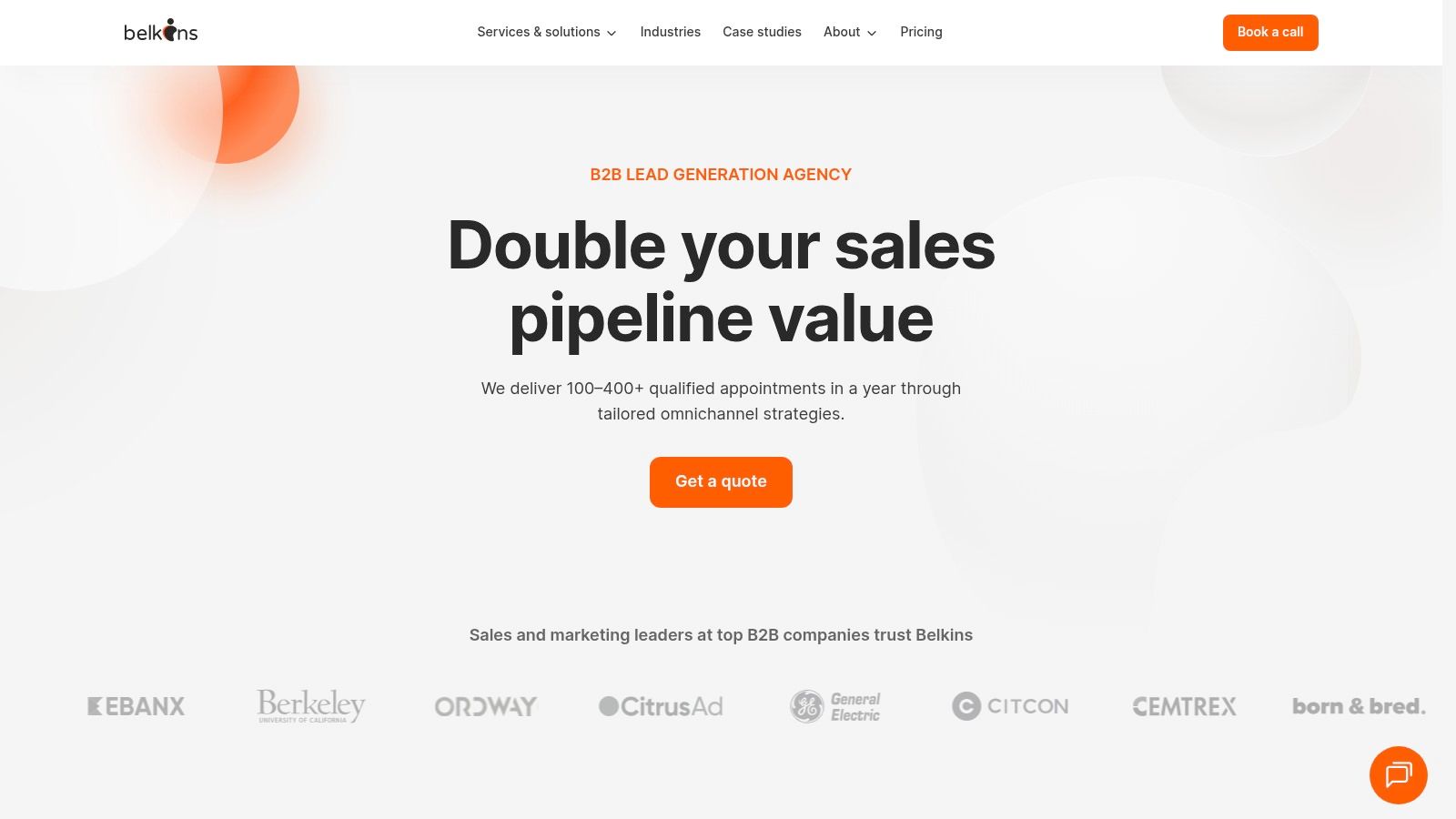
A common buying scenario looks like this. The team has product market fit, a defined ICP, and pressure to create more pipeline this quarter, but no appetite to hire SDRs, build prospecting ops, and troubleshoot deliverability from scratch. Belkins is a practical option for that stage.
Belkins sits in the outsourced outbound SDR and appointment-setting category of this list. That distinction matters because this article is not just ranking vendors. It is separating agency-led outbound partners from phone-first firms, platform-based options, and owned-channel alternatives like Breaker. Belkins is for teams that want meetings booked by an outside team, not for teams trying to build a compounding audience asset.
Their offer is fairly clear. They run outbound programs across email, LinkedIn, and phone, with list building, lead validation, testing, and appointment setting wrapped into one service. For a buyer, that reduces coordination overhead and gives one team responsibility for execution.
Where Belkins fits best
Belkins tends to work best for companies that already know who they want to reach and what message gets a response. If the fundamentals are in place, outsourcing execution can save months of hiring and ramp time.
It is a strong fit in situations like these:
- Mid-market and enterprise targeting: Multi-touch outreach across channels helps when one contact path rarely does the job alone.
- Teams without outbound infrastructure: Belkins covers research, messaging, deliverability, and booking, which removes a lot of operational setup.
- Marketing and sales teams that can handle follow-up: Booked meetings only matter if your reps qualify well and run a disciplined handoff.
I also like that Belkins explains its process in enough detail that buyers can see how the engagement is supposed to run after kickoff. That sounds basic, but plenty of agencies still sell outcomes while staying vague on workflow.
Trade-offs to watch
The trade-off is straightforward. Belkins can create activity, but it does not fix weak positioning, a poor offer, or a sloppy sales process. If your team is still testing ICP, pricing, or messaging, an agency engagement can become an expensive feedback loop.
This model also depends on what happens after the meeting gets booked. Companies with long sales cycles or multiple stakeholders usually need a stronger post-meeting follow-up plan than they expect. If that part is underbuilt, review a few lead nurturing best practices for B2B teams before judging the vendor solely on booked-call volume.
For buyers who want a done-for-you outbound engine and understand the limits of agency-led prospecting, Belkins deserves a place on the shortlist. For buyers who would rather build an owned audience and keep compounding demand over time, a platform model will make more sense.
3. SalesRoads
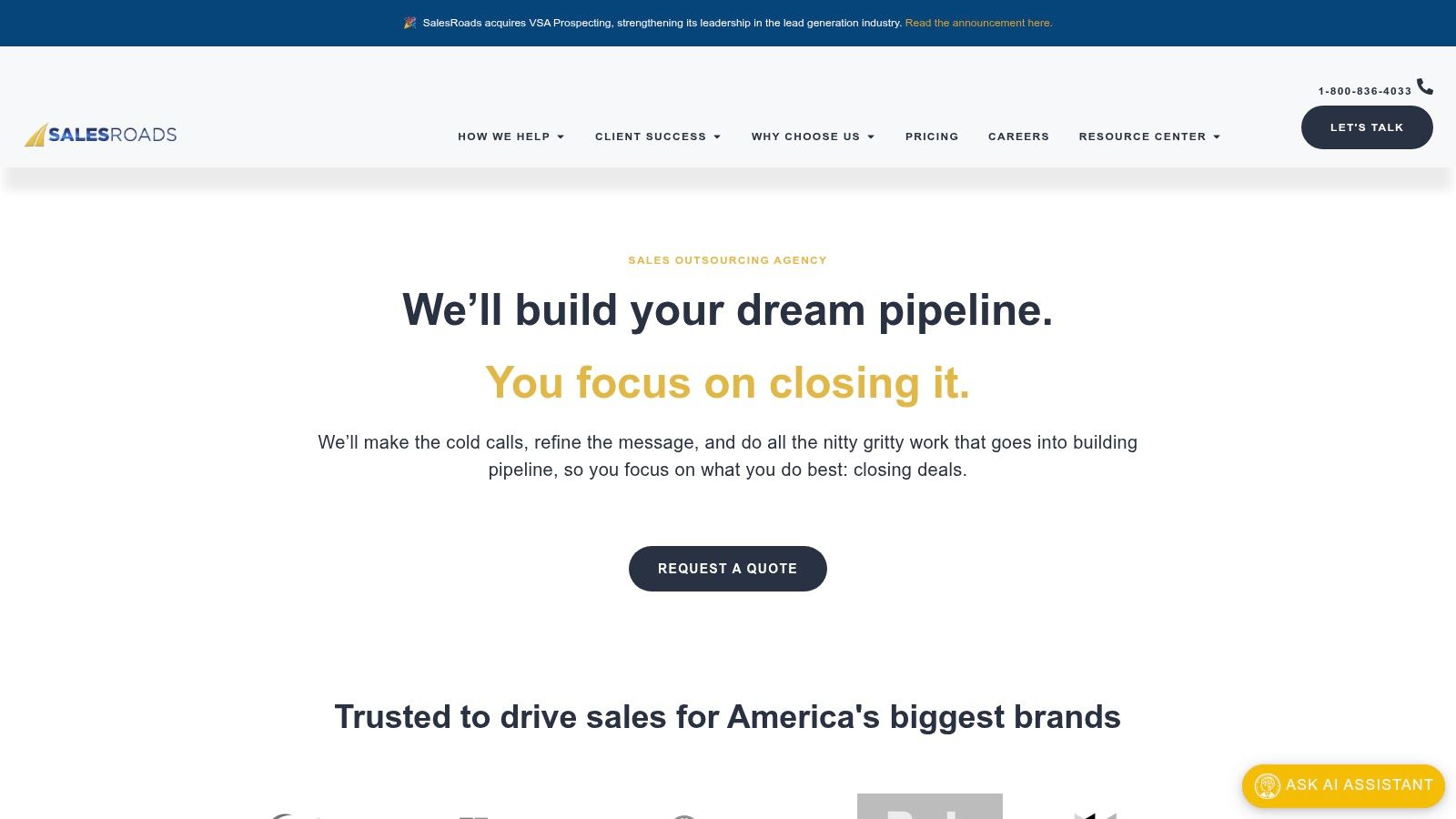
Some lead gen firms are email-first and treat calling as a fallback. SalesRoads is better viewed the other way around. If your buyers pick up the phone, this model makes sense quickly.
The company is built around U.S.-based SDR outsourcing and appointment setting, with a dedicated SDR plus sales operations and client success support. That setup is useful for companies selling into complex U.S. markets where live conversation still surfaces qualification signals faster than inbox replies do.
Best for teams that need voice-led coverage
SalesRoads publishes starting prices and account team roles, which I appreciate because too many services hide the operational reality behind vague sales language. You know it's a higher-commitment engagement going in.
It's especially useful in cases like these:
- Call-responsive buyers: Manufacturing, professional services, and some enterprise segments still move better through phone-first outreach.
- Need for structure: A defined account team reduces the “who owns what” confusion that hurts outsourced programs.
- Budget clarity: Public packaging makes internal approval easier.
Phone-first outsourcing works when your ICP answers unknown numbers and your offer can survive a real conversation. If neither is true, the SDR quality won't save the model.
SalesRoads can also work well when your internal team has a solid follow-up and nurture motion. That's where a stronger lead nurturing playbook keeps early conversations from dying after the first touch.
The real trade-off
The public entry price is substantial, and that alone will filter out smaller teams. This isn't a light experiment. It's a retainer-based decision.
The second issue is model fit. If you prefer pay-per-meeting economics or your market responds better to content-led education than live outreach, SalesRoads may feel expensive relative to alternatives. But if you want disciplined U.S.-based SDR execution and your buyers still pick up, it's one of the clearest options in the market.
4. Martal Group
A common buying scenario looks like this. The team knows outbound should be more disciplined, but no one internally wants to own messaging, channel mix, deliverability, and weekly performance reviews on top of everything else. Martal Group is built for that gap.
Its model combines outbound execution with fractional sales leadership across email, LinkedIn, and phone. That matters for companies that need someone to do more than book meetings. They need a partner to shape the motion, pressure-test the pitch, watch KPIs, and adjust before a weak campaign burns a quarter.
Why buyers choose Martal
Martal is strongest in situations where strategy and execution need to sit together. The offer includes direct-to-calendar booking, reporting, deliverability support, and mailbox or domain management. For a SaaS company, a services firm, or a team selling into enterprise accounts, that can remove a lot of operational drag.
I'd shortlist Martal for teams like these:
- Companies entering a new segment: Fractional sales leadership can tighten targeting and message-market fit faster than a pure appointment-setting vendor.
- Founders moving past founder-led outbound: The engagement adds process, management, and consistency.
- Teams with deliverability concerns: Including mailbox and domain support helps when internal outbound infrastructure is weak.
This puts Martal in a different bucket than a basic SDR shop. It looks closer to a managed outbound partner with built-in sales oversight, which is useful if you are still diagnosing your go-to-market motion and do not want to hire full-time leadership yet.
Where caution helps
The trade-off is complexity and cost visibility. Pricing is not fully public, so comparison shopping takes more effort than it does with firms that show clear entry points.
There is also a real ramp period. Fractional leadership improves campaign quality, but it does not remove the need to learn your category, objections, and buying committee dynamics. If you want a managed outbound program with more strategic input than a standard agency provides, Martal Group is worth a serious look.
5. CIENCE
CIENCE sits in the “broad GTM partner” category. It's not just selling appointment setting. It offers managed inbound and outbound SDR teams, data research, enrichment, and additional channels beyond basic prospecting.
That breadth can be valuable. It can also be too much. This is the kind of partner I'd consider when a company needs a larger operating layer around sales development, not just a narrow top-of-funnel service.
When the broader model helps
CIENCE's AI-plus-human positioning is aimed at organizations that want scale and range. If your team wants one partner that can support data operations, SDR programs, and adjacent GTM work, the all-in-one appeal is obvious.
This type of vendor reflects a bigger shift in the category. Top providers are increasingly judged by signal quality and activation depth, not just how many contacts sit in a database. That's why platforms and service partners alike now talk more about workflows, routing, and intent than raw list volume.
A good fit usually looks like this:
- Multi-market programs: You need more orchestration than a boutique agency can provide.
- Mixed inbound and outbound motions: One partner can bridge both.
- Larger GTM teams: Internal stakeholders can absorb a more complex engagement.
What doesn't work as well
The trade-off is complexity. Small teams often don't need this much infrastructure, and a broad scope can make it harder to isolate what's driving performance.
Custom pricing also means longer evaluation cycles. If you want a service you can compare quickly with a published package and a simple ramp, CIENCE may feel heavier than necessary. But for organizations that want a scaled GTM partner, it's one of the more expansive options in this category.
6. Callbox
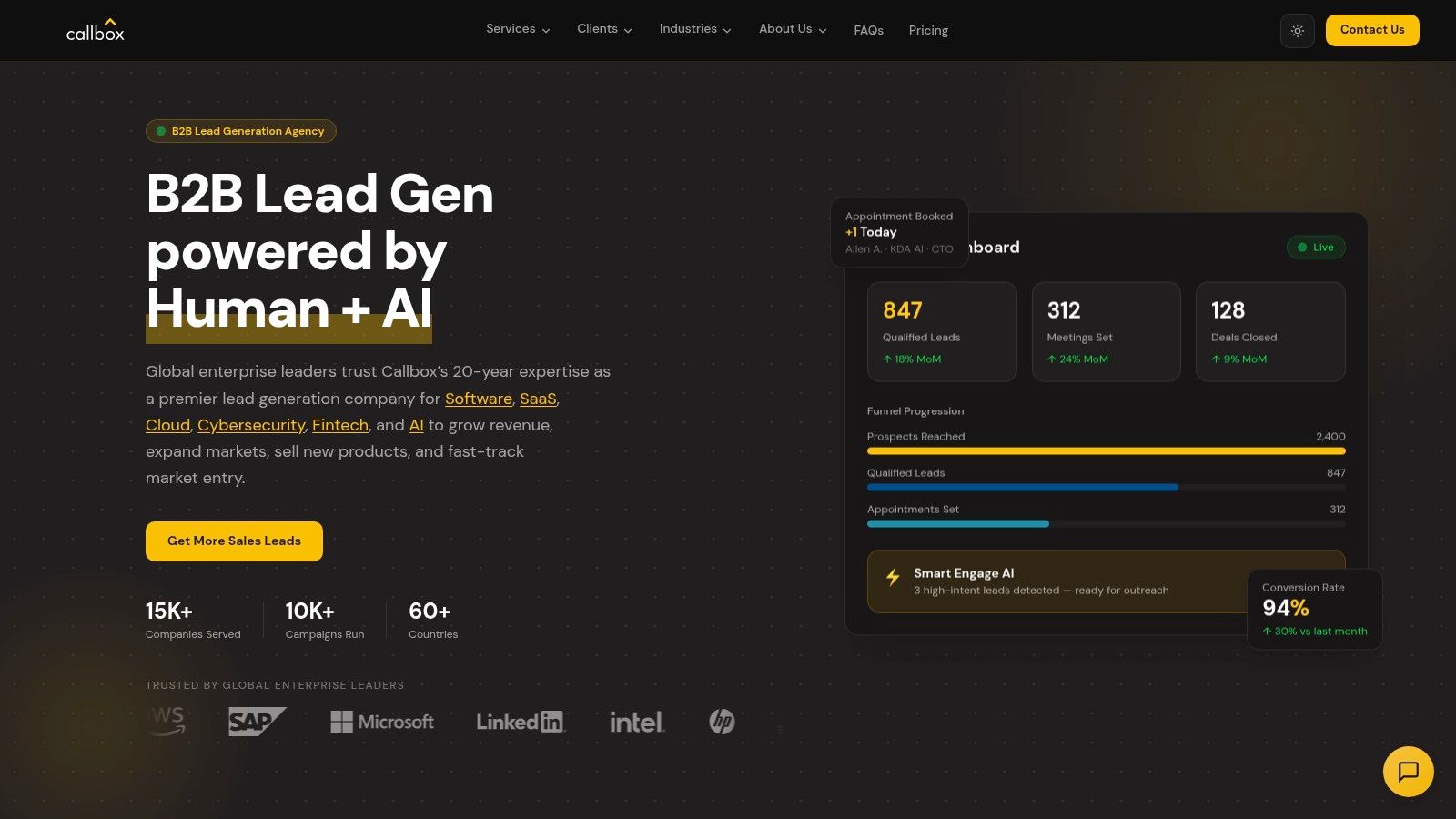
A common buying scenario looks like this: the team has clear ICPs, coverage needs span multiple regions, and internal SDR capacity is too thin to run outbound, event follow-up, and list operations at the same time. That is the kind of environment where Callbox usually enters the shortlist.
Callbox sits firmly in the agency camp. That matters in a category where buyers often compare service partners, appointment-setting firms, and platform products as if they were interchangeable. They are not. If you want a partner to run execution for you, Callbox is a more relevant comparison than database-first tools. If you want an owned-channel system your team controls directly, a platform model or a hybrid option like Breaker is often the better fit.
Where Callbox makes sense
The strength here is breadth. Callbox covers omnichannel outreach, ABM programs, webinar and event support, and data services, which makes it more useful than a narrow meeting-booking vendor when campaigns need coordination across multiple motions.
I would look at Callbox for situations like these:
- Regional or international programs: Coverage needs go beyond one market or one calling team.
- Event-driven pipeline goals: You need pre-event promotion, post-event follow-up, and outbound support under one partner.
- ABM campaigns with operational overhead: Target account programs need list building, outreach, and reporting in one engagement.
This model works best when strategy is already defined. Teams that still need to test positioning, offers, or market selection often struggle with larger outsourced programs because execution can outpace learning.
Trade-offs to weigh
The obvious drawback is buying friction. Pricing is custom, so comparison shopping takes more time than it does with standardized packages or software subscriptions.
There is also a control trade-off. A full-service agency can reduce load on your team, but it also puts more campaign knowledge outside your walls. For some companies, that is acceptable. For others, especially teams trying to build repeatable outbound as an internal capability, that is a meaningful downside.
If you need a broad agency partner with reach across channels and regions, Callbox is still one of the more established options to review.
7. EBQ
EBQ appeals to buyers who care about management structure as much as SDR output. Their appointment-setting service includes a Business Consultant and Project Manager alongside the execution layer, which gives the engagement more oversight than many “we'll book meetings for you” vendors.
That usually helps when internal teams want accountability, documentation, and a visible quality process instead of just calendar volume.
Why EBQ is a quality-first option
The company emphasizes research, verification, cold calling, email outreach, scheduling, and qualification criteria. I like that because it shifts the conversation from raw appointments to whether the lead belongs in your funnel.
EBQ can be a strong fit when:
- Your sales team needs better-filtered meetings: Quality standards matter more than volume.
- You want U.S.-based delivery: That's still a buying criterion in many segments.
- You care about launch discipline: Included management support tends to reduce chaos.
The no-public-pricing issue is the obvious drawback, but that's common in service-heavy engagements where scope changes fast. If you value process visibility and a stronger qualification layer, EBQ is worth a closer look.
8. memoryBlue
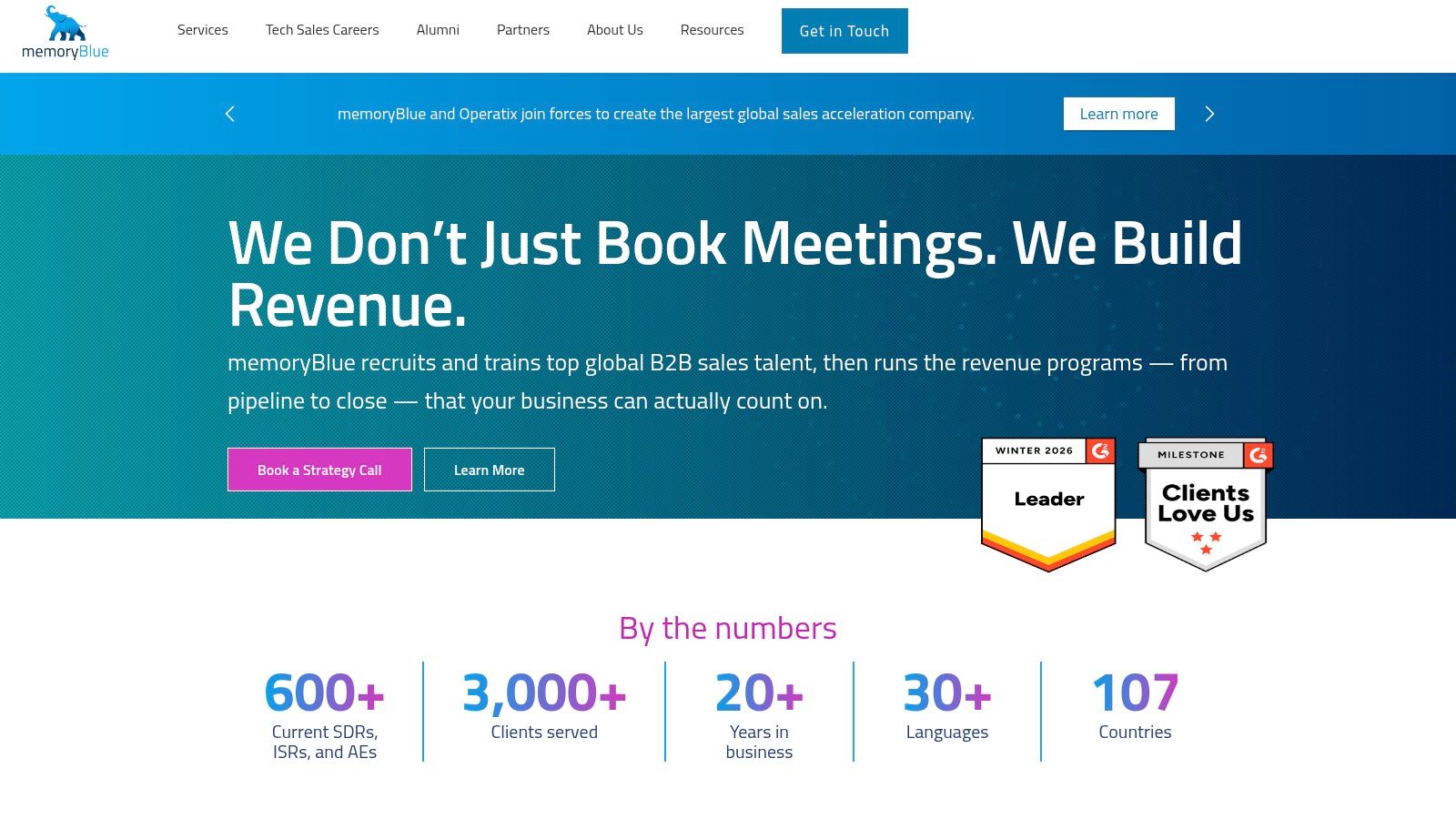
memoryBlue has long been associated with outsourced SDR development and outbound coverage, particularly in tech-oriented markets. If your company wants a partner with deep institutional experience in SDR training and performance management, that pedigree matters.
This is less of a boutique agency play and more of a disciplined outbound engine. For some buyers, that's exactly the point.
Best fit for structured outbound organizations
memoryBlue tends to make the most sense when the product category is already reasonably clear and the company needs consistent coverage, early qualification, and meeting generation without building the team from scratch.
A few reasons teams consider them:
- Training depth: SDR education is part of the value proposition.
- Tech-market experience: Useful if your buyers expect a more informed first conversation.
- Performance structure: Organizations that like measured outbound processes usually prefer this model.
The main downside is the same one that applies to many mature providers. Pricing is custom, and the engagement may feel more process-heavy than what a startup wants. I'd also evaluate management style carefully to make sure it matches how your sales org likes to work. For the right fit, memoryBlue can provide durable outbound coverage.
9. Leadium
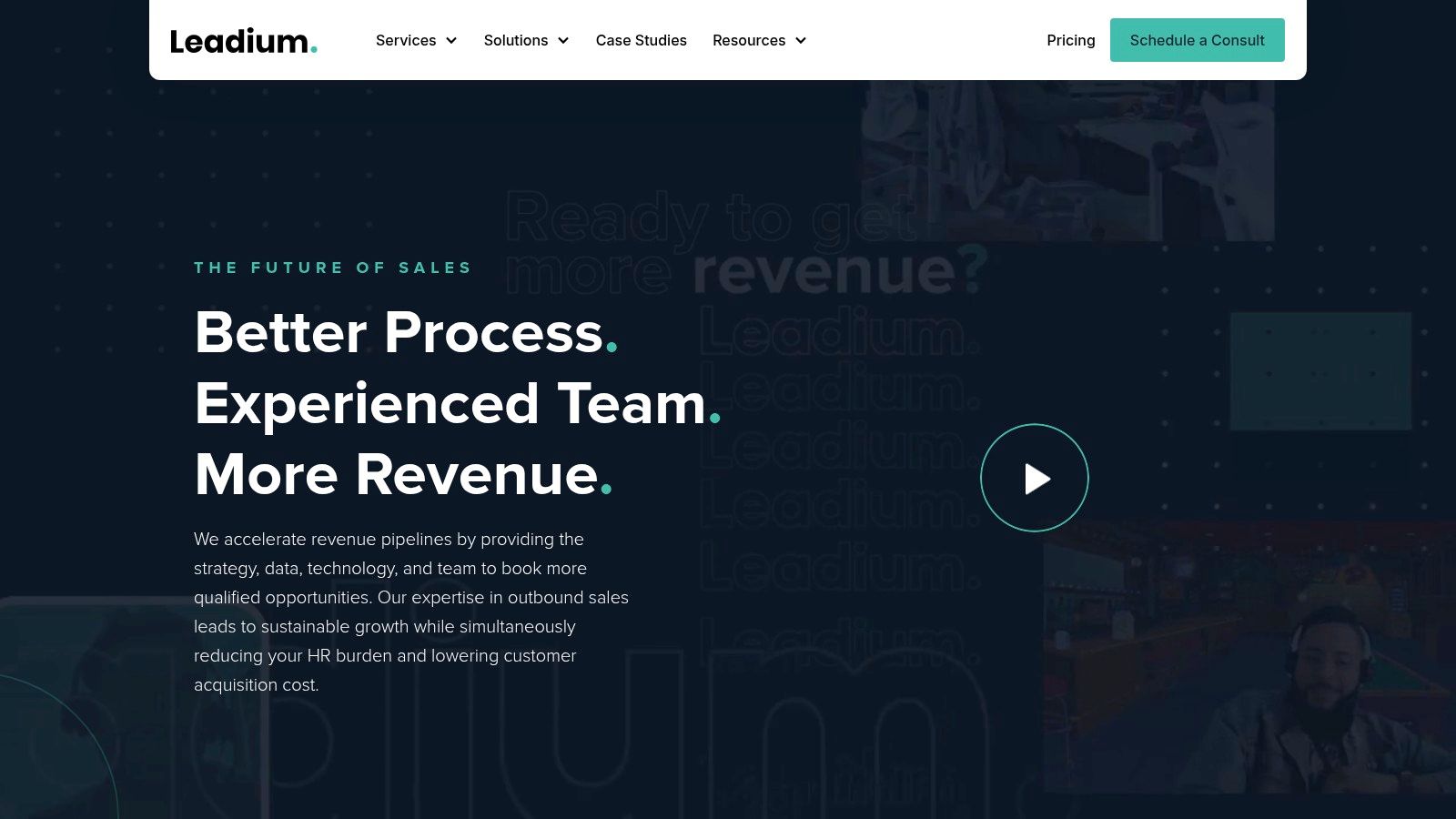
A common buying problem shows up after the first few agency calls. One vendor offers scale but pushes a standard playbook. Another promises creativity but only runs one channel well. Leadium sits in the middle. It is usually a better fit for teams that want a customized outbound program across email, phone, LinkedIn, SMS, gifting, data operations, and testing without defaulting to a large outsourced SDR shop.
That positioning matters because Leadium is not just selling meetings. It is selling program design.
Best for teams that need channel coordination
Leadium tends to work best when one channel alone is not enough. That often includes higher-consideration offers, segmented ICPs, or accounts where the first touch gets ignored and the second or third touch has to come from a different surface. As noted earlier in this article, LinkedIn plays a major role in B2B lead generation. Leadium benefits when that social layer is part of a broader sequence rather than the whole strategy.
A few strengths stand out:
- Customized campaign design: Useful when different segments need different messaging, touch patterns, and qualification rules.
- Multichannel execution: Email, calling, LinkedIn, SMS, and gifting can work together instead of running as separate experiments.
- Analytics-led iteration: Performance reviews and testing matter more here than a fixed script and a static sequence.
The trade-off is straightforward. Boutique service usually means proposal-based pricing, more hands-on scoping, and less bench depth than larger providers. If you need immediate global scale or a highly standardized SDR operation, other firms on this list may be easier to compare and procure.
If you want a partner that will shape the outbound motion around your market instead of forcing your market into a preset motion, Leadium deserves a serious look.
10. Cleverly
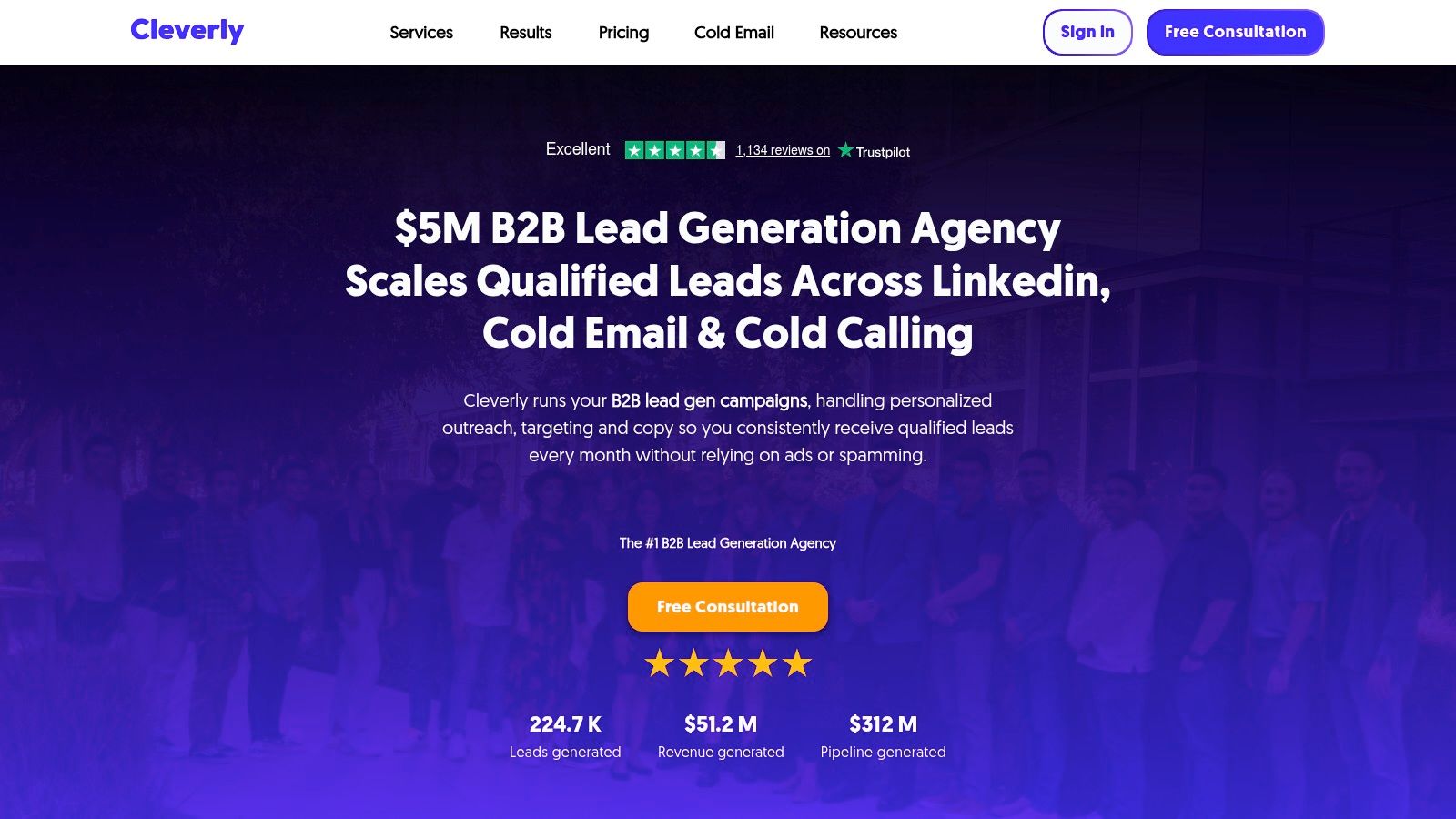
Cleverly is easiest to understand if you stop expecting it to be a full outbound department. It's a LinkedIn-first lead generation agency. That's both its appeal and its limitation.
For the right audience, a narrow focus is a feature. If your buyers live on LinkedIn, your offer is clear, and you want a lower-friction way to test social prospecting, Cleverly can make sense faster than a heavier agency engagement.
Best for LinkedIn-first testing
Cleverly handles targeting, copy, setup, campaign management, testing, and inbox workflows. It also has public entry pricing, which lowers the barrier to trying the channel.
This can work well when:
- Your ICP is active on LinkedIn: Founders, operators, recruiters, consultants, and many SaaS buyers are.
- You need fast setup: You already know who you want to reach.
- You want budget clarity: Published entry pricing is useful for quick decisions.
The limitation is obvious. A LinkedIn-first service won't replace a full omnichannel SDR program. If the sales process requires phone, email, and account-level orchestration, this won't cover enough ground. For simpler social-led prospecting, Cleverly remains a practical option.
Top 10 B2B Lead Gen Companies Comparison
Provider
Core features ✨
Quality ★
Pricing / Value 💰
Target 👥
USP / Notes ✨
🏆 Breaker
Automated list growth + newsletter builder; TruSend deliverability; real-time analytics
★★★★☆ (4.8/5)
💰 Starter $200/100 new subs; pay-per-new-subscriber (from $1.50); 7‑day trial
👥 B2B growth teams, agencies, creators
✨ Automated ICP targeting & AI enrichment; integrations + sponsorship monetization
Belkins
Omnichannel outreach (email/phone/LinkedIn), list research, deliverability
★★★★ (4/5)
💰 Public starter pricing; transparent packages
👥 SMBs & scaling B2B sales teams
✨ End-to-end outbound + direct-to-calendar booking
SalesRoads
Phone-first SDRs, dedicated account team, integrated email
★★★★ (4/5)
💰 Public pricing; starts ~$9,950/4-week cycle
👥 Teams needing US-based, high-touch calling
✨ Phone-led SDR quality with clear account roles
Martal Group
Fractional Sales Exec + SDRs, deliverability, KPI reviews
★★★★ (4/5)
💰 Quote-based (package tiers)
👥 Companies wanting fractional sales leadership + SDRs
✨ Scalable Sales Exec + SDR pairing; outcome-tiered packages
CIENCE
AI+human SDR teams, data ops, inbound+outbound programs
★★★★ (4/5)
💰 Custom pricing (quote)
👥 Firms needing broad GTM partner & data research
✨ Blend of AI and human teams across channels
Callbox
ABM-style omnichannel, webinars/events, global scale
★★★★ (4/5)
💰 Quote-based (enterprise focus)
👥 Teams needing regional/global ABM campaigns
✨ Global delivery + event/webinar lead gen capability
EBQ
US-based research, cold calling/email, management layer
★★★★ (4/5)
💰 Quote-based
👥 US-focused teams prioritizing quality & show-rate
✨ Included Business Consultant + PM for program management
memoryBlue
Dedicated SDRs, strong training, performance tracking
★★★★ (4/5)
💰 Custom pricing
👥 Tech firms and public-sector organizations
✨ Deep SDR training and long-tenured outbound playbooks
Leadium
Multichannel (email/phone/LinkedIn/SMS), ICP research, A/B testing
★★★★ (4/5)
💰 Proposal-based pricing
👥 Teams wanting consultative, analytics-driven outbound
✨ Boutique, data-driven program design and testing
Cleverly
LinkedIn-first prospecting, A/B testing, managed inbox
★★★★ (4/5)
💰 Public entry pricing (budget-friendly)
👥 SMBs testing LinkedIn outreach & agencies
✨ Low-cost, fast LinkedIn campaign setup; white-label option
Build Your Predictable Lead Engine
A common buying scenario looks like this. Pipeline is soft, sales wants meetings this quarter, marketing wants something that still pays off six months from now, and the team ends up comparing agencies, databases, and audience-building tools as if they solve the same problem.
They do not.
The strongest choice depends on the operating model you need. If you lack SDR capacity and need coverage fast, outsourced outbound firms such as Belkins, SalesRoads, Martal Group, EBQ, memoryBlue, Leadium, and Cleverly can help. If your team already knows the ICP, has solid messaging, and wants tighter control over targeting and process, a platform-based stack often makes more sense. Buyers get into trouble when they treat those as interchangeable purchases.
Owned-channel lead generation belongs in its own category. Breaker fits there. It helps teams build a newsletter audience they control, rather than relying only on rented attention from cold outreach programs. That trade-off matters for B2B companies with longer sales cycles, multiple stakeholders, or founder-led expertise that performs better through repeated exposure than through a single booked meeting.
That difference shows up in how value compounds. Agency programs can create activity quickly, which is useful when the quarter needs help now. Owned channels usually take longer to build, but they keep producing after the campaign window closes. Platform-led programs sit in the middle. They give in-house teams more control, but they also require process discipline, list management, and someone who can turn data into outreach that gets replies.
A practical self-diagnosis starts with three questions:
- Are you missing execution capacity or market clarity? If the problem is capacity, an agency can close the gap. If the problem is weak positioning, unclear ICP, or messaging that has not been validated, more outreach usually just scales the problem.
- Do you need speed, control, or compounding value? Appointment-setting firms can create near-term pipeline faster. Platforms give more control to internal teams. Owned channels build an asset that improves over time.
- Can sales convert the output? Lead generation breaks down when follow-up is slow, qualification standards are loose, or account executives are not set up to work the channel they asked for.
There is also one signal many teams underuse. Website intent. If your site already attracts the right accounts, tools like Leadfeeder can help your team identify visiting companies and prioritize outreach around existing interest. That often produces better conversion efficiency than another cold list, especially for categories where buyers conduct their research independently before taking a meeting.
The point is not to find a universal winner. It is to choose a lead generation model that matches your sales motion, your team's operating constraints, and the time horizon you care about. Teams that need outsourced execution should buy execution. Teams that want a repeatable in-house system should build around process and tooling. Teams that want an audience they own should treat that as a core channel, not a side experiment.
If growth efficiency matters across channels, it's also worth thinking about adjacent programs that scale your SaaS with affiliates.
If you want lead generation that compounds instead of resetting every quarter, take a close look at Breaker. It's a practical fit for B2B teams that want to grow a targeted newsletter audience, improve deliverability, and turn owned email into a real pipeline channel rather than a side project.
Keep reading
All articlesHow to Boost Conversions With Your Email Newsletter
Turn your newsletter into a conversion engine. See 2026 benchmarks, CTR vs CVR explained, and the fixes most email guides skip.
Drip Campaign Template: Ready-to-Use Email Sequences
Get 6 ready-to-paste drip campaign templates with subject lines, body copy, and send timing—plus a step-by-step guide to building your own.
Post-Webinar Survey Questions Template (2026)
30+ post-webinar survey questions with NPS, CSAT, and CES templates, plus timing and length tips to boost completion and qualify leads faster.