
7 Examples of Newsletters for Nonprofits to Inspire You
Looking for examples of newsletters for nonprofits? Steal ideas from these 7 top examples, with breakdowns of their strategy, content, and CTAs for 2026.
Most nonprofit newsletters fail for a simple reason. They're built around what the organization wants to announce, not what the reader wants to keep receiving.
That gap matters because email is already a core channel for the sector. A 2026 roundup reports that 83% of nonprofits use email marketing, and among those organizations the most common cadence is monthly at 46% (nonprofit email marketing statistics roundup). The opportunity isn't deciding whether newsletters matter. It's deciding what kind of newsletter your audience will open, read, and act on.
The best examples of newsletters for nonprofits don't just drop updates into an inbox. They teach, curate, frame decisions, reinforce trust, and create a rhythm supporters can rely on. If you need a sharper distinction between promotional updates and ongoing audience-building, this guide on understanding PR and newsletter examples is useful context.
Below are seven newsletter examples worth studying, not because you should copy them outright, but because each one gets a different job done well.
1. The Chronicle of Philanthropy – Philanthropy Today
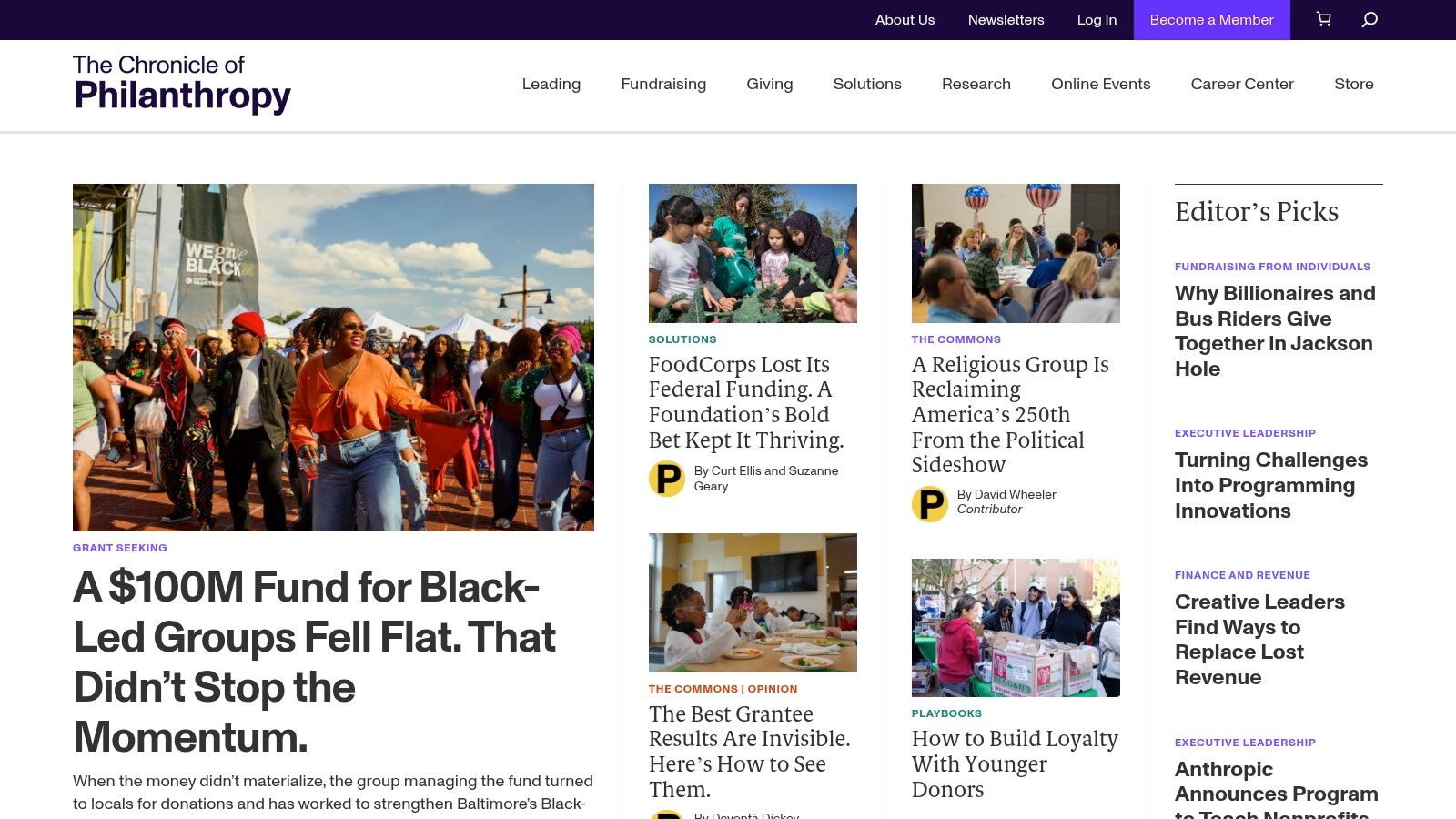
If your team spends too much time trying to monitor the sector, Philanthropy Today solves a real workflow problem. You get a weekday briefing that pulls together nonprofit management, fundraising, policy, and philanthropy headlines in one place. For executive directors, development leads, and comms teams, that curation is the value.
Visit The Chronicle of Philanthropy if you want a sector-news model to benchmark against.
Why its structure works
This is a classic curated roundup. It doesn't pretend every story deserves equal attention. The format is tight, headline-led, and built for skim reading. That makes it useful for leaders who need situational awareness before they need deep analysis.
What works here is the editorial filter. Readers aren't subscribing for one organization's internal updates. They're subscribing because someone already sorted the signal from the noise.
Practical rule: If your nonprofit serves professionals, members, or advocates, a curated format works better than a long organizational diary.
A simple nonprofit adaptation looks like this:
- Lead with the biggest issue: Open with one headline that matters now.
- Add two to four supporting items: Keep each blurb short and directional.
- End with one next step: Register, read more, reply, or donate. Not all four.
Best fit and trade-offs
This style fits associations, policy nonprofits, foundations, and umbrella organizations that need to keep stakeholders informed. It's less useful for a community nonprofit whose strongest asset is emotional storytelling.
The main downside is access friction. Some linked or hosted content can sit behind a paywall or metered access. There's also a national U.S. lens, so smaller local organizations may find some stories more strategic than immediately usable.
If you're building a similar product, get clear on your newsletter glossary terms and formats before you choose between a briefing, digest, or full editorial newsletter.
2. Stanford Social Innovation Review
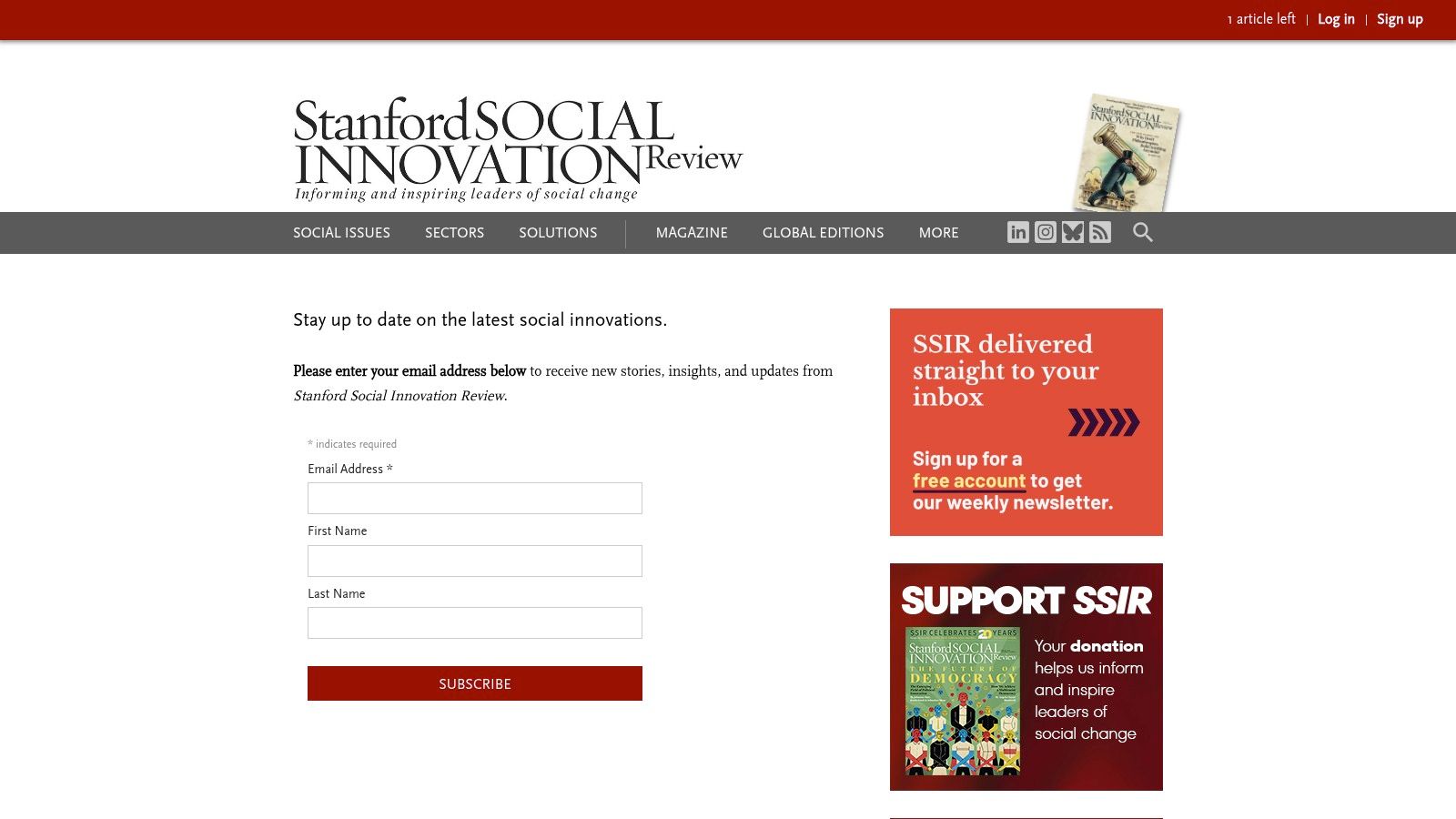
SSIR is what I'd point a board chair to when the organization needs better thinking, not just more news. Its newsletter is editor-curated, usually weekly in feel and cadence, and anchored in governance, strategy, impact, and social innovation. You can subscribe through Stanford Social Innovation Review.
This is one of the strongest examples of newsletters for nonprofits when your audience includes executives, trustees, institutional funders, or strategy-minded program leaders.
What makes it effective
SSIR bridges research and practice well. Instead of chasing urgency, it helps readers think through hard questions: governance design, cross-sector collaboration, systems change, and outcomes. That makes the email itself a positioning tool. It signals seriousness.
The newsletter also benefits from content variety. Articles, webinars, and long-form analysis sit together naturally because the audience expects intellectual range.
The takeaway isn't “write longer.” It's “send ideas your audience can use to make better decisions.”
What to borrow and what to avoid
Borrow the editorial hierarchy. Put one substantial idea at the top, then support it with related pieces. That's far more effective than stacking unrelated updates and hoping something lands.
You should not copy the depth blindly. SSIR works because its readers want analysis. Many nonprofit donor lists do not. If your supporter base wants mission stories, volunteer opportunities, and community updates, a boardroom tone will flatten engagement.
One useful benchmark from nonprofit email guidance is the emphasis on balanced content. One industry source recommends a 3-to-1 mix of educational or story-driven emails for every fundraising appeal, and cites an average nonprofit click-through rate of 3.29% as a practical benchmark for engagement (nonprofit newsletter examples and email benchmarks). That's a good reminder that even high-level thought leadership still has to earn interaction.
For execution basics, review these email best practices for newsletters before you imitate a more editorial format.
3. Nonprofit Quarterly
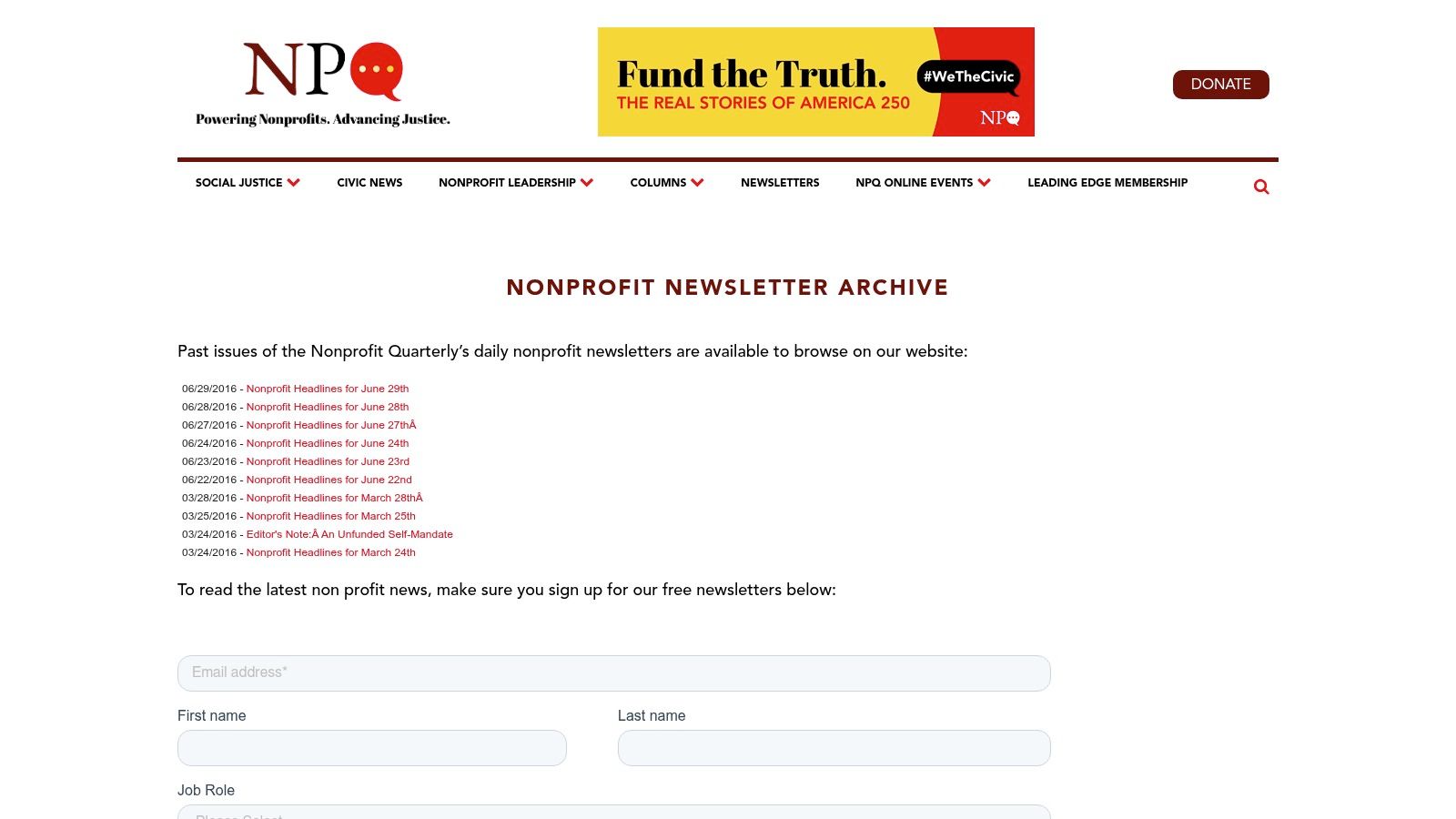
NPQ does something many nonprofit newsletters never manage. It lets readers choose relevance. Through Nonprofit Quarterly newsletters, subscribers can receive daily briefings and topic-based emails tied to management, equity, governance, fundraising, and policy.
That flexibility matters because not every subscriber wants the same lens. A program leader, a communications director, and a board member all care about different issues.
Why the personalization model stands out
This isn't personalization in the cosmetic sense of dropping a first name into the greeting. It's topic alignment. That's far more useful.
For nonprofits designing their own newsletter programs, the lesson is straightforward. Segment by role, issue interest, or supporter behavior. Current nonprofit email guidance recommends behavior-based segmentation, such as tailoring content after a subscriber clicks a volunteer-related link but doesn't convert. The same guidance also points to a focused format, with one cited organization sending a “heartbeat” update with only about three articles per email, which helps preserve readability (behavior-based nonprofit email list strategy).
Mini-template you can apply
Use NPQ's logic without copying its voice:
- For donors: one impact story, one program update, one action step
- For volunteers: one spotlight, one upcoming opportunity, one easy signup CTA
- For advocates: one policy development, one explainer, one action alert
Send fewer, more relevant blocks. Relevance usually beats volume.
The trade-off is operational complexity. Once you offer multiple tracks, someone has to maintain them. Topic-personalized email works when your team can sustain the calendar and keep each stream distinct.
If you're starting from scratch, this guide on how to start a newsletter helps you avoid overbuilding before you know what your audience wants.
4. Nonprofit AF
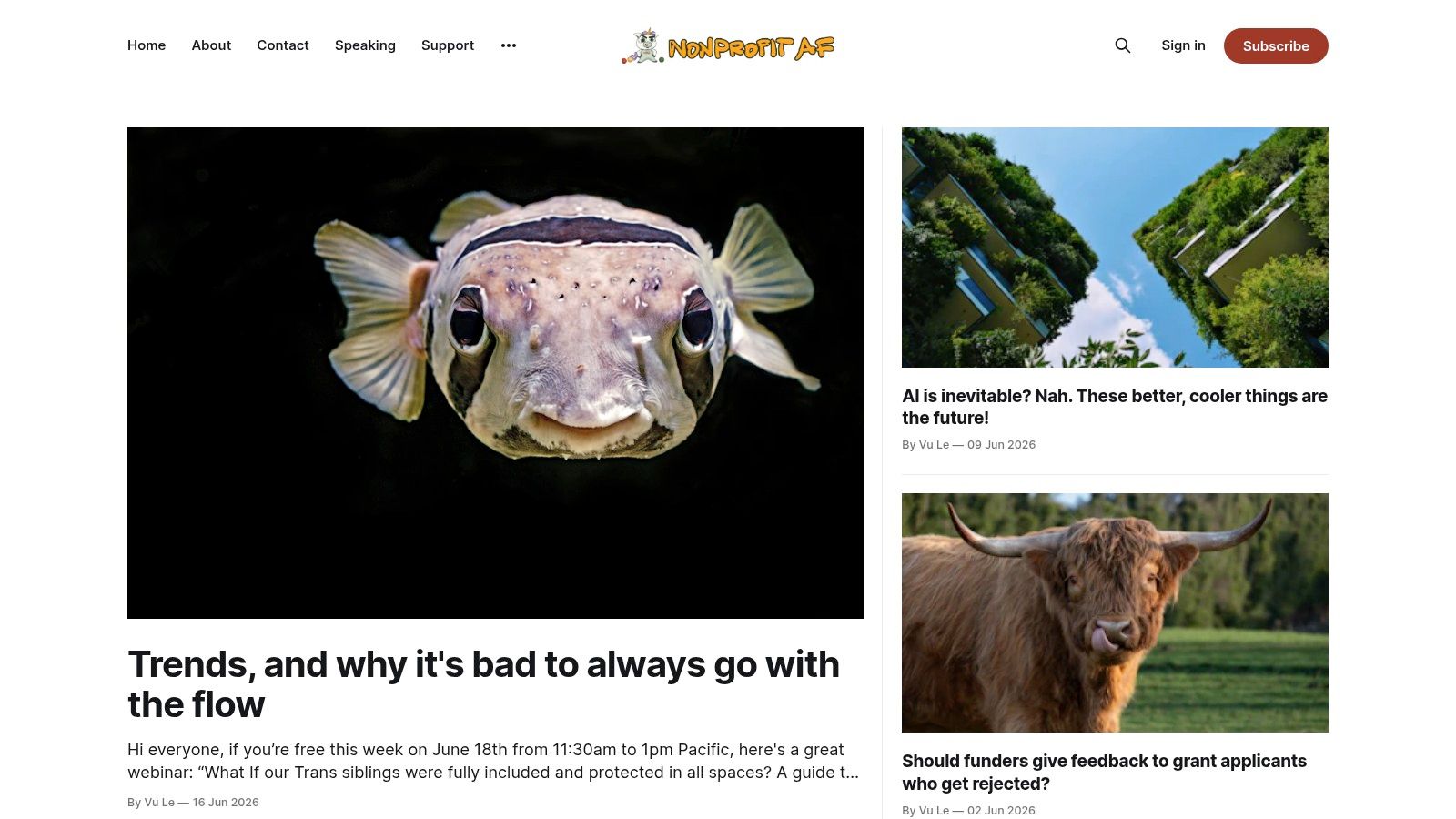
Most nonprofit newsletters sound institutionally safe. Nonprofit AF succeeds because it doesn't.
At Nonprofit AF, Vu Le's newsletter and blog voice is candid, opinionated, funny, and often sharply critical of nonprofit culture, funding dynamics, and management habits. That tone is the product. People don't just read it for information. They read it for perspective.
Why readers stay subscribed
This kind of newsletter works because it has a point of view. Readers can disagree with pieces and still look forward to the next issue. That's a sign of strong editorial identity.
For nonprofit leaders, the key lesson is not “be snarky.” It's “stop sanding off your voice.” If every issue sounds like it passed through three committees and legal review, supporters won't form any attachment to it.
A useful structure borrowed from this style:
- Open with one strong observation.
- Tie it to a common nonprofit tension.
- Give readers language they can reuse in internal conversations.
- End with one reflection question or discussion prompt.
Where this approach fits, and where it doesn't
This works well for staff-facing, movement-facing, coalition, and advocacy audiences. It can also work for founder-led nonprofits whose supporters are invested in the organization's worldview.
For staff-facing editions specifically, our staff newsletter ideas guide has eight formats that translate well to nonprofit teams.
It's less suitable for every donor-facing newsletter. If your list includes a broad base of occasional givers, a highly opinionated essay every week may narrow your audience more than you want.
A newsletter doesn't need neutral tone to be credible. It needs a clear audience and a consistent editorial line.
The practical sweet spot for many nonprofits is to borrow the human voice without importing the full confrontational edge.
5. The NonProfit Times
The NonProfit Times is strong because it recognizes a basic reality. Finance staff, fundraisers, HR leaders, and operations managers don't need the same newsletter.
Through The NonProfit Times, readers can access themed e-newsletters that focus on areas like breaking news, fundraising, finance, healthcare, and management coverage. That makes the publication useful inside organizations with multiple decision-makers.
What it gets right strategically
Themed newsletters reduce internal forwarding friction. A CFO can subscribe to finance-heavy content without wading through donor storytelling. A development director can get fundraising-relevant material without sorting through governance updates.
That's a model many midsize nonprofits should study. Instead of one overloaded newsletter for everyone, create one primary external newsletter and a few lighter specialized sends for high-interest groups.
Consider these practical adaptations:
- Function-first internal newsletter: For staff and board updates.
- Mission-first external newsletter: For donors, volunteers, and community supporters.
- Campaign-specific alerts: For advocacy pushes, events, or emergency response.
Main trade-offs
The upside is relevance. The downside is fragmentation. If each department starts sending its own email without a shared strategy, supporters get inconsistent voice, overlapping asks, and avoidable fatigue.
This style also tends to skew toward more mature organizations with enough staff to support specialization. Small nonprofits can still use the principle, but they should simplify it. Start with one core newsletter and one segmented variation, not five separate streams.
If your current send is trying to cover operations, policy, events, fundraising, and staffing all at once, that's usually a sign you need sharper audience separation, not a longer email.
6. TechSoup – Nonprofit Tech Updates
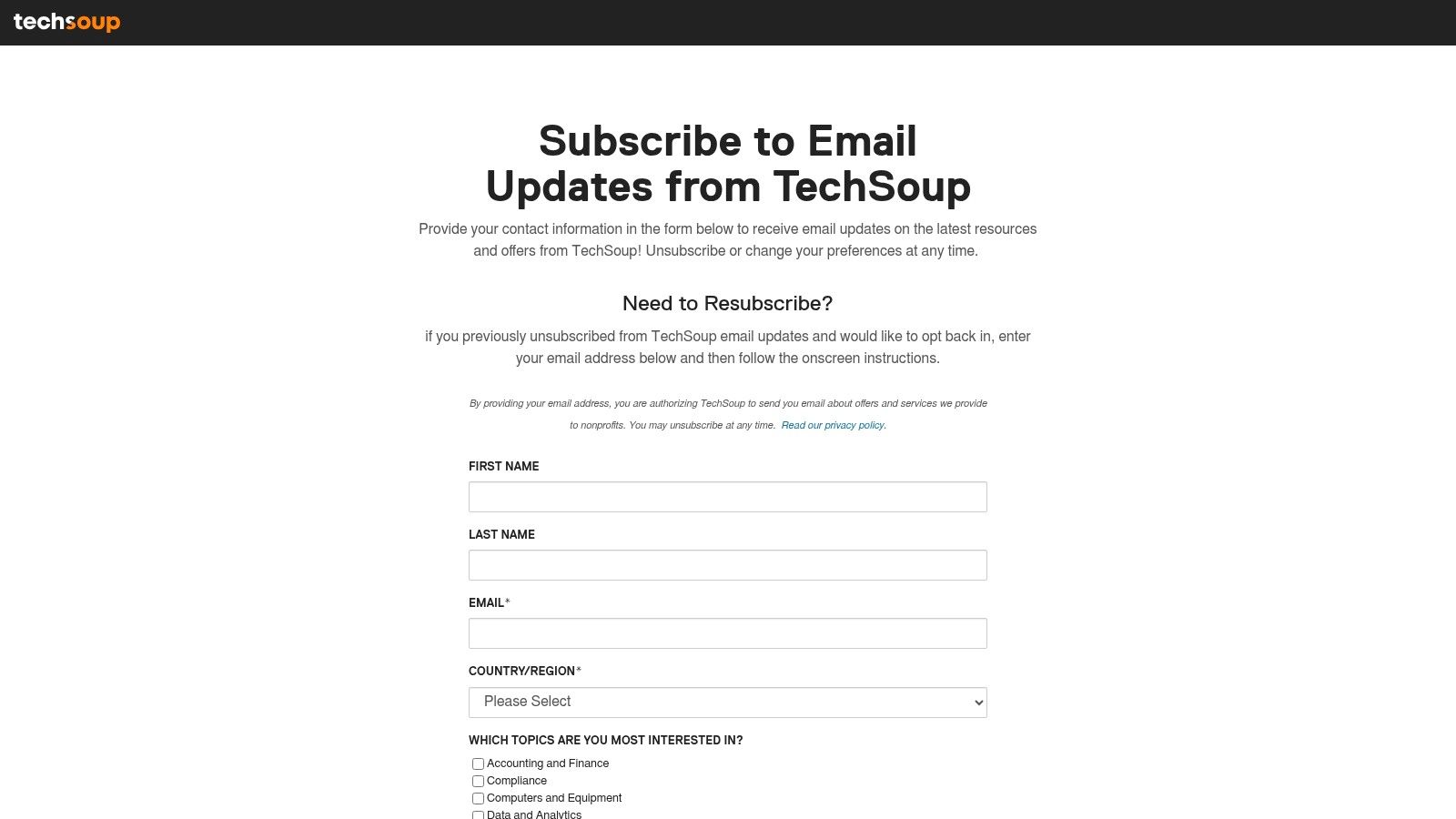
TechSoup's updates are a reminder that a newsletter doesn't have to feel editorial to be valuable. At TechSoup subscriptions, the appeal is practical utility. Software updates, discounted or donated technology access, implementation guidance, and training opportunities all map directly to operational needs.
That makes this one of the more useful examples of newsletters for nonprofits with lean teams. It respects the reader's time by focusing on things they can use.
The newsletter pattern worth stealing
This is a resource-and-opportunity format. It works especially well when your audience is trying to solve recurring problems with limited budget and staff capacity.
The structure is usually easy to replicate:
- One timely update or offer
- One how-to or training resource
- One product or program note with clear eligibility context
- One next-step CTA
That last piece matters. Utility newsletters win when the CTA matches the content. “Apply,” “register,” “download,” or “check eligibility” usually performs better than dropping in a generic donation button.
When the value is practical, keep the call to action practical too.
Limits of this style
A utility-first newsletter won't build emotional affinity on its own. It supports trust through helpfulness, but it doesn't replace mission storytelling, donor stewardship, or community building.
That's why many nonprofits need both. One newsletter can deepen mission connection. Another can solve day-to-day problems for staff, partners, or member organizations.
If your audience regularly asks operational questions, a resource-driven email may outperform a polished brand newsletter that says very little.
7. BoardSource
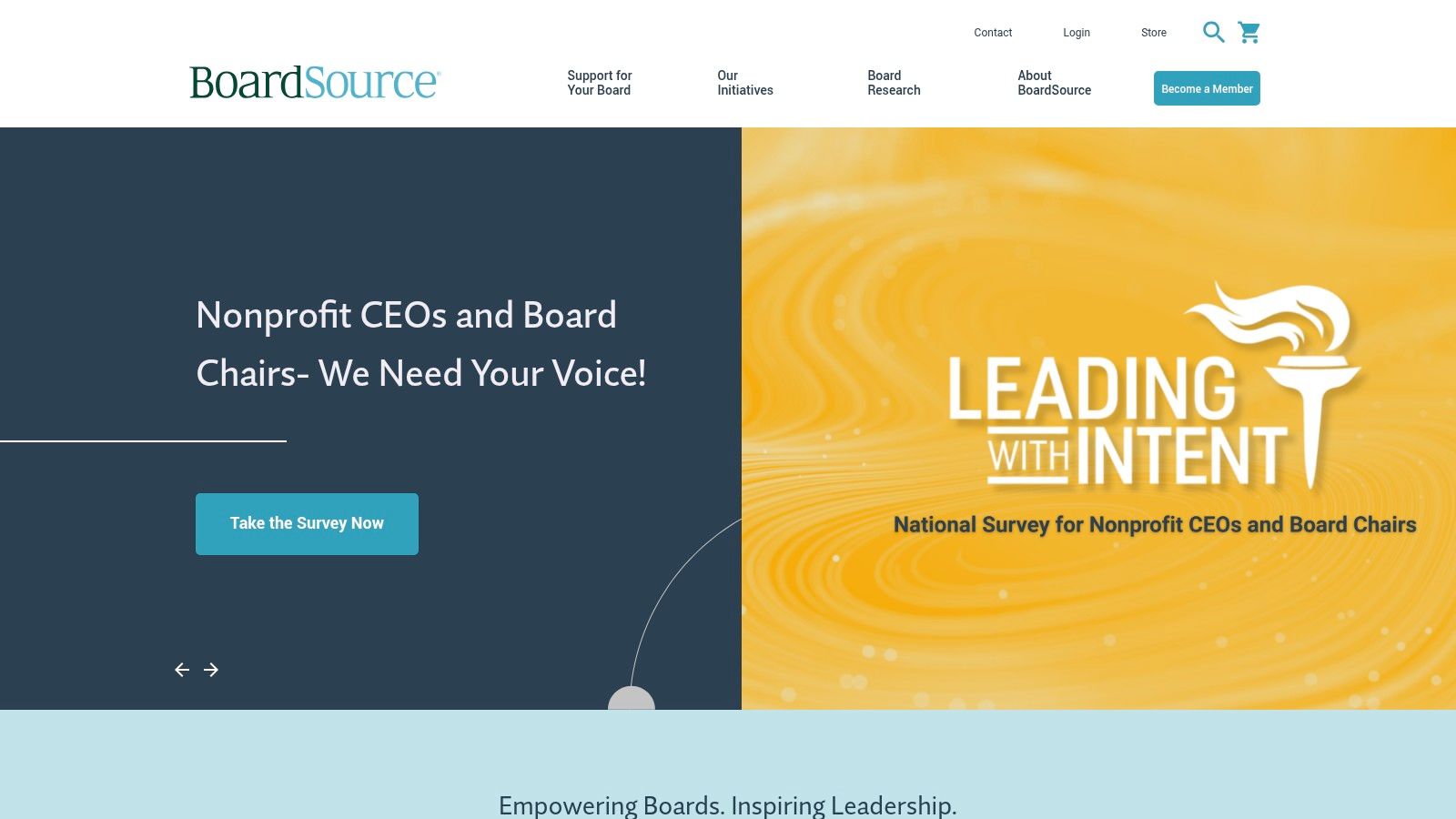
BoardSource is a strong example because it serves a narrow but important job: helping boards govern better. At BoardSource, the newsletter ecosystem centers on governance tips, research, board resources, curated headlines, and tools for chairs, governance committees, and CEOs.
That focus is exactly why it works. It doesn't try to be a general nonprofit digest.
What makes it effective for leadership audiences
Governance content often gets buried inside broader newsletters, even though boards need different framing than donors or staff. BoardSource treats governance as its own discipline, with its own vocabulary, cadence, and tools.
For nonprofits, there's a useful lesson here. Not every newsletter has to be public-facing. Some of the highest-value emails are designed for internal leadership audiences who need clarity, not inspiration.
A board-facing mini-template might include:
- One governance question the board should be discussing
- One policy, compliance, or oversight resource
- One short note from the ED or board chair
- One upcoming decision or meeting prep item
The strategic takeaway
This format is especially good for onboarding new trustees and reinforcing board habits over time. A quarterly board email can do more to improve meeting quality than a stack of PDFs no one reads.
The downside is obvious. Governance-focused content won't help much with day-to-day fundraising or volunteer mobilization. But that's not a flaw. It's disciplined positioning.
The strongest nonprofit newsletters usually choose one primary job and do it well. BoardSource does that better than most governance communications.
Top 7 Nonprofit Newsletters Comparison
Newsletter
Implementation complexity 🔄
Resource requirements ⚡
Expected outcomes 📊⭐
Ideal use cases 💡
Key advantages ⭐
The Chronicle of Philanthropy – Philanthropy Today
Low, simple subscription; occasional paywall navigation
Low, quick daily scan; some articles behind paywall
Broad national headlines and sector awareness
Executives and fundraisers needing daily national briefs
Time‑saving curation; wide fundraising and policy coverage
Stanford Social Innovation Review (SSIR)
Low, weekly delivery; requires time for deep reads
Moderate, long‑form reading; some paid content
High‑quality, research‑backed strategy and governance insights
Boards and executive teams focused on strategy and impact
Strong thought leadership and research‑driven analysis
Nonprofit Quarterly (NPQ)
Low, customizable topic subscriptions
Variable, can be high volume if many topics selected
Contextual analysis with strong equity and leadership perspective
Communications, policy teams, and role‑based monitoring
Distinct equity lens and topical personalization
Nonprofit AF
Low, weekly essays; no setup
Low, short, reflective reads that spark conversation
Stimulates internal discussion and culture change
Staff and boards seeking candid, conversation‑starting content
Relatable, practical commentary that fosters dialogue
The NonProfit Times
Low, subscribe by function; multiple topic lists
Low, targeted by department; manageable volume
Practical, tactical updates for operations and compliance
Department leads (fundraising, finance, HR, healthcare)
Function‑specific, actionable how‑tos and news
TechSoup – Nonprofit Tech Updates
Low, subscribe and verify eligibility for offers
Low, brief alerts; may require follow‑up for implementation
Cost savings and faster tech adoption for nonprofits
IT, operations, and digital communications teams
Concrete discounts, donated software, and practical tech guides
BoardSource
Low, governance‑focused subscription; some member content
Low–Moderate, many tools behind membership
Improved board practice, governance frameworks, and orientation
Board chairs, governance committees, and CEOs
Authoritative, trusted governance guidance and tools
Your Turn: Create a Newsletter That Drives Your Mission
What should your newsletter do every time it lands in someone's inbox?
The strongest examples in this list answer that question with precision. Each one has a clear job, a defined audience, and a format readers learn to expect. That is the core lesson here. Strong nonprofit newsletters are built on strategy, not polish.
A common mistake is trying to serve donors, volunteers, advocates, board members, and staff in the same email. The result is usually predictable. The stories feel disconnected, the CTA gets muddy, and no one segment feels like the issue was made for them. If you want a newsletter that drives action, start narrower.
Use this simple planning framework:
- Audience: Pick one primary reader group first.
- Goal: Decide what each issue should produce, such as trust, event attendance, advocacy action, repeat giving, or volunteer signups.
- Format: Choose a structure your team can repeat without rebuilding from scratch every month.
- CTA: Give each issue one main action, with one secondary action at most.
That framework forces trade-offs, which is useful. A donor newsletter can carry a mission story plus a giving CTA. A board newsletter might focus on program progress, financial context, and governance dates. An advocate email often works better as a short update with one clear action. Different goals need different structures.
A practical build can look like this:
- Audience first: donors, volunteers, advocates, board members, or partners
- Repeatable format: story-led update, curated digest, leadership note, resource roundup, or action alert
- Sustainable cadence: maintaining a consistent schedule is more important than an ambitious one your team cannot keep
- Performance review: look at clicks, replies, and conversions, not just sends or opens
Keep the content useful between asks. Nonprofits that treat every send like a campaign appeal usually train subscribers to ignore the next one. A better approach is to mix proof, perspective, and participation. Show progress, explain why the work matters, and invite the reader to do one specific thing.
Here is a simple mini-template you can adapt:
- Opening: one short story, insight, or timely update
- Proof: one result, lesson, or example from the field
- Action: one clear CTA tied to the content
- Footer: subscription preferences, contact info, and a secondary link if needed
As your program grows, operations start to matter as much as content. A dedicated platform can help you manage segmentation, scheduling, deliverability, and reporting without turning every send into a manual task. If lead capture is part of your strategy, it also helps to build forms that qualify leads so the right subscribers enter the right newsletter stream from the start.
If you're comparing tools beyond nonprofit-specific use cases, Breaker is one option for teams that want newsletter sending and audience growth in the same system.
If you're building a newsletter program and want one platform for sending, audience targeting, subscriber growth, and performance tracking, Breaker is worth a look. It's designed for teams that treat newsletters as a growth channel, with tools for campaign creation, list expansion, analytics, and deliverability management.
Keep reading
All articles8 Best Email Tracking Software Tools in 2026
Compare 8 top email tracking tools for 2026, how tracking pixels work, and why Apple's privacy rules make open rates unreliable. See our top pick.
6 Best Email Trackers for Newsletter Senders in 2026
Open rates lie. Learn how email trackers really work, why Apple and Gmail skew the data, and which tools newsletter senders should actually use in 2026.
Post Webinar Survey: Questions, Examples, and a Checklist
What to ask in a post webinar survey, when to send it, three example formats, and a checklist for turning the answers into segmented follow-up and pipeline.