
About the Author Pages: A Growth-Focused Blueprint
Build high-converting about the author pages with proven structure, SEO schema, trust signals, and CTAs tailored for B2B newsletter creators and growth teams.
Most advice on about the author pages is stuck in the wrong frame. It treats the page like a polite sidebar bio, when in practice it often sits among the most visited pages on an author site, and it has to win trust fast because attention is thin and first-time visitors dominate. In a study of successful author websites, the About page accounted for 12% of page popularity, behind only Home (41%), Books (28%), and Blog Post pages (19%), while the average site saw 849 visits per month, 82% new visitors, 18% returning visitors, 1 minute 44 seconds average session time, and 2.2 pages per visit source. That's not biography territory, that's conversion territory.
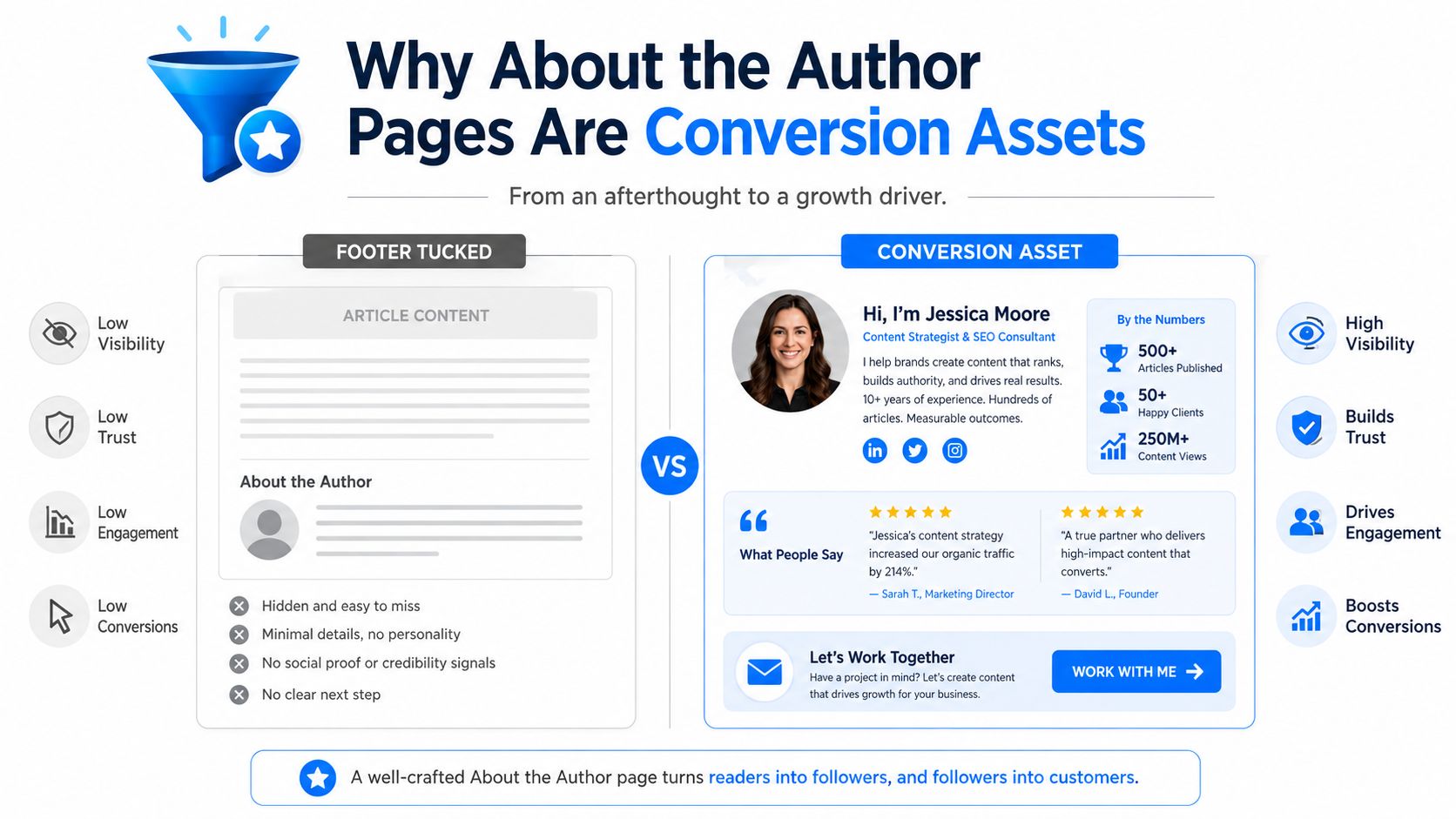
For B2B newsletters, the page does two jobs at once. It reassures a skeptical reader that the person behind the byline is credible, and it gives that same reader a clear next step before they bounce. If your author page can't do both, it's underperforming.
Why About the Author Pages Are Conversion Assets
The cleanest way to think about an author page is this, it's often the first trust checkpoint a new reader hits after landing on your site. That matters because the traffic mix on author sites skews toward new visitors, not loyal repeat readers, so the page has to make a case quickly source. If a visitor only scans two pages before leaving, your author page can't afford to read like a resume dump.
From bio copy to business asset
The old model treated the page as a dead-end. Name, headshot, a short third-person bio, maybe a link to a book page, and then nothing else. That's a waste of a surface that already gets meaningful attention and can steer readers into a newsletter, a lead magnet, a consulting inquiry, or a book purchase.
There's also a clear market signal that the page has become more important, not less. One industry report says 85% of English-language author websites in the U.S., U.K., and Australia now include a well-optimized About page, up from 55% in 2013 source. That same source links strong About pages to higher retention and direct sales, which is exactly why growth teams should stop treating the page as a vanity asset.
Practical rule: If the page isn't moving a reader toward another meaningful action, it's not an About page, it's a cul-de-sac.
For B2B newsletter operators, the conversion goal doesn't have to be dramatic. It can be a newsletter signup, a “read the latest issue” click, a sponsor inquiry, or a services page visit. What matters is that the page earns a next step instead of merely describing the person who wrote the content.
The Ideal Structure for a High-Converting Author Page
A high-performing author page reads like a short argument. It opens with a clear claim, backs that claim with proof, then gives the reader a next step that makes sense. If the layout hides the point inside a long biography, the page loses momentum before the CTA ever earns attention.
Start with a sharp positioning hook
Open with one sentence that says what you cover and who you help. For a B2B newsletter creator, that usually means a plain statement about the problem area, the audience, and the lens you bring. Clarity beats cleverness here.
Build credibility before asking for action
Put the proof directly after the hook. That can be current role, relevant expertise, editorial review, featured work, or independent corroboration. A profile that answers “why should I listen?” before it asks for an email address usually feels more legitimate.
End with a visible next step
The CTA should not sit under a wall of biography text. Place the signup module, book link, or contact prompt where it feels like the natural end of the page narrative. If the page is for a newsletter brand, the CTA should make the subscription value obvious in one glance.
The same hierarchy and friction rules that shape strong landing pages apply here too, which is why a practical landing page best practice guide is useful when you are structuring an author page around conversion.
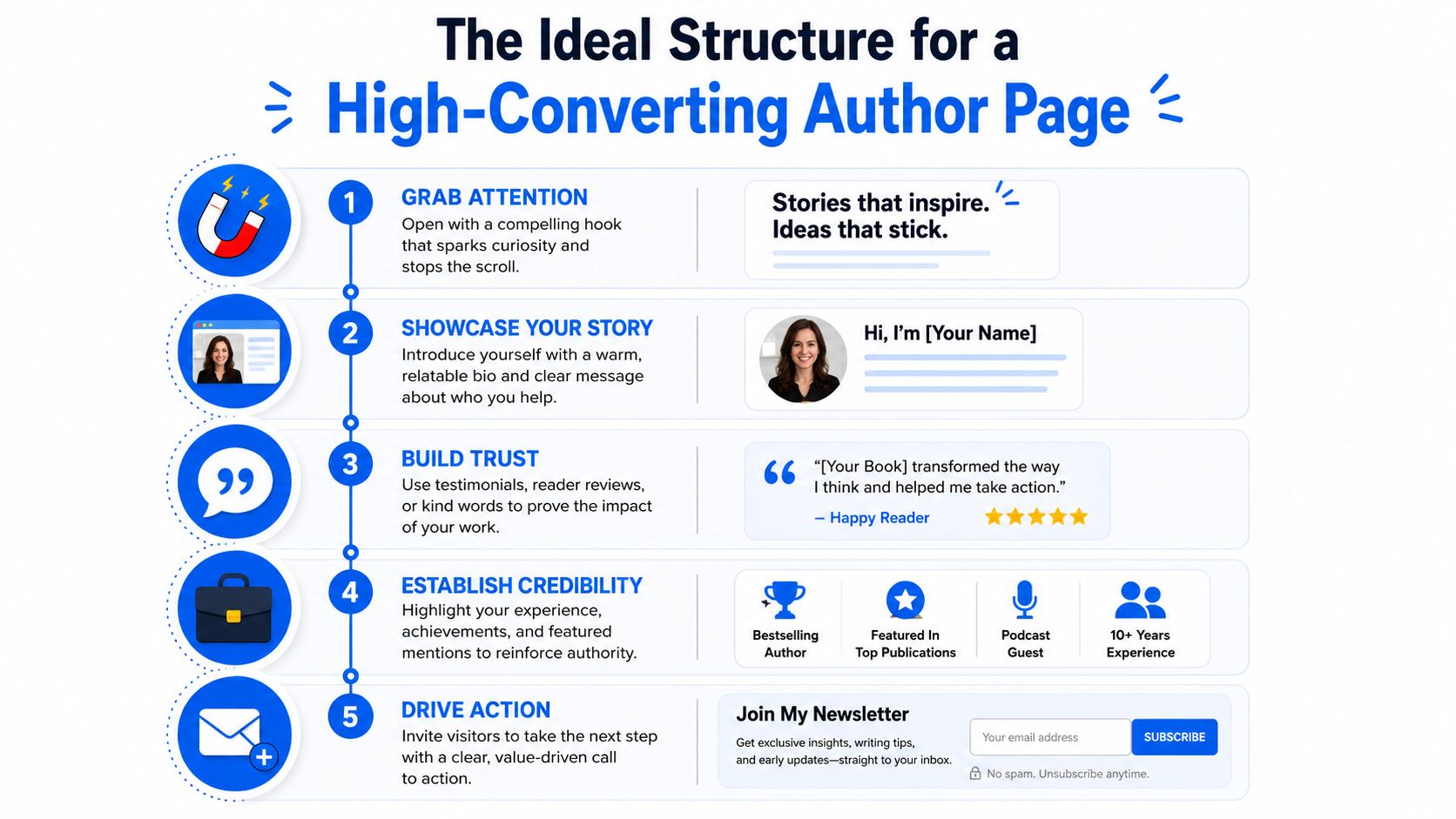
A simple wireframe works well in practice, hero statement, proof points, audience fit, then CTA. You do not need to force every credential onto the page, but you do need enough evidence to make the next click feel safe. If the page supports a newsletter, the signup form should feel like the obvious finish line, not an afterthought.
For B2B newsletters, the page also does entity-resolution work. Name the author consistently, use the same headshot and byline across the site, and add structured data so search engines can connect the page to the person behind the content. That matters as much as the visible copy because the page is doing two jobs at once, converting readers and clarifying identity.
Before you polish the copy, make sure the page loads fast, the headshot is current, and the mobile layout does not break the flow. I have seen strong bios lose momentum because the first screen looked cramped on a phone. A good author page should feel like a tight pitch, not a cluttered archive.
Writing Persuasive Copy and Microcopy That Converts
The words on the page have to do more than describe a person. They have to make a reader feel, quickly, that the person behind the page understands a specific problem and speaks to a specific audience. That's a positioning task first, and a biography task second.
Write for the reader, not the résumé
Weak author pages sound like a career timeline. Strong ones sound like an answer to the question the visitor is already asking, “Why should I care?” For a B2B newsletter creator, that usually means leading with the topic lens, the audience, and the outcome you focus on.
A useful test is to replace generic claims with reader-facing specificity. “Writes about marketing” is soft. “Helps growth teams make newsletter acquisition less guesswork-heavy” is sharper and more useful. The same principle applies to the short bio beneath the CTA, which should reinforce fit instead of repeating the full page headline.
Make the CTA copy do some selling
The button text matters more than many teams realize. “Subscribe” is functional, but it's vague. “Get weekly B2B growth tactics” or “Read the next issue” gives the visitor a reason and a rhythm.
Here's a practical approach.
- Use outcome language. Tell readers what they get after signing up, not just what action they're taking.
- Use the audience signal. If the newsletter is for operators, say that plainly.
- Use the topic signal. Name the subject area so the promise feels concrete.
That approach pairs well with the broader copy discipline in this SEO copywriting training guide, because persuasive page copy and search-aware writing often fail for the same reason, they get abstract instead of specific.
People don't subscribe to a bio. They subscribe to a useful expectation.
Undercredentialed authors can still write persuasive copy if they stop trying to impersonate a more established profile. The better move is to lead with lived expertise, audience relevance, and proof of work. That can mean operator experience, consulting work, research synthesis, or a narrow niche where the writer has obvious signal even without a long publication trail.
SEO and JSON-LD Schema for Author Entity Resolution
A page only works if machines can read it clearly. Search engines and AI systems connect identity faster when the author page is treated as a single entity, not a loose bio pasted onto a blog theme. For B2B newsletters, that means the page has to do two jobs at once, help a reader decide to subscribe and help a system understand exactly who is behind the content.
Build one author entity, not several competing versions
The cleanest setup is a dedicated author bio URL as the canonical ProfilePage, then Person schema with fields like name, jobTitle, image, url, and sameAs. Every article should point back to that same author entity with an @id reference instead of spinning up separate inline person objects. That keeps the identity graph stable and cuts down schema fragmentation source.
The failure mode I see most often is partial identity. The site has one bio, the podcast page has another, social profiles say something slightly different, and none of it lines up cleanly. Search systems then have to guess whether those pages describe the same person, and guesswork weakens entity resolution.
Validate identity the way search systems read it
A schema checker is a starting point, not the finish line. Prompt a few search and LLM systems with the author's name and area of expertise, then compare the response to the page's published entity graph source. If the model describes the author differently from the page, the signals are muddy.
The sameAs field matters more than teams usually admit. Verification URLs give search systems stronger confirmation that the author is the same person across the web, while missing links make the identity look thinner and harder to resolve. For newsletter brands that rely on expert bylines, that difference can affect whether the page reads like a real author profile or just another generic bio.
If you want a practical AI-search resource to pair with that work, the guide to AI search content optimization is a useful reference point for how machines interpret identity and content signals.
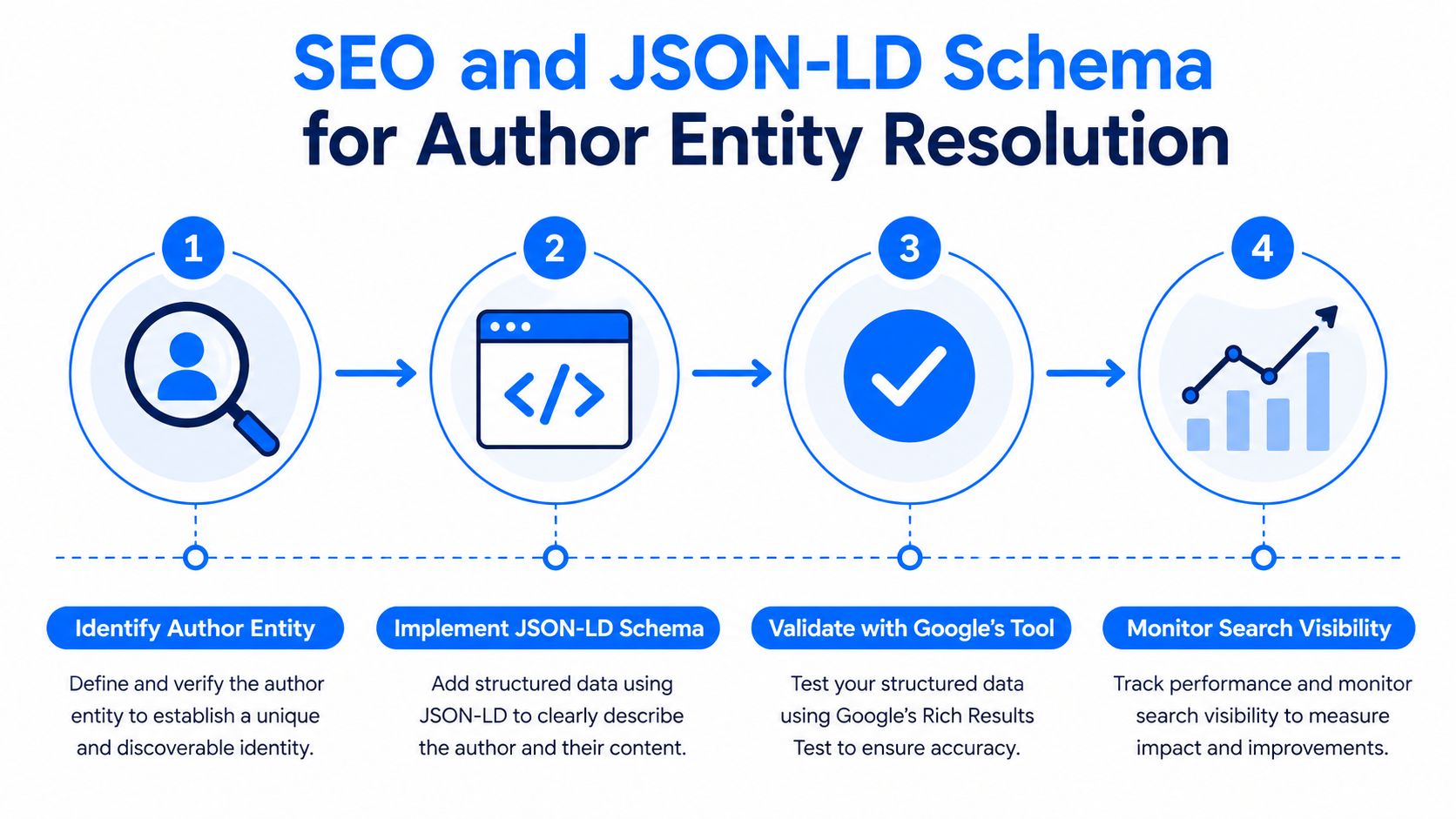
The operational takeaway is simple. Establish the canonical author entity first, attach articles to it consistently, then check whether search and AI systems are reading the same identity you intended. Without that consistency, even a strong page can underperform because the machine-readable signals do not line up.
Trust Signals and Social Proof That Build Credibility
B2B readers start skeptical, and that skepticism is useful. A polished bio does not carry much weight if the page does not show why this person deserves attention. The trust signals need to match the reader's context, not sit there as decoration.
Use proof that matches the reader's risk level
For a consultant or fractional CMO, client logos, recognizable media mentions, and named projects can reduce hesitation. For a newsletter creator serving a niche audience, editorial notes, guest contributions, and visible bylines often matter more than generic praise. The goal is simple, show corroboration that a reader can recognize or verify.
Video can help too. A source notes that many authors use video on bio pages to make the page feel more immediate and less static. That does not mean every author page needs a polished shoot, but a short introduction clip can add a human layer that text alone sometimes misses.
Keep the proof layered, not noisy
One strong proof point usually beats six weak ones. Lead with the credential that matters most to the audience, add one or two supporting signals, then stop. Too much proof starts to feel defensive.
A practical stack for a technical newsletter page might include:
- One recognizable credential. A role, certification, or notable past employer.
- One audience-aligned proof point. A published article, keynote, or cited project.
- One human signal. A short video intro or a personal detail that feels real.
If you want a reference for how social proof is framed on marketing pages, the testimonial examples for marketers are useful because they show how proof can stay specific without sounding inflated.
Practical rule: Use proof to lower friction, not to impress other experts.
The hardest case is the expert with limited public-facing proof. Specificity matters more than volume there. A clear explanation of what the person does, who they work with, and how their perspective is applied usually beats a vague stack of achievements that no reader can verify.
CTAs and A/B Testing for Newsletter Growth
An author page without a strong conversion path is just a nicer-looking bio. The CTA has to feel like the logical next step in the page story, not a box pasted in at the bottom because marketing asked for one. For newsletter-led brands, that means the page should make the subscription offer easy to understand and easy to act on.
Put the action in the narrative
Inline signup modules work best when they appear after the value proposition has been established. If the reader has already seen the topic focus, the proof, and the audience fit, the ask feels earned. The page can also support a downloadable resource, a contact form for inbound leads, or social follow buttons, depending on the business model.
The page copy should make the action specific. If the newsletter is for growth operators, say that. If the audience is agency buyers, say that too. The more precise the promise, the cleaner the conversion path.
Test what actually changes behavior
A/B testing on author pages doesn't need to be complicated. Start with the most impactful variables:
- CTA placement. Compare an early inline module against a lower-page module.
- Headline framing. Test a topic-led headline against a benefit-led headline.
- Form length. Ask for the minimum data needed to convert.
It also helps to watch assisted conversions instead of obsessing over raw signups. A visitor might read the author page, return later, and subscribe from a different page. That's still the page doing work. Breaker's newsletter platform is one option that supports forms, CTAs, and campaign scheduling in a single builder, which can make this kind of testing easier to manage without stitching together too many tools.
For a broader optimization lens, the marketing campaign optimization guide is a good companion because the same discipline applies here, test one lever, isolate the effect, and keep the winning version simple.
Rolling Out and Measuring Author Page Performance
The quickest way to waste time is to rebuild every author page at once. Start with the pages attached to your highest-value content, since those pages are usually closest to lead flow and revenue. Then measure the change over a realistic window, not a few days of noisy movement.
Use a 60 to 90 day measurement window
A practical rollout for a newsletter brand is to update the top author pages first, then compare pre and post performance after search engines have had time to recrawl and re-evaluate the entity graph source. Track article visibility, assisted conversions, and AI-citation patterns, not just vanity traffic. The point is to see whether the page is helping readers, search systems, and newsletter signups connect the same author to the same topic with less confusion.
Keep the scorecard small. If the page is doing its job, you should see stronger engagement with the author's content, clearer referral paths into the newsletter, and more consistent identity signals across search and AI surfaces. If those patterns do not move, the page may look better without contributing much to growth.
Prioritize the pages that matter most
A simple rollout sequence usually wins. Start with the ten author pages most closely tied to revenue-driving content, then expand once you have confirmed the structure, copy, and schema are working source.
That is the part teams often skip. They spend time polishing low-impact pages and leave the high-value authors with generic bios and weak CTAs. The better move is to treat the author page program like a portfolio, fix the pages with the most impact first, then standardize the pattern across the rest. A clean rollout also makes attribution easier, because you can compare one author cluster against another instead of guessing which change mattered.
Test what changes behavior
A/B testing on author pages does not need to be complicated. Start with the variables most likely to change action.
- CTA placement. Compare an early inline module against a lower-page module.
- Headline framing. Test a topic-led headline against a benefit-led headline.
- Form length. Ask for the minimum data needed to convert.
Watch assisted conversions, not just raw signups. A visitor may read the author page, return later, and subscribe from a different page. That still means the page did part of the work. The marketing campaign optimization guide is a useful companion here because the same habit applies, test one lever, isolate the effect, and keep the winning version simple.
If your team wants a repeatable way to run that kind of lifecycle, Breaker gives B2B marketers a newsletter platform for building campaigns, forms, and subscriber growth workflows around the same audience they are trying to convert from the author page. Use that setup to test the page as a growth asset, not a static profile.
Keep reading
All articles8 Best Email Tracking Software Tools in 2026
Compare 8 top email tracking tools for 2026, how tracking pixels work, and why Apple's privacy rules make open rates unreliable. See our top pick.
6 Best Email Trackers for Newsletter Senders in 2026
Open rates lie. Learn how email trackers really work, why Apple and Gmail skew the data, and which tools newsletter senders should actually use in 2026.
Post Webinar Survey: Questions, Examples, and a Checklist
What to ask in a post webinar survey, when to send it, three example formats, and a checklist for turning the answers into segmented follow-up and pipeline.