
Master Email Marketing for Customer Acquisition
A complete guide to email marketing for customer acquisition. Build targeted lists, craft nurture sequences, and measure ROI to boost your B2B growth.
Some months, leads drip in from webinars, referrals, and a few lucky inbound demos. Then the next month goes quiet, and the pipeline suddenly depends on ad performance, social reach, or whether someone on your team remembered to follow up fast enough.
That pattern wears teams down. It also makes planning nearly impossible.
Email marketing for customer acquisition works when you stop treating email as a batch-and-blast channel and start treating it like an acquisition system. That means tighter audience definition, offers matched to buyer intent, strong automation, clean sending practices, and a deliberate mix of organic and paid subscriber growth. Done well, email gives you a channel you can shape instead of one you borrow from an algorithm.
Beyond Unpredictable Leads to a Reliable Acquisition Engine
Most B2B teams don't have a lead generation problem. They have a consistency problem.
One campaign lands. Another stalls. Social brings attention but not action. Paid channels can fill the top of funnel, but the cost and quality fluctuate. Search can work, until rankings shift or intent softens. Email is different because it gives you a direct line to people who have already shown some level of fit or interest.
That directness is why email marketing is 40 times more effective at customer acquisition than social media platforms like Facebook or Twitter, and why it delivers an average $36 for every $1 spent according to EntrepreneursHQ's roundup of current email marketing statistics.
That doesn't mean every email program performs well. Plenty don't. The gap usually comes down to system design.
Practical rule: If your email program depends on one lead magnet, one welcome email, and occasional newsletters, you don't have an acquisition engine. You have a list.
A reliable engine has a few parts working together:
- A precise audience definition so the list starts with the right people.
- Multiple entry points so buyers can join based on their stage and urgency.
- A growth mix that combines trust-building organic capture with scalable paid subscriber acquisition.
- Automated conversion paths so new subscribers don't sit idle after signup.
- Revenue measurement so the channel earns more budget instead of defending itself every quarter.
Many teams miss the opportunity here. They use email after acquisition, not for acquisition itself. In practice, the strongest programs do both. They build demand with content and forms, then add targeted subscriber growth to remove the feast-or-famine pattern from pipeline creation.
First Principle Build Your Ideal Customer Profile
Bad email acquisition starts before the first send. It starts when the audience is fuzzy.
If your definition of a target customer is "SaaS founders," "mid-market operators," or "B2B marketers," your list will fill with people who can read your emails but never buy. That's expensive even when the list was built organically.

Email carries a lot of weight in acquisition. 81% of small businesses rely on email marketing as their primary channel for customer acquisition, according to Oberlo's email marketing statistics. That makes sloppy targeting more than a messaging issue. It turns into wasted send volume, weaker engagement, and the wrong leads entering your funnel.
Go past surface-level personas
A useful ICP isn't a fictional persona with a headshot and a job title. It should tell your team who to pursue, who to avoid, and what signals matter.
Start with five categories:
- Firmographic fit. Company size, industry, business model, geography, sales motion, and team maturity.
- Role relevance. Economic buyer, day-to-day operator, recommender, or technical evaluator.
- Pain intensity. What problem costs them time, money, or momentum right now.
- Current stack. The tools they already use often reveal budget, sophistication, and integration needs.
- Trigger events. Hiring, funding, new leadership, product launch, expansion, or a change in channel strategy.
For a product-led SaaS company, a good ICP may not be "marketing leader at a software company." It might be "growth lead at a B2B SaaS company with a sales-assisted PLG motion, active content production, a CRM already in place, and pressure to generate qualified pipeline without adding paid social spend."
That's specific enough to shape offers, landing pages, and acquisition channels.
Score fit before you write copy
Before anyone drafts a subject line, assign positive and negative signals.
A simple scoring model helps:
Signal type
What to look for
Why it matters
Strong fit
Right company type, right role, clear pain
Higher chance of engagement and sales relevance
Medium fit
Adjacent role or soft pain
Good for nurture, weaker for direct activation
Weak fit
Student, vendor, competitor, unrelated industry
Inflates list size without adding pipeline
Exclusion
Freebie seekers, personal emails, bad geography fit
Protects list quality and sales time
This matters even more when you use audience expansion tools. If your ICP is weak, scale only gives you more wrong people.
Build the ICP from actual buying patterns
Use closed-won deals, not internal opinions, as the source material. Review:
- Recent customers who moved fast
- Stalled opportunities that looked promising but didn't convert
- High-retention accounts that matched your product well
- Low-quality leads that consumed content but never had purchase potential
Document the patterns in one working brief. Keep it operational, not academic.
If your team needs a sharper framework, this guide on ideal customer profile definition is a good reference point for turning broad personas into something acquisition teams can use.
The best ICPs don't just describe who the buyer is. They describe what makes that buyer likely to act now.
Create a Lead Magnet Portfolio for the Entire Buyer Journey
Most lead magnets underperform for a simple reason. They ask every prospect to raise their hand the same way.
A first-time visitor with a vague problem doesn't want the same asset as a buyer comparing vendors this week. If you want email marketing for customer acquisition to produce both volume and qualified intent, you need more than one entry offer.
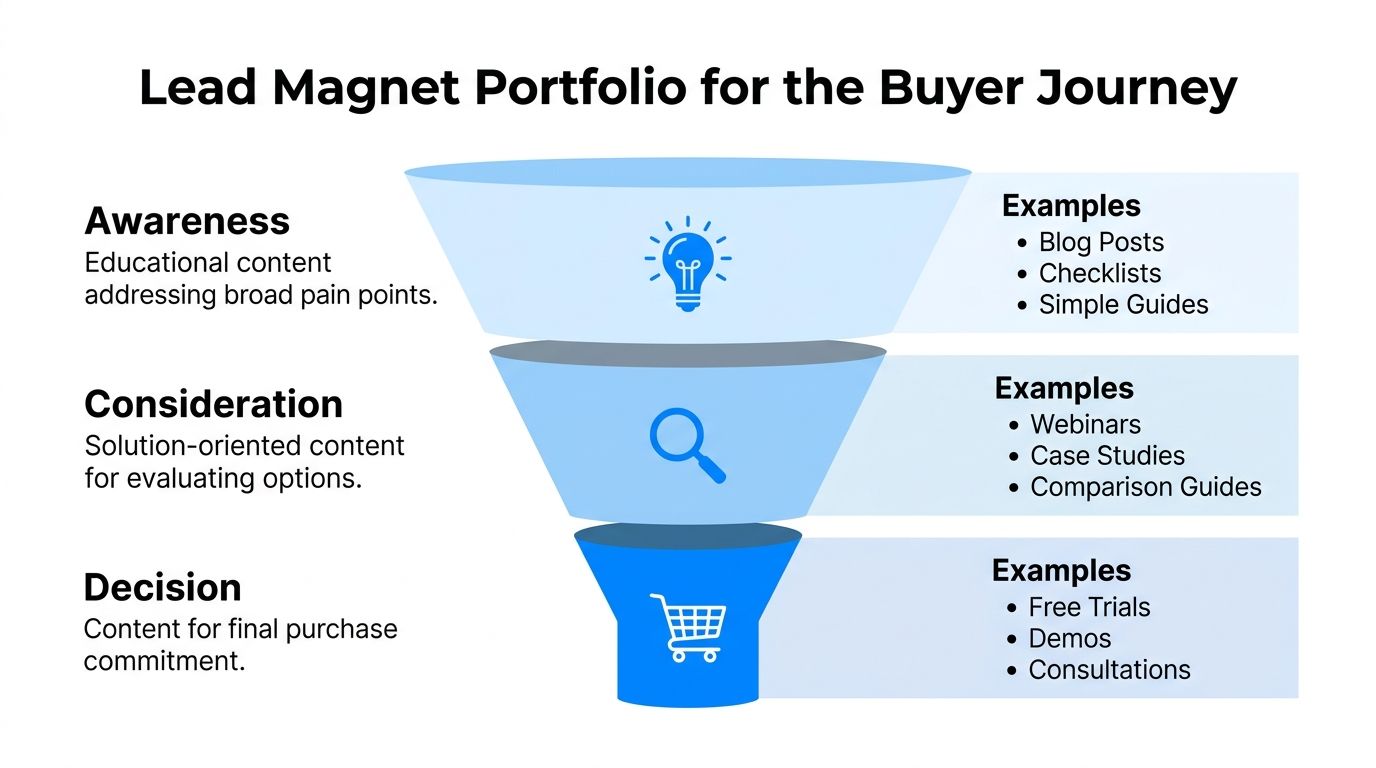
Recent trends show that AI-driven segmentation specific to buyer journey stages can boost acquisition ROI by 25%, according to Quiet Light's discussion of email acquisition tactics. The important takeaway isn't the technology itself. It's the structure. Match the offer to the stage, and acquisition improves because relevance improves.
Awareness offers should earn attention
At the top of the funnel, buyers usually aren't looking for your product. They're trying to understand a problem, compare approaches, or get oriented.
Good awareness lead magnets include:
- Problem checklists that help prospects diagnose gaps
- Short guides focused on one painful task
- Industry briefings that frame a market shift in plain language
- Templates that reduce time to first action
For B2B SaaS, that might be a lifecycle audit template. For a consultancy, it could be a planning worksheet. For an agency, a campaign teardown often works better than a generic ebook.
Keep these assets fast to consume. If it feels like homework, top-of-funnel prospects won't finish it.
Consideration offers should reduce uncertainty
Middle-of-funnel buyers need help evaluating options. Educational content starts pulling real commercial weight at this stage.
Use assets that answer practical buying questions:
Buyer concern
Better lead magnet
Why it works
"Can this solve my use case?"
Case study collection or workflow examples
Makes value concrete
"How does this compare?"
Comparison guide or vendor checklist
Supports active evaluation
"Will this fit our team?"
Webinar, walkthrough, or implementation overview
Lowers perceived complexity
A common mistake here is gating a sales deck and calling it thought leadership. Buyers can tell. Consideration content should still teach, but it should also show your point of view and operating method.
Decision offers should create movement
At the bottom of the funnel, the job changes. You're not just educating. You're helping someone take the next step with low friction.
These offers work well:
- Consultations that focus on diagnosis, not a hard pitch
- Live demos designed for role-specific use cases
- ROI or prioritization tools that help justify action internally
- Trial or pilot invitations for buyers who want to test before committing
Field note: A lead magnet portfolio works best when every asset points to the next logical step. A checklist should lead to a webinar. A webinar should lead to a demo or consultation. Dead ends kill momentum.
Build offers around buying jobs, not content formats
Don't start by asking, "Should we make an ebook or webinar?" Start with the buyer's job at that moment.
Examples:
- Awareness-stage operator. They need to name the problem and estimate the cost of inaction.
- Consideration-stage manager. They need to compare approaches and avoid a bad purchase.
- Decision-stage leader. They need confidence, internal buy-in, and a simple path forward.
That shift changes the assets you create. It also improves the quality of subscribers entering your system because each signup reflects a clearer intent signal.
A strong portfolio doesn't need dozens of assets. It needs enough range to catch buyers where they are instead of forcing every prospect through the same gate.
Fuel Your Growth with Organic and Paid Subscriber Channels
Teams usually lean too far in one direction.
Some rely only on organic list building, then wonder why growth is slow. Others buy attention too aggressively, then end up with weak engagement and a list that doesn't convert. The practical answer is a hybrid approach. Organic builds trust and captures active interest. Paid subscriber acquisition adds speed and planning control.
That mix matters because organic alone often can't supply enough volume for a serious acquisition target. At the same time, paid acquisition without strong audience definition and follow-up turns into rented traffic with a short shelf life.
Organic channels build trust first
Organic list growth usually produces the strongest intent because the prospect chose to engage with your content or offer directly.
Common channels include:
- Embedded forms on high-intent pages such as comparison content, templates, and webinar registrations
- Homepage and blog capture modules tied to specific value, not "join our newsletter"
- LinkedIn traffic sent to focused landing pages instead of a generic site form
- Partner webinars and newsletter swaps with adjacent brands
- Referral prompts inside emails for readers already engaged with your content
If you want a broader menu of tactics, Sotion's guide to powerful email list building strategies is useful because it goes beyond popups and basic forms.
Organic channels have a clear upside. Subscribers often arrive warmer. The downside is pace. You can improve conversion paths, publish more, and tighten offers, but growth still depends on how much qualified attention you can attract.
Paid subscriber acquisition buys speed and precision
Paid acquisition changes the planning conversation. Instead of asking whether enough people will discover your opt-in form this month, you decide how aggressively to add qualified subscribers.
The most interesting version of this in B2B is email as media. Rather than relying only on your own inbound capture, you use permissioned audience sources and targeting to reach people who match your ICP. According to Triple Whale's discussion of rented-email acquisition, this approach can acquire 50 to 100 qualified leads per 10,000 sends.
That number doesn't make paid acquisition automatically better than organic. It shows that list growth doesn't have to rely solely on waiting for inbound demand.
Organic channels earn trust slowly. Paid subscriber channels compress time when your targeting and follow-up are disciplined.
The biggest mistake here is buying names instead of buying fit. If the source can't align to your ICP, your nurture sequence has to work too hard. The second mistake is handing paid-acquired subscribers the same generic welcome path as every other lead. Source and intent matter.
Comparing Subscriber Acquisition Channels
Channel
Acquisition Speed
Cost Per Subscriber
ICP Targeting Precision
Website forms
Slow to moderate
Usually lower upfront, higher content cost behind the scenes
Moderate to high if page intent is strong
LinkedIn lead capture
Moderate
Usually higher than owned-site capture
High when audience targeting is tight
Partner promotions
Moderate
Varies by partner quality and structure
Moderate, depends on audience overlap
Paid subscriber acquisition
Fast
Budget-controlled and more predictable
High if built around a clear ICP
Build a hybrid model instead of arguing ideology
In practice, the strongest acquisition systems use both.
Use organic to capture:
- High-intent visitors already researching the problem
- Referrals and existing audience spillover
- Brand-safe subscribers who discover you through thought leadership
Use paid subscriber acquisition to add:
- Predictable monthly volume
- Coverage in underpenetrated segments
- Faster testing of new ICPs or offers
A good rule is simple. Organic should prove your message and offer quality. Paid should scale what already has evidence of fit.
If you're refining your channel mix, this breakdown of email list building approaches is a helpful reference for balancing owned capture with more proactive growth methods.
Match channel to buyer stage
Not every channel should push the same asset.
- Organic blog traffic often fits awareness and early consideration offers.
- Partner newsletters can work well for educational guides and webinars.
- Paid subscriber acquisition is stronger when the ICP is narrow and the downstream nurture path is clear.
- LinkedIn lead forms fit event-driven and role-specific campaigns, especially when the offer speaks to one operational pain point.
Many teams leave money on the table at this point. They build one signup path, send everyone into it, and blame the channel when conversion quality is uneven. The channel isn't always the issue. The mismatch between source, stage, and follow-up usually is.
Design Email Sequences That Convert New Subscribers into Customers
A new subscriber isn't a win by itself. It's a chance.
What happens in the next few emails determines whether that chance turns into a conversation, a trial, a purchase, or a quiet unsubscribe. Many teams underuse this window. They deliver the lead magnet, send a generic newsletter, and hope interest survives long enough to become intent.
That approach wastes signal.
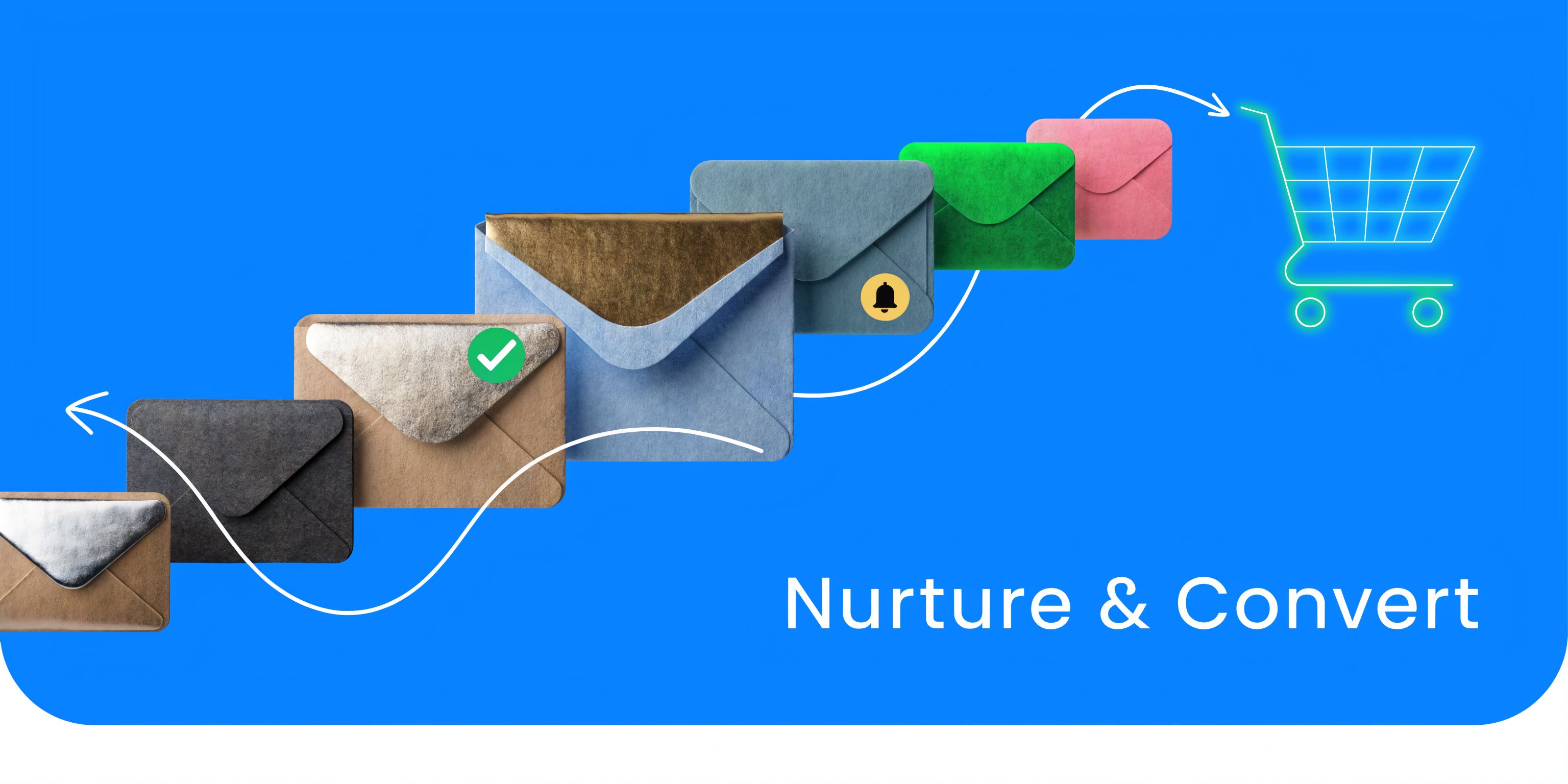
Segmentation starts paying off in automated sequences. According to beehiiv's roundup of email marketing success statistics, segmentation can boost email marketing revenue by up to 760%. In acquisition, that means your sequence should adapt to what the subscriber asked for, what they clicked, and how close they seem to buying.
Start with a welcome sequence that does more than deliver
The welcome sequence sets the tone. It should deliver the promised asset, establish why your emails are worth opening, and move the subscriber to a small next action.
A practical welcome flow looks like this:
- Email one delivers the promised asset
Keep it clean. Remind them what they requested. Add one next-step CTA that matches the asset. If they downloaded a planning checklist, invite them to a deeper guide or webinar.
- Email two frames the problem
Don't pitch yet. Explain the mistake buyers commonly make, the hidden cost of waiting, or the flawed default process in your market.
- Email three introduces your method
Here, you show your operating model, point of view, or framework. Buyers need to understand how you solve the problem, not just that you exist.
- Email four asks for movement
Offer a demo, consultation, trial, or another bottom-funnel action if the subscriber's behavior suggests readiness.
Build nurture around buying questions
A nurture sequence should not be a random stream of blog content. It should answer the questions buyers need resolved before they act.
Use these themes:
- Problem education for subscribers still defining the issue
- Solution comparison for people evaluating approaches
- Social proof and examples for skeptical buyers
- Objection handling for legal, budget, timing, or implementation friction
A simple way to structure this is by behavior.
Subscriber behavior
What it suggests
What to send next
Downloads a top-of-funnel guide only
Early awareness
Educational emails and diagnostic content
Clicks comparison content
Active evaluation
Case studies, decision checklists, implementation details
Visits pricing or demo page
High intent
Activation emails with stronger CTAs
Ignores multiple emails
Weak fit or poor timing
Slower cadence, different angle, or suppression
Send based on what subscribers do, not what your content calendar says.
Make activation emails specific
When it's time to ask for action, vague CTAs hurt conversion.
"Learn more" is soft. "See how this works" is forgettable. The strongest activation emails connect one pain point to one next step.
Examples:
- For a SaaS buyer evaluating tools, offer a role-specific demo tied to their workflow.
- For a consultant or agency, offer a diagnostic call with a defined output.
- For a creator or newsletter operator, offer a growth review based on their current audience source mix.
This is also the point where shorter copy often wins. By now, engaged subscribers don't need another essay. They need a reason to move.
A useful benchmark for your own thinking is whether each activation email answers three things quickly:
- Why act now
- Why this next step is low friction
- What they'll get from doing it
Here's a useful walkthrough on sequence strategy and message flow:
Personalize without sounding robotic
Personalization is not just first-name insertion. In acquisition sequences, the strongest personalization comes from context:
- The source they came from
- The asset they requested
- Their role
- The pages or topics they interacted with
- The stage signal implied by those interactions
That lets you write naturally. A subscriber who joined through a comparison guide should not receive the same second email as someone who downloaded a beginner checklist. The first is evaluating. The second is still diagnosing.
Keep the sequence tight
Most acquisition sequences get bloated because teams try to include every message they might ever want to send.
Cut aggressively. Every email should earn its place by moving the subscriber closer to one of three outcomes:
- Better qualification
- Higher intent
- Clear disqualification
Disqualification matters. If someone never engages, protect your list health and shift them out of the main acquisition path. Good sequencing isn't just about converting more people. It's also about identifying who won't convert so your program stays focused.
Protect Your Sender Reputation and Maximize Deliverability
You can write sharp copy, build strong automations, and attract the right subscribers, then lose the whole advantage in the inbox.
Deliverability is where a lot of acquisition programs break. The team sees weak opens, blames the offer, rewrites the subject line, and keeps sending. Meanwhile the underlying issue is sender reputation, list quality, or poor domain hygiene.
Get the technical foundation right
Every serious email program needs proper authentication and a clean sending setup. That includes SPF, DKIM, and DMARC configured correctly through your email infrastructure and sending platform.
You don't need to become the technical owner of every detail, but you do need to verify that these basics are in place. If they aren't, mailbox providers have less reason to trust your mail.
List hygiene is not optional
Acquisition creates pressure to grow. That pressure leads some teams to keep everyone forever.
That's a mistake. Subscriber quality matters more than vanity list size. Remove inactive contacts from the core acquisition stream, watch for engagement decay, and be careful with imported lists. If someone doesn't engage over time, continuing to hammer them damages the whole program.
For a practical checklist, this guide on how to improve email deliverability is worth reviewing because it covers the operational habits that keep campaigns out of spam folders.
Watch for the warning signs early
A sender reputation problem rarely appears as one dramatic failure. It usually shows up in patterns:
- Open performance drops across multiple campaigns
- Replies and conversions soften even when content quality is stable
- Previously healthy segments stop engaging
- Inbox placement varies sharply by mailbox provider
When that happens, stop scaling volume until you know why.
Operational advice: Don't solve a deliverability problem by sending more email. Solve it by cleaning the audience, checking setup, and narrowing sends to the people most likely to engage.
Use process, not guesswork
Teams need a repeatable rhythm for deliverability:
- Review new subscriber sources for relevance and engagement quality.
- Monitor inactive segments and suppress the dead weight.
- Check campaign engagement by segment, not just in aggregate.
- Audit email content patterns that may trigger poor placement.
- Coordinate with your sending platform when reputation starts slipping.
If your team wants a stronger baseline, this overview of email deliverability best practices is a useful place to tighten the operational side.
Deliverability isn't glamorous. It is, however, one of the clearest differences between email programs that scale and email programs that slowly poison themselves.
Measure What Matters From Subscriber Growth to Revenue
Open rate has its place. Click rate does too. Neither is enough.
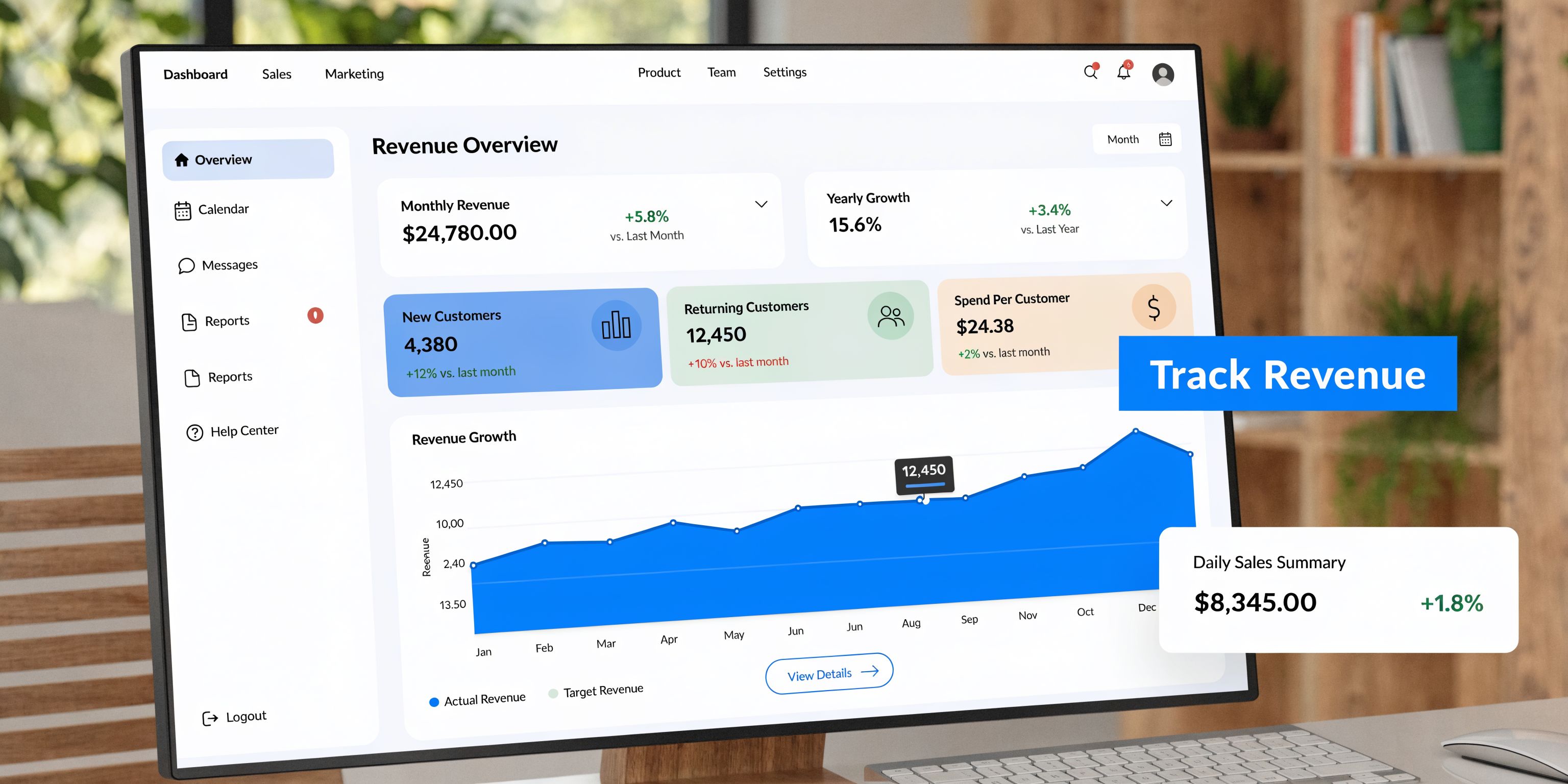
If you want email marketing for customer acquisition to earn budget, it has to answer business questions. Did the channel generate qualified pipeline? Did subscribers become customers? Which source produced the best buyers? Which sequence created movement toward revenue?
Stop reporting email in isolation
A lot of teams still report email like it's a content channel. They share opens, clicks, unsubscribes, and maybe top-performing subject lines.
That's not enough for acquisition. Email should connect to CRM stages, sales activity, trial starts, booked calls, and closed revenue. If it doesn't, you'll overvalue campaigns that attract curiosity and undervalue campaigns that attract buyers.
Track the chain, not just the send:
Metric
What it tells you
Why it matters
Subscriber source
Where the contact came from
Reveals which growth channels produce real fit
Lead-to-opportunity movement
Whether subscribers become qualified pipeline
Separates engagement from commercial value
Opportunity-to-customer outcome
Whether sales closes them
Prevents false confidence in top-funnel performance
Revenue per subscriber
Business value of each acquired contact
Makes budgeting decisions easier
Use simple formulas your team will maintain
You don't need a complicated attribution model to start measuring email properly.
Use straightforward formulas:
- Email CAC = total email acquisition spend divided by new customers from email
- Visitor-to-subscriber rate = new subscribers divided by relevant landing page visitors
- Subscriber-to-customer rate = new customers divided by new subscribers
- Revenue per subscriber = revenue attributed to acquired subscribers divided by number of acquired subscribers
The point isn't accounting perfection. The point is operational clarity.
Treat subscriber growth quality as seriously as growth volume
A bigger list can still be a weaker acquisition asset.
Ask these questions regularly:
- Are new subscribers entering the right sequences?
- Which source creates the best downstream conversion?
- Do paid-acquired subscribers behave differently from organic subscribers?
- Which lead magnet produces subscribers who move fastest toward sales activity?
- Where do qualified contacts stall?
The most useful email dashboard isn't the one with the most charts. It's the one that shows where money goes in, where qualified demand comes out, and where the leak sits in between.
Build reporting around decisions
Every metric should support a decision.
If one subscriber source brings volume but no qualified opportunities, cut it or change the offer. If one welcome sequence produces stronger sales conversations, move more traffic into it. If a lead magnet attracts broad interest but weak fit, rewrite or reposition it.
Many teams finally see the full value of email at this point. It's not just a channel you send. It's a system you can measure, improve, and scale because the touchpoints are trackable and the audience relationship is direct.
Start Building Your Predictable Growth Machine Today
A strong acquisition program doesn't come from sending more newsletters. It comes from making better decisions at each point in the system.
Define the right ICP. Build offers for different stages of buyer intent. Grow your list through both organic capture and targeted paid acquisition. Automate the path from first signup to commercial conversation. Keep your deliverability clean. Measure revenue, not just activity.
Start small if you need to. Fix the welcome sequence. Replace the generic lead magnet. Tighten one segment. Add one new subscriber source.
Consistency compounds fast when the system is built to convert.
If you want a platform built for this exact model, Breaker is worth a look. It combines email sending, organic capture, paid subscriber acquisition, deliverability management, and real-time ROI tracking in one workflow, which makes it easier for B2B teams to turn a newsletter into a dependable customer acquisition channel instead of another disconnected marketing task.
Keep reading
All articlesB2B Lead Generation via Newsletter: What Actually Works
Cold outbound is losing steam. See 7 proven newsletter tactics for B2B lead generation, from gated content to sponsorship swaps, that beat cold outreach.
How to Write a Newsletter with AI: Step-by-Step Guide 2026
Learn how to write a newsletter with AI the right way: a 7-step process to train, calibrate, and edit AI drafts that still sound like you.
How to Boost Conversions With Your Email Newsletter
Turn your newsletter into a conversion engine. See 2026 benchmarks, CTR vs CVR explained, and the fixes most email guides skip.